The Calling of Saints Peter and Andrew is a oil on canvas painting by Caravaggio (1571–1610), created in 1603. Measuring 176 × 140 cm, it depicts the biblical scene from Matthew 4:18-20.
This haunting masterpiece by Caravaggio Merisi captures the pivotal moment from Matthew 4:18-20 when Christ calls the fisherman brothers Peter and Andrew to become "fishers of men." The scene unfolds along the shores of the Sea of Galilee, where the two brothers are casting their nets when Jesus approaches with his transformative invitation to discipleship. Caravaggio's interpretation emphasizes the profound spiritual awakening occurring in this ordinary moment, as the fishermen encounter their divine calling.
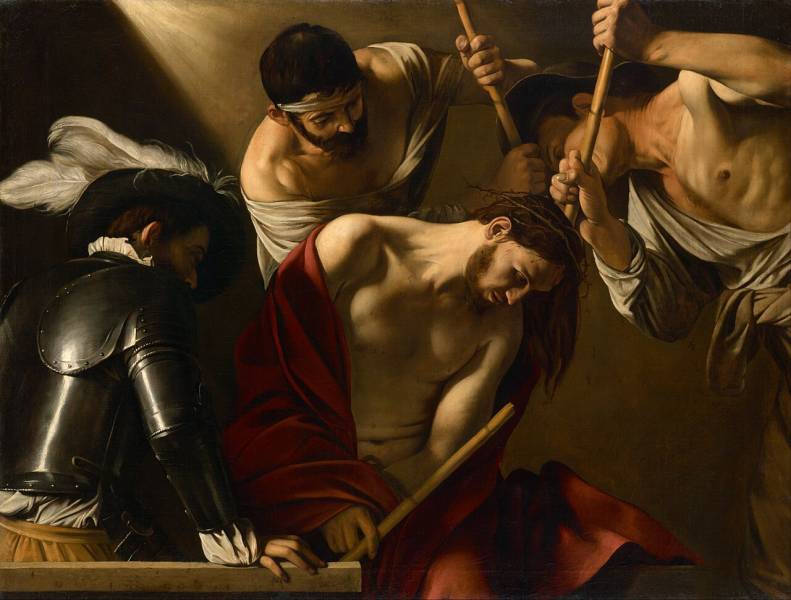
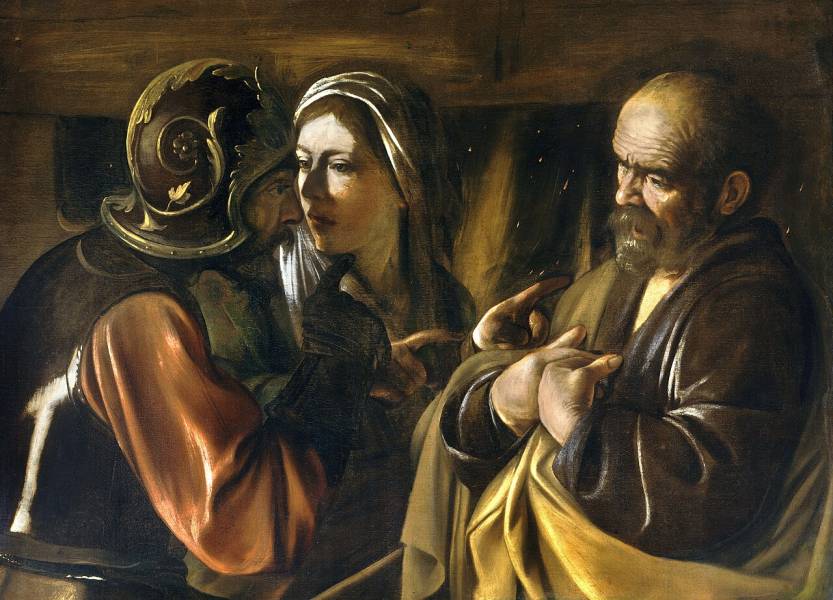
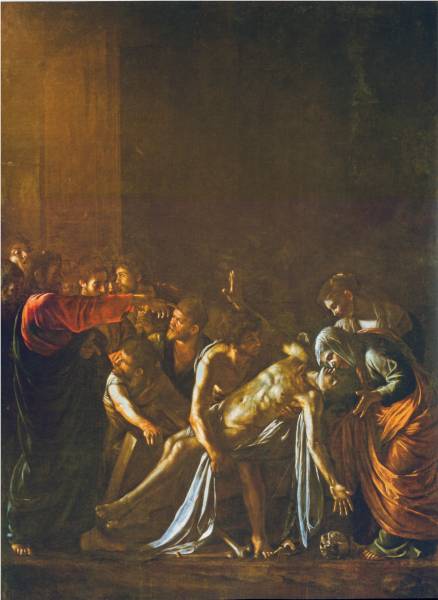
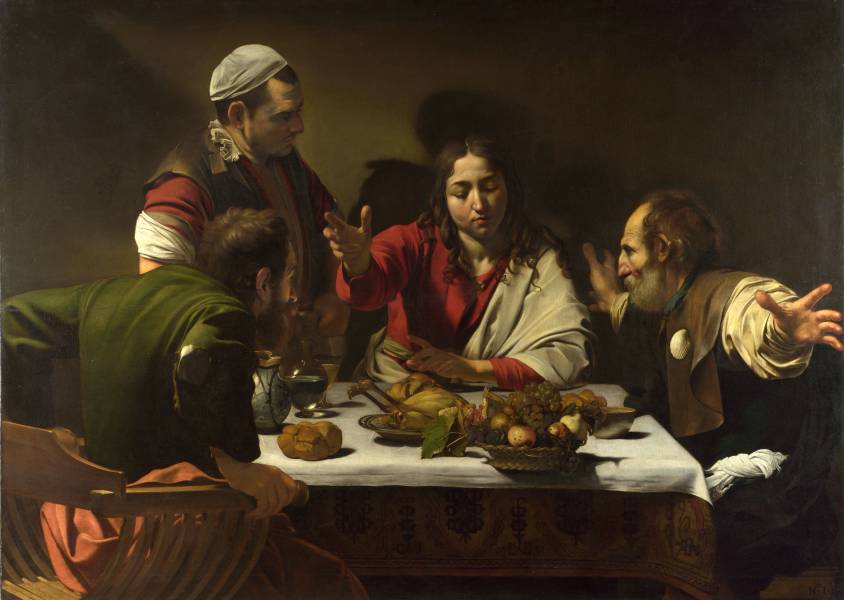
The artist's revolutionary use of chiaroscuro—dramatic contrasts between light and shadow—transforms this biblical narrative into an intensely personal revelation. Divine light illuminates the figures of Peter and Andrew, symbolically representing the spiritual enlightenment they experience through Christ's call. The composition draws the viewer's eye to the moment of recognition and decision, as the brothers must choose between their familiar livelihood and an uncertain path of faith. Caravaggio's realistic portrayal of working-class fishermen reflects his commitment to depicting biblical figures as authentic, relatable human beings rather than idealized saints.
The painting demonstrates Caravaggio's masterful ability to infuse sacred subjects with psychological depth and emotional immediacy. The artist's signature technique of placing religious scenes in contemporary settings makes the divine encounter accessible to viewers, suggesting that such moments of calling can occur in any era. This work stands as a testament to Caravaggio's revolutionary approach to religious art, where the sacred and profane merge to create compositions of extraordinary spiritual power and human authenticity.