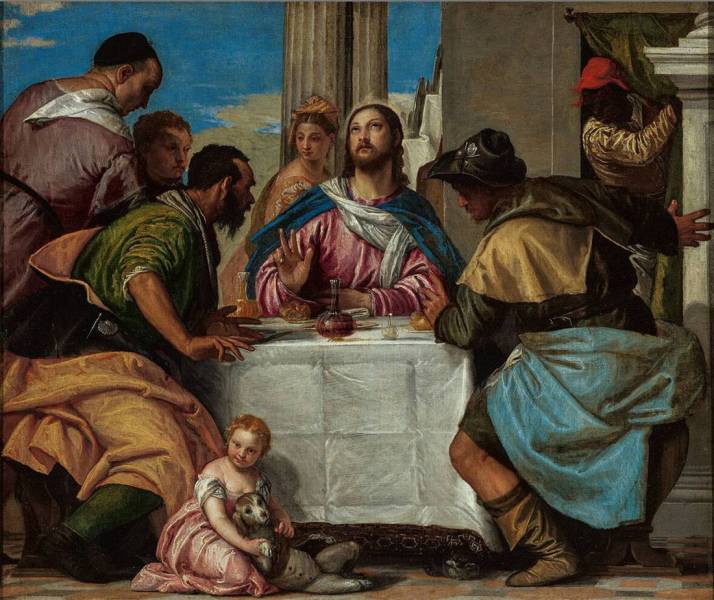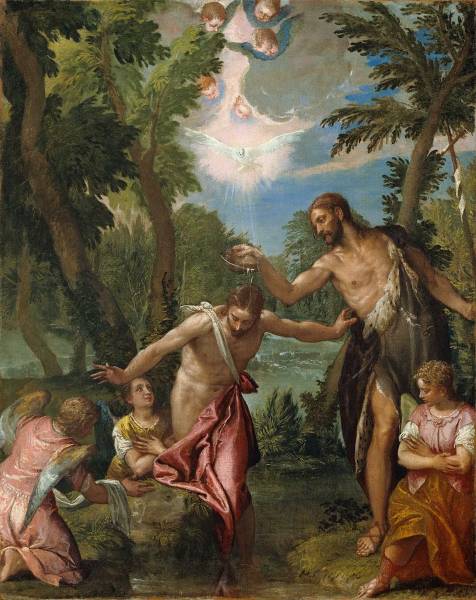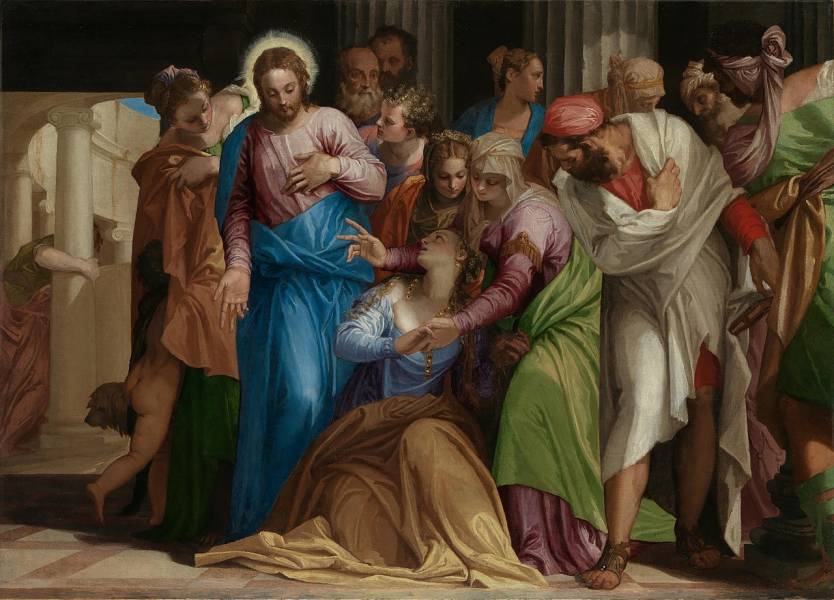
Christ Among the Doctors
(c1565)
Paolo Veronese
(Verona, 1528 - 1588)
Luke 2:41-52
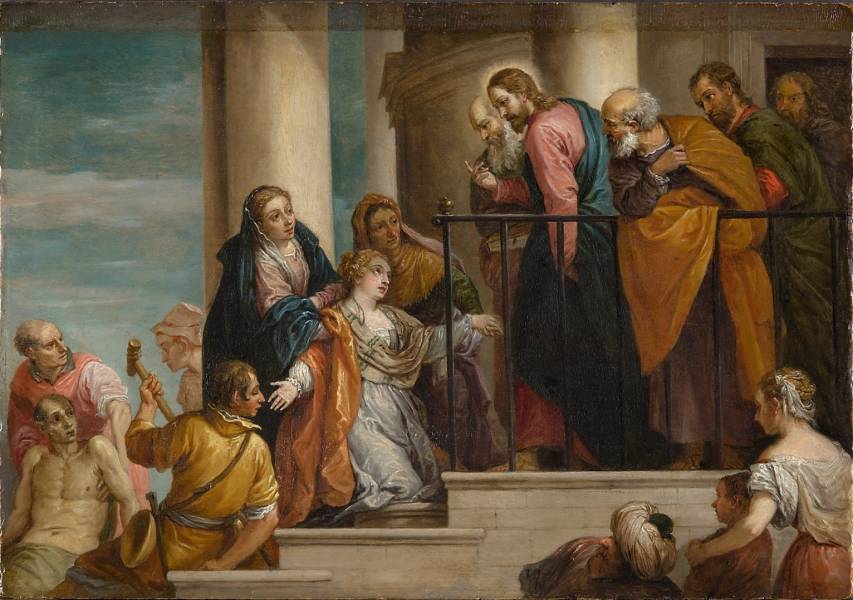
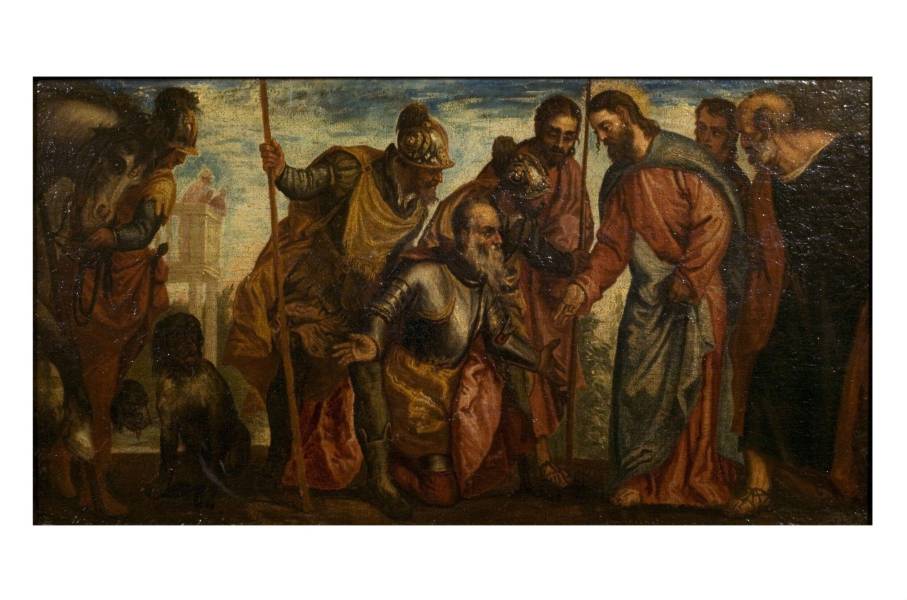
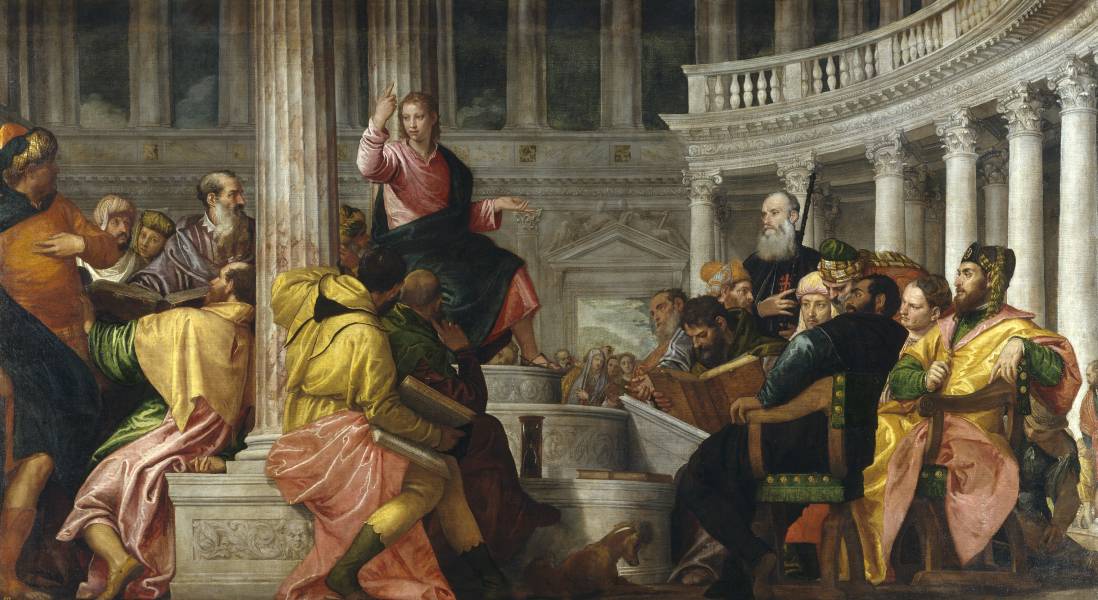
In the New Testament, the story of the centurion's faith is a poignant example of devotion and humility. As recounted in Matthew 8:5-13, a Roman centurion approaches Jesus, pleading for him to heal his ailing servant. The centurion's remarkable faith is on full display as he acknowledges Jesus' authority, saying, "Just say the word, and my servant will be healed." This powerful scene is beautifully captured in Paolo Veronese's painting, "The Faith of the Centurion," which masterfully conveys the emotional depth and spiritual significance of the moment.
Veronese's composition is characterized by a sense of grandeur and monumentality, with a large gathering of figures set against a backdrop of classical architecture. The artist's use of vibrant colors and masterful handling of light and shadow creates a sense of drama and tension, drawing the viewer's eye to the central figures of Jesus and the centurion. The centurion, shown kneeling in reverence, is a powerful symbol of humility and devotion, while Jesus' compassionate gaze and outstretched hand convey a sense of divine mercy and healing. The surrounding figures, including the centurion's servants and a group of onlookers, add a sense of depth and context to the scene, highlighting the centurion's extraordinary faith in the face of skepticism and doubt.
Through his masterpiece, Veronese not only illustrates a pivotal moment in the New Testament but also explores broader themes of faith, compassion, and redemption. The painting's emphasis on the centurion's humility and Jesus' divine authority serves as a powerful reminder of the transformative power of faith and the boundless compassion of the divine. As a work of art, "The Faith of the Centurion" is a testament to Veronese's skill as a painter and his ability to convey complex emotional and spiritual truths through his work. The painting's significance extends beyond its artistic merits, however, as it continues to inspire and edify viewers to this day, offering a profound meditation on the nature of faith and the human experience.
As a work of Renaissance art, "The Faith of the Centurion" is also notable for its reflection of the cultural and artistic values of Veronese's time. The painting's use of classical motifs and its emphasis on grandiose composition and dramatic lighting are all characteristic of the Renaissance humanist ideals, which sought to revive the artistic and cultural achievements of ancient Greece and Rome. At the same time, the painting's deeply personal and emotional portrayal of the biblical scene reflects the intense spirituality and religious fervor of the Renaissance era, making "The Faith of the Centurion" a rich and multifaceted work that continues to resonate with audiences today.
Found in: Matthew, Matthew 8, 16th century
5 When he came into Capernaum, a centurion came to him, asking him,
6 and saying, “Lord, my servant lies in the house paralyzed, grievously tormented.”
7 Jesus said to him, “I will come and heal him.”
8 The centurion answered, “Lord, I’m not worthy for you to come under my roof. Just say the word, and my servant will be healed.
9 For I am also a man under authority, having under myself soldiers. I tell this one, ‘Go,’ and he goes; and tell another, ‘Come,’ and he comes; and tell my servant, ‘Do this,’ and he does it.”
10 When Jesus heard it, he marveled, and said to those who followed, “Most certainly I tell you, I haven’t found so great a faith, not even in Israel.
11 I tell you that many will come from the east and the west, and will sit down with Abraham, Isaac, and Jacob in the Kingdom of Heaven,
12 but the children of the Kingdom will be thrown out into the outer darkness. There will be weeping and gnashing of teeth.”
13 Jesus said to the centurion, “Go your way. Let it be done for you as you have believed.” His servant was healed in that hour.
Matthew 8:5-13 · World English Bible

1528 - 1588
Verona
Paolo Caliari, known as Paolo Veronese, was an Italian Renaissance painter, based in Venice, known for large-format history paintings of religion and mythology, such as The Wedding at Cana (1563) and The Feast in the House of Levi (1573). Included with Titian, a generation older, and Tintoretto, a decade senior, Veronese is one of the "great trio that dominated Venetian painting of the cinquecento" and the Late Renaissance in the 16th century. Known as a supreme colourist, and after an…