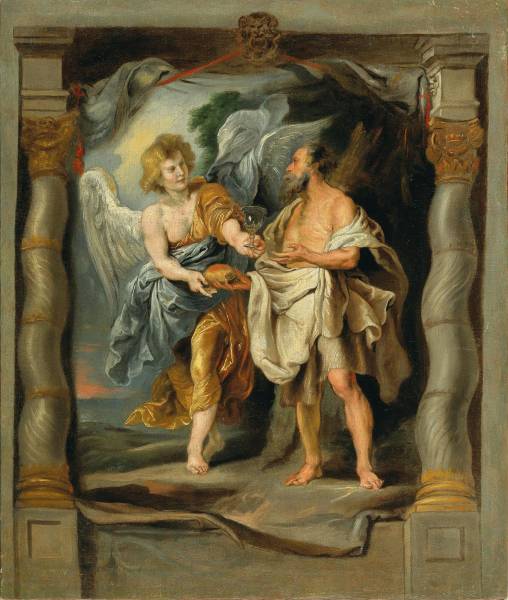
Abraham Meets Melchizedek
(c1625)
Peter Paul Rubens
(Siegen, 1577 - 1640)
Genesis 14
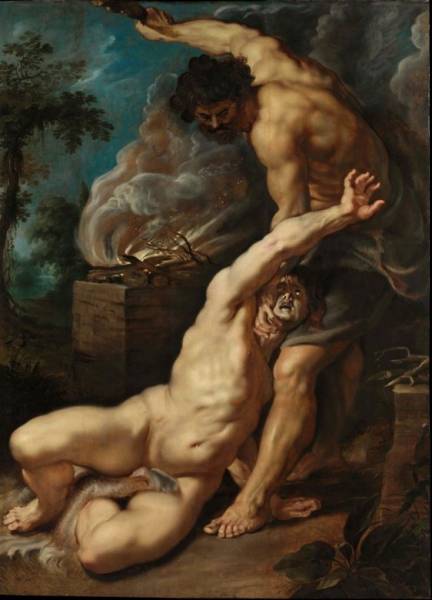
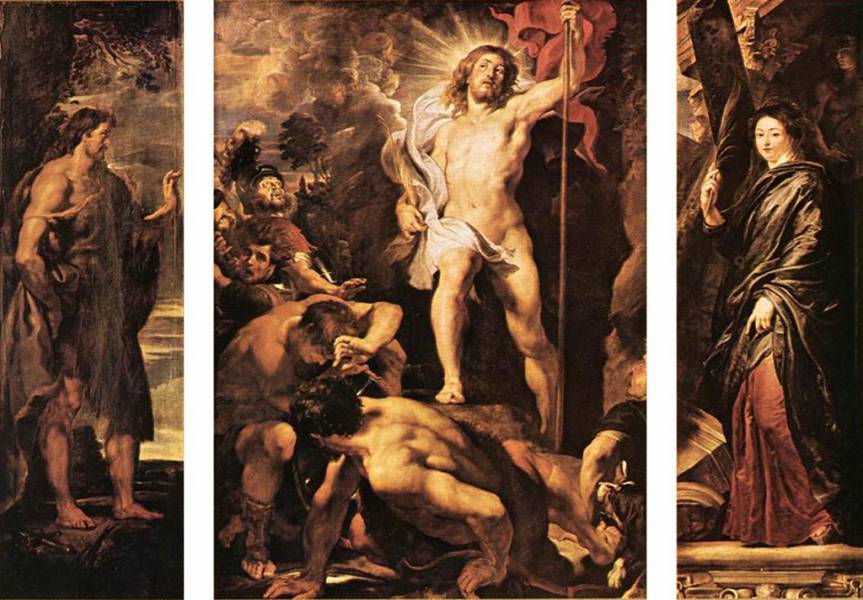
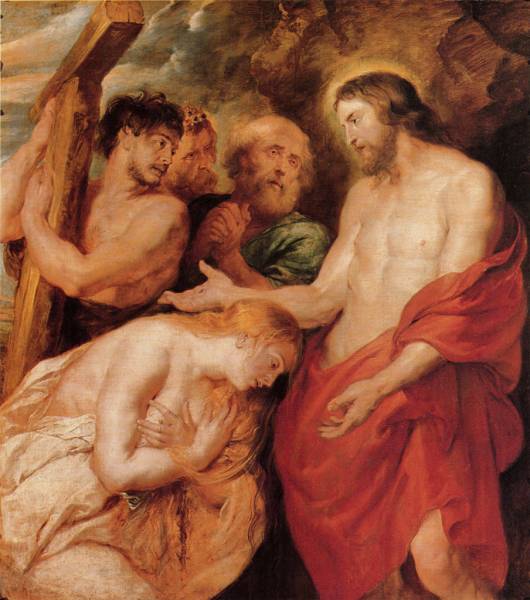
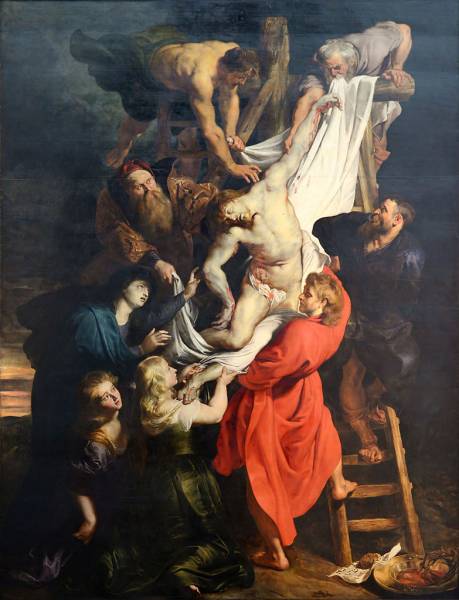
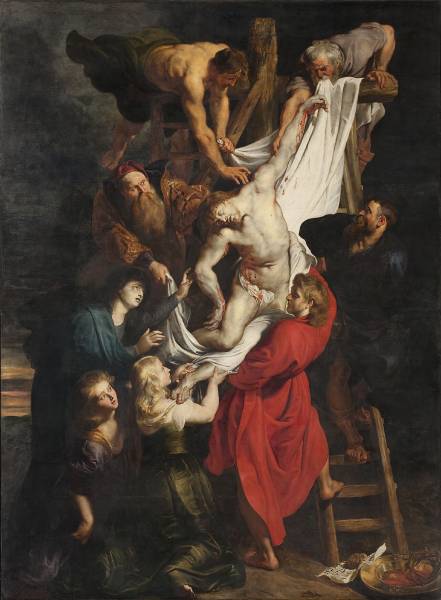
Peter Paul Rubens' monumental Descent from the Cross (1612-1614) captures the solemn yet triumphant moment described in Mark 15:42-47, when Joseph of Arimathea and others carefully lower Christ's lifeless body from the cross. Commissioned by the Confraternity of the Arquebusiers for Antwerp's Cathedral of Our Lady, where it remains today, this masterwork transforms the biblical narrative into a deeply emotional meditation on sacrifice and redemption. The scene unfolds with ritualistic reverence as the faithful gather to receive their Savior's body, creating an intimate moment of shared grief and devotion.
Rubens orchestrates the composition with masterful dramatic intensity, positioning Christ's pale, muscular form as the central focal point against rich crimson drapery. The artist's characteristic dynamic movement flows through the painting as multiple figures work in unison to support and lower the body, their expressions conveying profound sorrow yet dignified restraint. The Virgin Mary, reimagined through Counter-Reformation ideals, displays strength and fortitude rather than collapse, embodying the Catholic doctrine of Co-redemptrix. Rich symbolism permeates every element: the luminous flesh tones emphasize Christ's divine nature, while the careful positioning of hands and fabric creates a sense of sacred ritual that invites viewers into contemplative participation.
Created during the height of the Counter-Reformation, this painting exemplifies Catholic art's renewed emphasis on emotional engagement and doctrinal clarity. Rubens successfully balances Italian Mannerist influences with Flemish attention to detail, creating a work that speaks both to artistic sophistication and popular devotion. The inclusion of Saint Christopher, patron of the commissioning guild, demonstrates how religious art served both spiritual and civic purposes. This masterpiece has endured remarkable historical upheavals, twice removed by occupying forces to Paris and Berlin before returning home, testament to its recognition as one of Rubens' greatest achievements and a cornerstone of Baroque religious art.
Found in: Mark, Mark 15, 17th century
42 When evening had now come, because it was the Preparation Day, that is, the day before the Sabbath,
43 Joseph of Arimathaea, a prominent council member who also himself was looking for God’s Kingdom, came. He boldly went in to Pilate, and asked for Jesus’ body.
44 Pilate marveled if he were already dead; and summoning the centurion, he asked him whether he had been dead long.
45 When he found out from the centurion, he granted the body to Joseph.
46 He bought a linen cloth, and taking him down, wound him in the linen cloth, and laid him in a tomb which had been cut out of a rock. He rolled a stone against the door of the tomb.
47 Mary Magdalene and Mary, the mother of Joses, saw where he was laid.
Mark 15:42-47 · World English Bible

1577 - 1640
Siegen, Germany
Peter Paul Rubens was a Flemish artist. He is considered the most influential artist of Flemish Baroque tradition. Rubens's highly charged compositions reference erudite aspects of classical and Christian history. His unique and immensely popular Baroque style emphasized movement, colour, and sensuality, which followed the immediate, dramatic artistic style promoted in the Counter-Reformation. Rubens specialized in making altarpieces, portraits, landscapes, and history paintings of mythological and allegorical subjects.