Caravaggio
(Milan, 1571 - 1610)
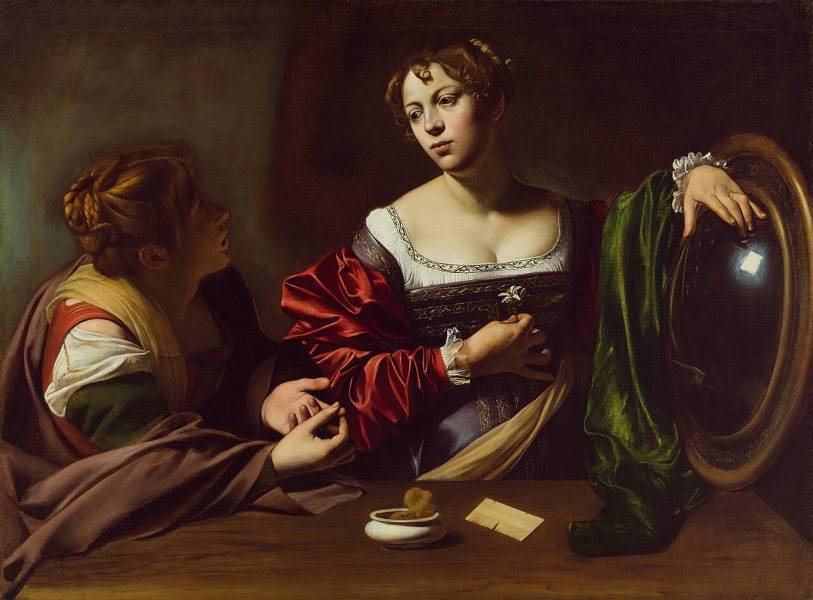
Luke 10:38-42
The Crowning with Thorns, a poignant and powerful painting by Caravaggio, depicts a pivotal scene from the New Testament, as described in Matthew 27:27-31. This haunting image shows Jesus Christ being subjected to cruel mockery and physical torment as a crown of thorns is forced onto his head, a brutal precursor to his crucifixion. The scene is a masterful representation of the intersection of human cruelty and divine suffering, as the soldiers and officials surrounding Christ demonstrate a callous disregard for his well-being.
Caravaggio's composition is characterized by a classical arrangement of contrasting horizontals and diagonals, which serves to heighten the emotional intensity of the scene. The twisted body of Christ, influenced by the Belvedere Torso, conveys a sense of tortured anguish, while the faces of the tormentors and onlookers are etched with cruelty, boredom, and indifference. The use of chiaroscuro, a hallmark of Caravaggio's style, adds depth and dramatic tension to the painting, drawing the viewer's eye to the central figure of Christ and emphasizing the spiritual significance of the event.
The Crowning with Thorns is a masterpiece of Baroque art, exemplifying the artist's ability to combine realism and style in a manner that is both deeply moving and intellectually engaging. The painting's themes of pain, suffering, and sadism are balanced by the serene and patient endurance of Christ, creating a powerful visual paradox that challenges the viewer to contemplate the mysteries of faith and redemption. As a work of biblical art, The Crowning with Thorns offers a profound and thought-provoking meditation on the human condition, one that continues to inspire and disturb audiences to this day.
As a significant work in Caravaggio's oeuvre, The Crowning with Thorns has been widely admired and studied for its technical mastery, emotional depth, and spiritual resonance. The painting's history, including its creation for Caravaggio's patron Vincenzo Giustiniani and its eventual acquisition by the Kunsthistorisches Museum in Vienna, is a testament to its enduring value and importance as a work of art. Today, The Crowning with Thorns remains a powerful and haunting image, one that invites the viewer to reflect on the complexities of human nature and the profound mysteries of the Christian faith.
Found in: Matthew, Matthew 27, 17th century
27 Then the governor’s soldiers took Jesus into the Praetorium, and gathered the whole garrison together against him.
28 They stripped him, and put a scarlet robe on him.
29 They braided a crown of thorns and put it on his head, and a reed in his right hand; and they kneeled down before him, and mocked him, saying, “Hail, King of the Jews!”
30 They spat on him, and took the reed and struck him on the head.
31 When they had mocked him, they took the robe off him, and put his clothes on him, and led him away to crucify him.
Matthew 27:27-31 · World English Bible
1571 - 1610
Milan, Italy
Michelangelo Merisi da Caravaggio (1571-1610) stands as one of history's most revolutionary and influential painters, whose dramatic innovations forever transformed religious art. Born in Milan, he moved to Rome in his twenties where he developed his extraordinary artistic vision, combining intense psychological realism with revolutionary lighting techniques. Despite his relatively short career, cut tragically short by his death at age 38, Caravaggio created some of the most powerful and emotionally compelling biblical paintings ever conceived.