Caravaggio
(Milan, 1571 - 1610)
Luke 10:38-42
Caravaggio's "The Supper at Emmaus" (1601) depicts the powerful moment from Luke 24:13-35 when the resurrected Christ reveals himself to two disciples at the village of Emmaus. According to the Gospel of Luke, after Christ's death, two followers journey to Emmaus and encounter a stranger they do not recognize as the risen Christ. During their evening meal, Christ breaks bread, revealing his identity before vanishing.
The composition features four male figures around a laden table. Christ sits centrally, wearing red and white robes with his right arm raised in blessing. Two disciples flank him — one older man with outspread arms forming a cross shape, wearing a pilgrim's shell brooch; the other seated with his back to the viewer, gripping his chair in astonishment. The innkeeper stands unshaven, oblivious to the revelation unfolding before him.
Caravaggio employs dramatic chiaroscuro — stark contrasts between light and shadow — to convey meaning. Christ and the believing disciples are brightly illuminated, while the innkeeper remains in shadow. A fruit basket teeters on the table's edge, with symbolic elements including bread, wine, and a roasted bird arranged throughout. The painting, now in the National Gallery in London, exemplifies Caravaggio's genius for transforming religious narrative into immediate, visceral experience, collapsing the distance between biblical history and the viewer's daily reality.
Found in: Luke, Luke 24, 17th century
13 Behold, two of them were going that very day to a village named Emmaus, which was sixty stadia from Jerusalem.
14 They talked with each other about all of these things which had happened.
15 While they talked and questioned together, Jesus himself came near, and went with them.
16 But their eyes were kept from recognizing him.
17 He said to them, “What are you talking about as you walk, and are sad?”
18 One of them, named Cleopas, answered him, “Are you the only stranger in Jerusalem who doesn’t know the things which have happened there in these days?”
19 He said to them, “What things?” They said to him, “The things concerning Jesus, the Nazarene, who was a prophet mighty in deed and word before God and all the people;
20 and how the chief priests and our rulers delivered him up to be condemned to death, and crucified him.
21 But we were hoping that it was he who would redeem Israel. Yes, and besides all this, it is now the third day since these things happened.
22 Also, certain women of our company amazed us, having arrived early at the tomb;
23 and when they didn’t find his body, they came saying that they had also seen a vision of angels, who said that he was alive.
24 Some of us went to the tomb, and found it just like the women had said, but they didn’t see him.”
25 He said to them, “Foolish men, and slow of heart to believe in all that the prophets have spoken!
26 Didn’t the Christ have to suffer these things and to enter into his glory?”
27 Beginning from Moses and from all the prophets, he explained to them in all the Scriptures the things concerning himself.
28 They came near to the village, where they were going, and he acted like he would go further.
29 They urged him, saying, “Stay with us, for it is almost evening, and the day is almost over.” He went in to stay with them.
30 When he had sat down at the table with them, he took the bread and gave thanks. Breaking it, he gave it to them.
31 Their eyes were opened, and they recognized him, and he vanished out of their sight.
32 They said to one another, “Weren’t our hearts burning within us, while he spoke to us along the way, and while he opened the Scriptures to us?”
33 They rose up that very hour, returned to Jerusalem, and found the eleven gathered together, and those who were with them,
34 saying, “The Lord is risen indeed, and has appeared to Simon!”
35 They related the things that happened along the way, and how he was recognized by them in the breaking of the bread.
Luke 24:13-35 · World English Bible
1571 - 1610
Milan, Italy
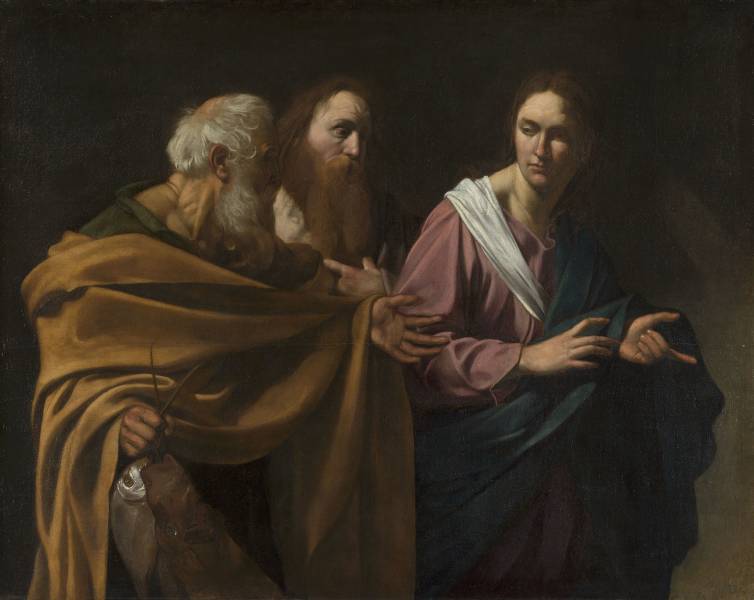
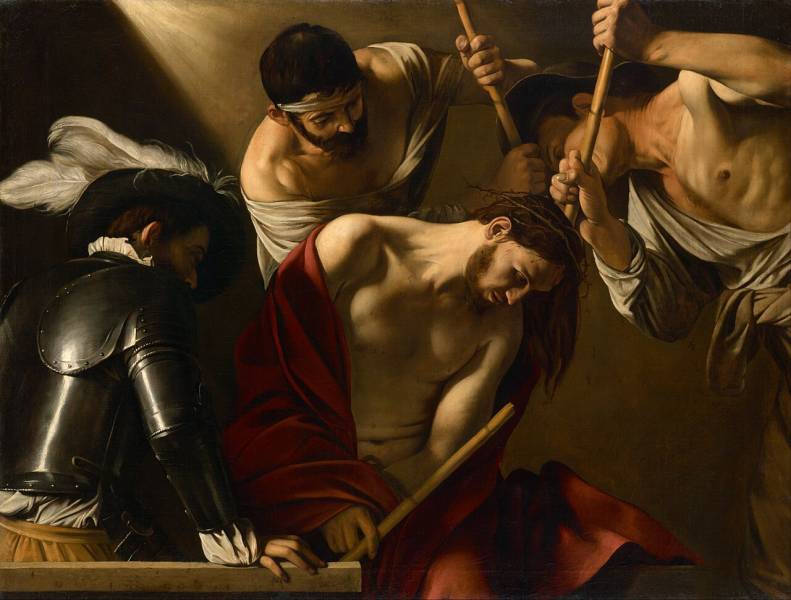
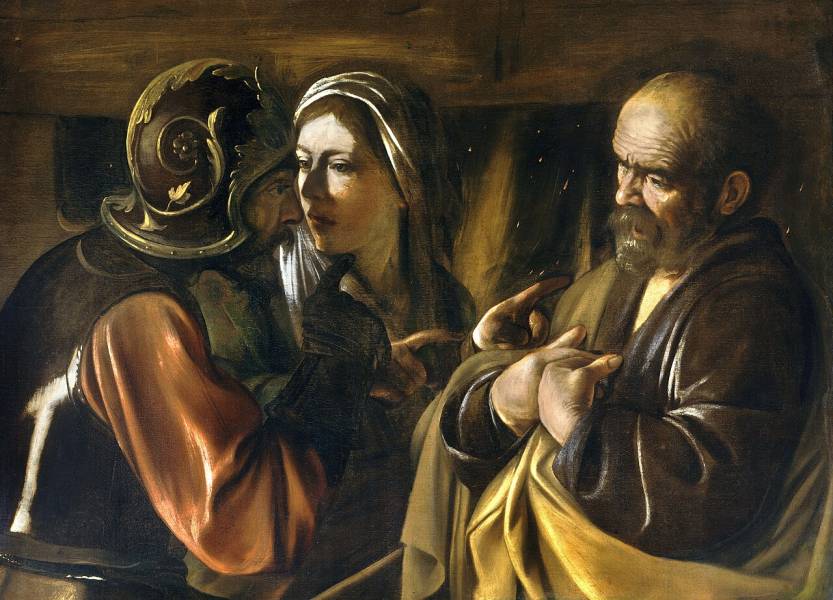
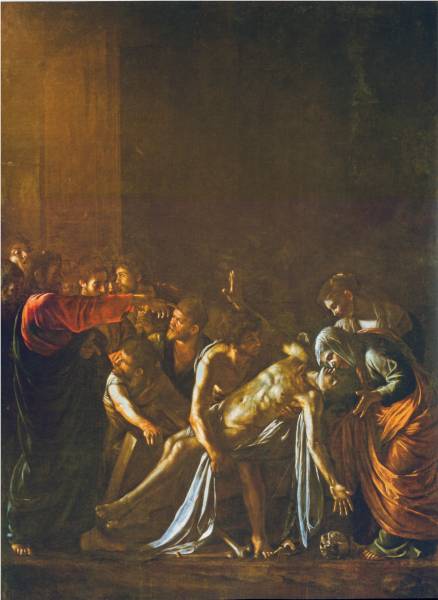
Michelangelo Merisi da Caravaggio (1571-1610) stands as one of history's most revolutionary and influential painters, whose dramatic innovations forever transformed religious art. Born in Milan, he moved to Rome in his twenties where he developed his extraordinary artistic vision, combining intense psychological realism with revolutionary lighting techniques. Despite his relatively short career, cut tragically short by his death at age 38, Caravaggio created some of the most powerful and emotionally compelling biblical paintings ever conceived.