Hieronymus Bosch
(Brabant, Netherland, 1450 - 1516)
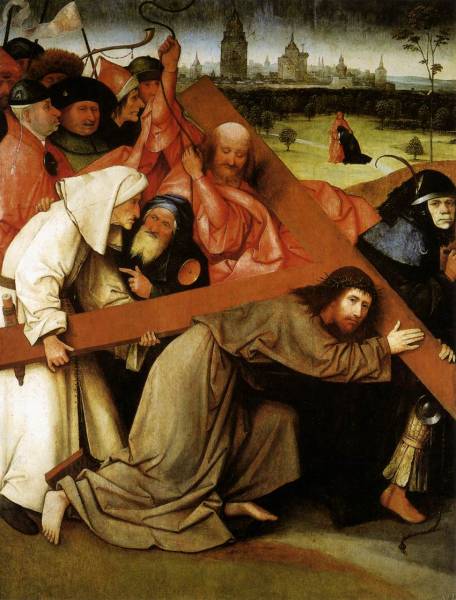
John 19:17-27
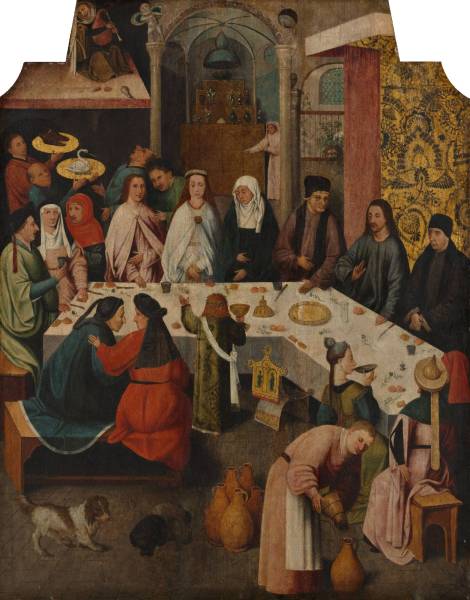
The Wedding at Cana, a painting attributed to Hieronymus Bosch, brings to life the iconic scene from John 2:1-11, where Jesus performs his first miracle, transforming water into wine at a wedding celebration. This biblical story is a pivotal moment in Jesus' ministry, as it reveals his divine nature and foreshadows the many miracles that will follow. Bosch's depiction of this scene is a testament to the artist's unique style and his ability to capture the essence of the narrative.
Although the specific composition and symbolism of Bosch's painting are not well-documented, it is likely that the artist employed his characteristic use of vivid colors and intricate details to convey the emotions and atmosphere of the scene. The wedding guests, Jesus, and the servants would have been painstakingly rendered, with each figure contributing to the overall sense of joy and wonder. Bosch's use of symbolism would have added layers of meaning to the painting, inviting the viewer to reflect on the spiritual significance of the event.
As a work of art, The Wedding at Cana holds significant importance in the history of biblical art. It demonstrates the enduring power of scripture to inspire creativity and artistic expression. The painting also highlights the artists' ability to interpret and reimagine biblical scenes in innovative and imaginative ways. Despite being created after 1550, Bosch's painting remains a compelling example of the Renaissance era's fascination with biblical narratives and the artistic innovations that defined this period.
The cultural and artistic context in which The Wedding at Cana was created is also noteworthy. During the 16th century, artists like Bosch were experimenting with new techniques and styles, pushing the boundaries of artistic expression. The painting's significance extends beyond its aesthetic appeal, as it reflects the artistic and theological preoccupations of its time. As a masterpiece of biblical art, The Wedding at Cana continues to inspire and captivate audiences, offering a unique window into the artistic and spiritual sensibilities of the past.
Found in: John, John 2, 15th century
1 The third day, there was a marriage in Cana of Galilee. Jesus’ mother was there.
2 Jesus also was invited, with his disciples, to the marriage.
3 When the wine ran out, Jesus’ mother said to him, “They have no wine.”
4 Jesus said to her, “Woman, what does that have to do with you and me? My hour has not yet come.”
5 His mother said to the servants, “Whatever he says to you, do it.”
6 Now there were six water pots of stone set there after the Jews’ way of purifying, containing two or three metretes apiece.
7 Jesus said to them, “Fill the water pots with water.” They filled them up to the brim.
8 He said to them, “Now draw some out, and take it to the ruler of the feast.” So they took it.
9 When the ruler of the feast tasted the water now become wine, and didn’t know where it came from (but the servants who had drawn the water knew), the ruler of the feast called the bridegroom,
10 and said to him, “Everyone serves the good wine first, and when the guests have drunk freely, then that which is worse. You have kept the good wine until now!”
11 This beginning of his signs Jesus did in Cana of Galilee, and revealed his glory; and his disciples believed in him.
John 2:1-11 · World English Bible

1450 - 1516
Brabant, Netherland
Hieronymus Bosch born Jheronimus van Aken (c. 1450 – 9 August 1516) was a Dutch/Netherlandish painter and draughtsman from Brabant. He is one of the most notable representatives of the Early Netherlandish painting school. His work contains fantastic illustrations of religious concepts and narratives. Within his lifetime his work was collected in the Netherlands, Austria, and Spain, and widely copied, especially his macabre and nightmarish depictions of hell.