Caravaggio
(Milan, 1571 - 1610)
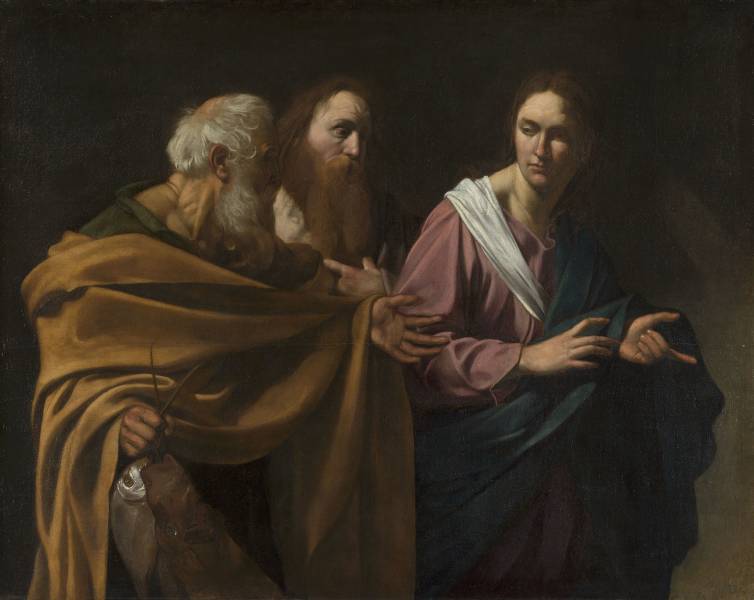
Matthew 4:18-20
The painting "Mary Magdalene and Martha of Bethany" by Caravaggio depicts a poignant scene from the New Testament, as described in Luke 10:38-42. In this biblical account, Jesus visits the home of Martha and Mary, sisters from Bethany, where Martha is busy preparing a meal while Mary sits at Jesus' feet, listening intently to his words. The painting captures a moment of introspection and conversion, as Martha, already devoted to Jesus, attempts to persuade her sister to follow a virtuous path. The scene is one of quiet intensity, with Martha's passionate arguments contrasting with Mary's contemplative demeanor.
Artistically, the composition is characterized by Caravaggio's signature use of chiaroscuro, with deep shadows and soft, golden light illuminating the faces and figures of the two women. The symbolism in the painting is equally striking, with Mary's mirror and orange blossom serving as potent reminders of the vanity and worldly desires she is about to renounce. The mirror, in particular, reflects not only Mary's hand but also a rectangular window, symbolizing the spiritual illumination that is about to transform her life. The cream-brown table in front of the sisters displays a few carefully chosen objects, including an ivory comb and a dish with a sponge, which serve as humble reminders of the simple, virtuous life that Mary is being called to embrace.
The painting's significance extends beyond its beautiful composition and symbolism, speaking as it does to the enduring themes of faith, redemption, and personal transformation. Caravaggio's work is a powerful exploration of the human experience, one that continues to resonate with audiences today. The fact that the models for the painting were two well-known courtesans of the time, Anna Bianchini and Fillide Melandroni, adds a layer of complexity to the work, highlighting the tension between worldly desires and spiritual aspirations that lies at the heart of the biblical narrative.
As a work of art, "Mary Magdalene and Martha of Bethany" is a masterpiece of Baroque painting, one that showcases Caravaggio's innovative use of light and shadow, as well as his profound understanding of the human psyche. The painting's history is equally fascinating, with its origins tracing back to the late 16th century and its eventual acquisition by the Detroit Institute of Arts in 1973. Today, it remains one of the most celebrated and thought-provoking works in the Caravaggio oeuvre, a testament to the enduring power of art to inspire, to provoke, and to transform us.
Found in: Luke, Luke 10, 16th century
38 As they went on their way, he entered into a certain village, and a certain woman named Martha received him into her house.
39 She had a sister called Mary, who also sat at Jesus’ feet, and heard his word.
40 But Martha was distracted with much serving, and she came up to him, and said, “Lord, don’t you care that my sister left me to serve alone? Ask her therefore to help me.”
41 Jesus answered her, “Martha, Martha, you are anxious and troubled about many things,
42 but one thing is needed. Mary has chosen the good part, which will not be taken away from her.”
Luke 10:38-42 · World English Bible
1571 - 1610
Milan, Italy
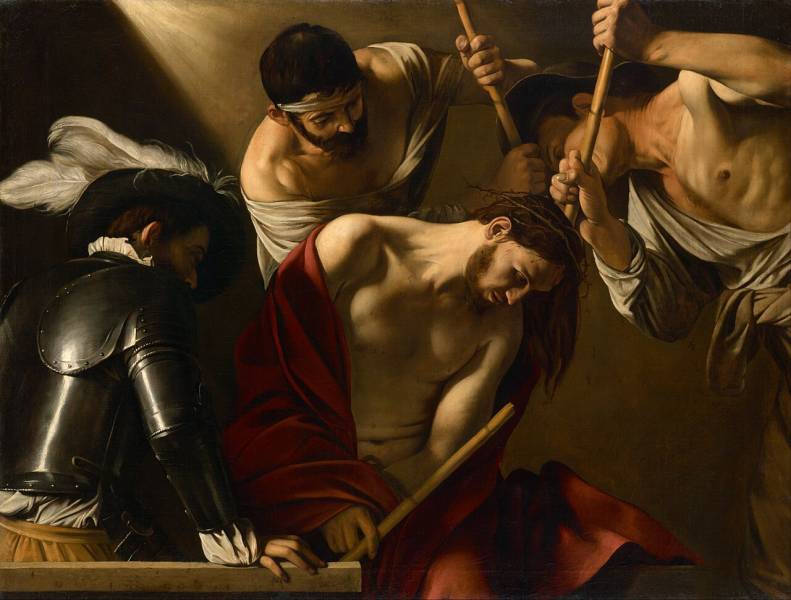
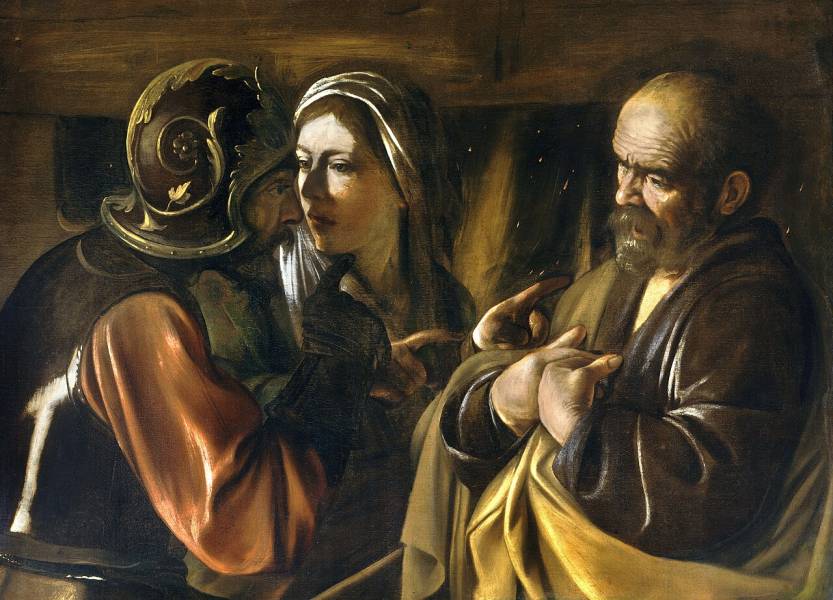
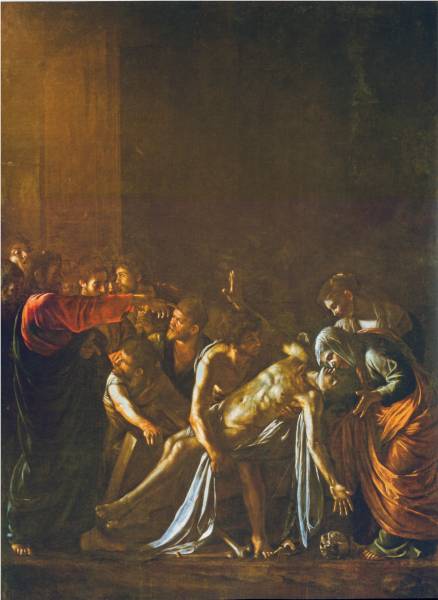
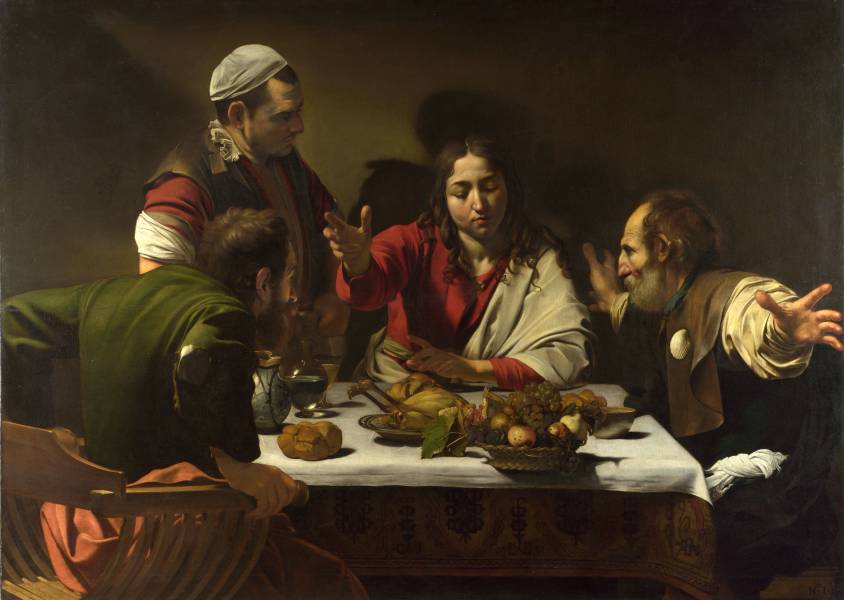
Michelangelo Merisi da Caravaggio (1571-1610) stands as one of history's most revolutionary and influential painters, whose dramatic innovations forever transformed religious art. Born in Milan, he moved to Rome in his twenties where he developed his extraordinary artistic vision, combining intense psychological realism with revolutionary lighting techniques. Despite his relatively short career, cut tragically short by his death at age 38, Caravaggio created some of the most powerful and emotionally compelling biblical paintings ever conceived.