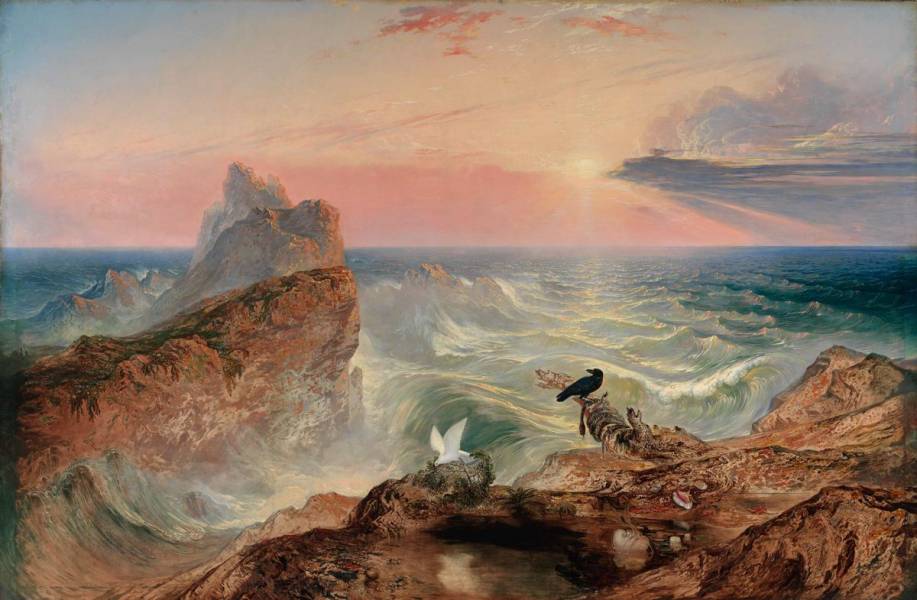
The Assuaging of the Waters
(c1840)
John Martin
(Northumberland, 1789 - 1854)
Genesis 8:1-14
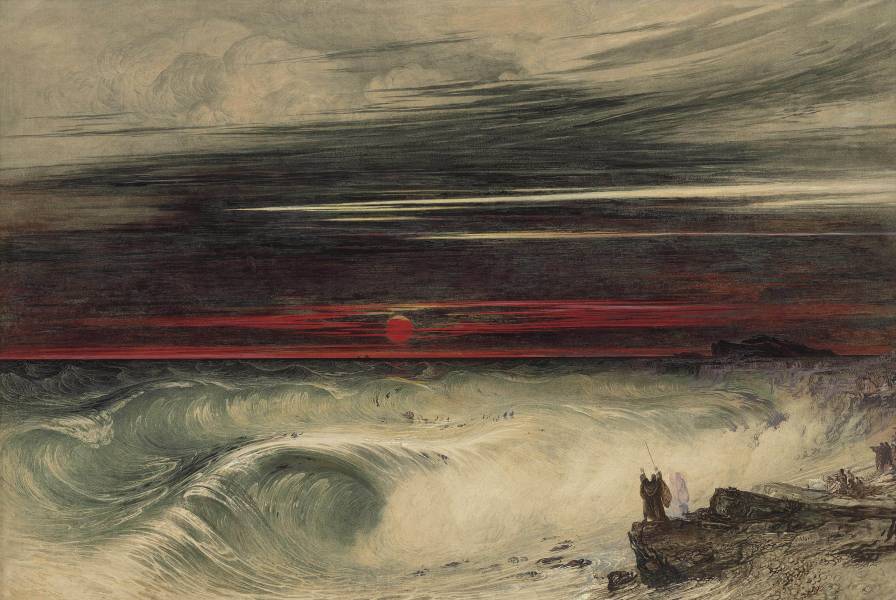
The British painter and printmaker John Martin made his reputation with sublime scenes of vast spaces overwhelmed by classical architecture and countless figures. He made this drawing in preparation for the painting that launched his future successes: Joshua Commanding the Sun to Stand Still upon Gibeon (United Grand Lodge of England, London, exhibited at the Royal Academy in 1816, reproduced in lithograph and two mezzotints in 1827). It shows Joshua, the Old Testament commander of the Israelite armies, standing on the rocky outcropping in the foreground. He commands the sun and moon to stop in their courses so that the Israelites may destroy their fleeing enemies-the Amorites, who had been attacking the city of Gibeon-in the prolonged daylight (Joshua 10:12-13).
Found in: Joshua, Joshua 10, 19th century
This artwork depicts Joshua: 10:1-15.
The passage text is being fetched and will appear shortly.

1789 - 1854
Northumberland, England
John Martin (19 July 1789 – 17 February 1854) was an English Romantic painter, engraver and illustrator. He was celebrated for his typically vast and melodramatic paintings of religious subjects and fantastic compositions, populated with minute figures placed in imposing landscapes. Martin's paintings, and the prints made from them, enjoyed great success with the general public—in 1821 Thomas Lawrence referred to him as "the most popular painter of his day"—but were lambasted by John Ruskin and other critics.