John Martin
(Northumberland, 1789 - 1854)
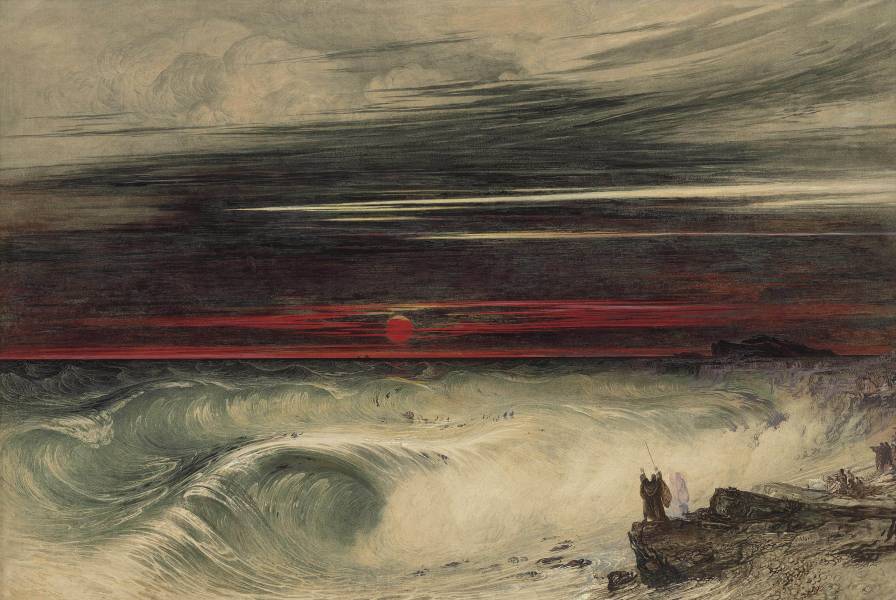
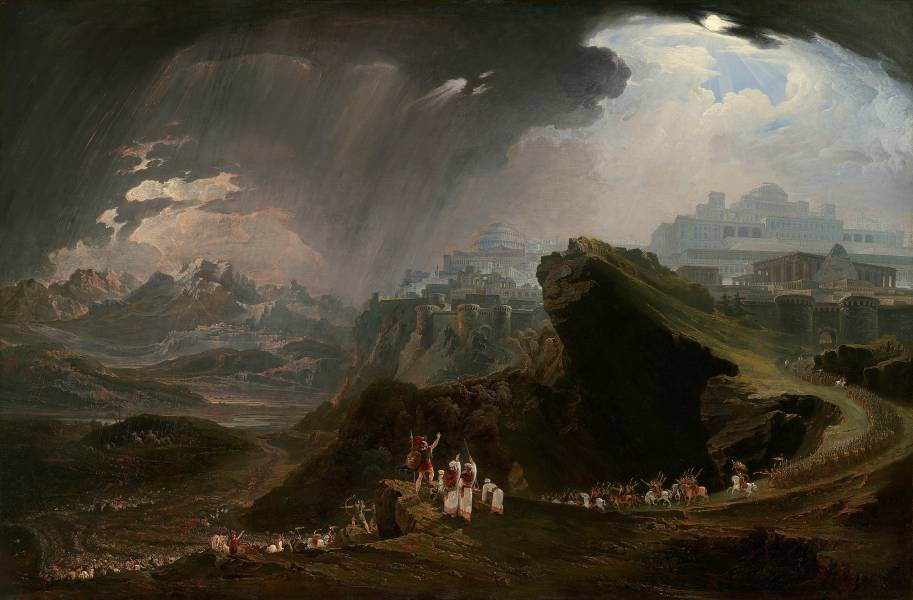
Joshua: 10:1-15
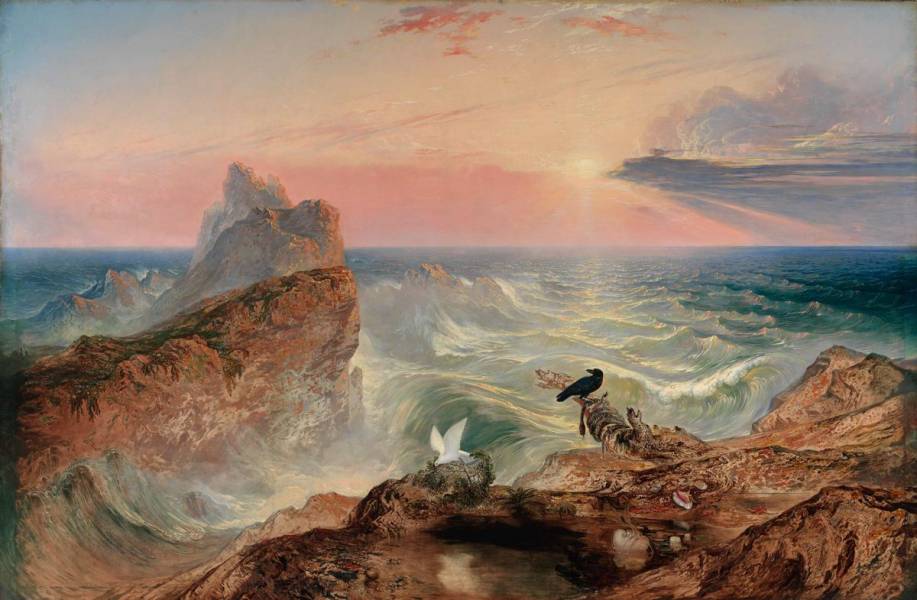
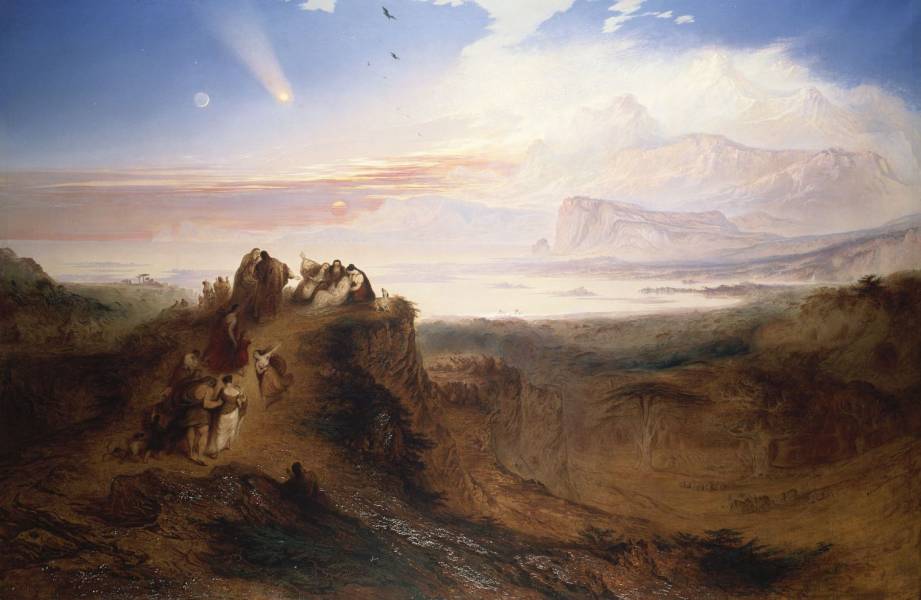
John Martin's artwork delves into the compelling concept of nature's sublime dominance over humanity. In his vision, Martin conceived a scenario where the sun, moon, and a comet once collided in antiquity, unleashing a colossal flood that swept away various life forms from the face of the Earth. This notion, intriguingly, he shared with the French naturalist Baron Georges Cuvier, who had the opportunity to witness "The Deluge" within Martin's studio. Beyond just alluding to this cosmic collision and the resultant cataclysmic inundation, "The Deluge," replete with its submerged and devastated figures strewn across the canvas, draws inspiration from the biblical flood narrative found in the opening book of the Bible. This narrative recounts how, in response to humanity's corruption, God enacted divine retribution by wiping out nearly all living entities on the planet.
Within the painting, Martin seamlessly intertwines elements of both religion and science, infusing his composition with hues of Romantic literature. One of his sources of inspiration was Lord Byron's dramatic work "Heaven and Earth" (1821). The amalgamation of these varied influences produces a remarkable synthesis within "The Deluge." When this masterpiece graced the walls of the Paris Salon in 1835, it earned the distinguished accolade of a gold medal, conferred upon it by none other than King Louis-Philippe.
Found in: Genesis, Genesis 7, 19th century
17 The flood was forty days on the earth. The waters increased, and lifted up the ship, and it was lifted up above the earth.
18 The waters rose, and increased greatly on the earth; and the ship floated on the surface of the waters.
19 The waters rose very high on the earth. All the high mountains that were under the whole sky were covered.
20 The waters rose fifteen cubits higher, and the mountains were covered.
21 All flesh died that moved on the earth, including birds, livestock, animals, every creeping thing that creeps on the earth, and every man.
22 All on the dry land, in whose nostrils was the breath of the spirit of life, died.
23 Every living thing was destroyed that was on the surface of the ground, including man, livestock, creeping things, and birds of the sky. They were destroyed from the earth. Only Noah was left, and those who were with him in the ship.
24 The waters flooded the earth one hundred fifty days.
Genesis 7:17-24 · World English Bible

1789 - 1854
Northumberland, England
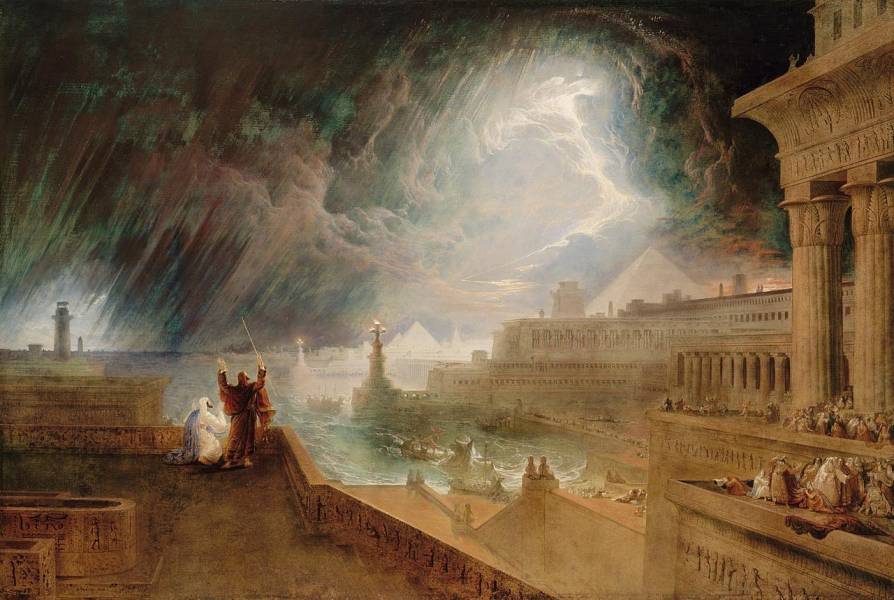
John Martin (19 July 1789 – 17 February 1854) was an English Romantic painter, engraver and illustrator. He was celebrated for his typically vast and melodramatic paintings of religious subjects and fantastic compositions, populated with minute figures placed in imposing landscapes. Martin's paintings, and the prints made from them, enjoyed great success with the general public—in 1821 Thomas Lawrence referred to him as "the most popular painter of his day"—but were lambasted by John Ruskin and other critics.