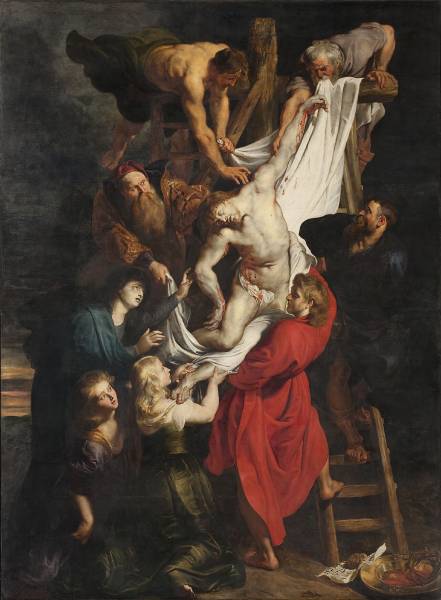
Golgotha
(1649)
Govert Flinck
(Kleve, 1615 - 1660)
Matthew 27:45-56
"Bathsheba Makes an Appeal to David" by Govert Flinck is an oil-on-canvas painting created in 1651, inspired by the biblical passage from 1 Kings 1:1-27. This artwork portrays a significant moment in the biblical narrative, where Bathsheba, the wife of King David and the mother of Solomon, approaches David to secure the succession of her son to the throne.
Here are some key aspects to analyze in "Bathsheba Makes an Appeal to David":
1. Emotional Expression: Govert Flinck adeptly captures the emotions of the characters in the painting. Bathsheba's face shows concern and determination as she makes her appeal to David. King David's response is crucial, and his expression may reflect a mix of surprise, contemplation, and empathy as he listens to her plea. The artist's ability to convey these emotions contributes to the painting's dramatic intensity.
2. Symbolism: Like many historical and religious paintings, "Bathsheba Makes an Appeal to David" uses symbolism to convey deeper meanings. The objects and attire of the characters may hold symbolic significance related to their roles in the narrative. Analyzing these symbols can provide insight into the artist's interpretation of the story and the cultural context in which the painting was created.
3. Composition and Perspective: Flinck's composition directs the viewer's attention to the central figures of Bathsheba and David. The placement of the characters, the use of light and shadow, and the positioning of other elements in the scene create a balanced and visually engaging composition. The perspective adds a sense of depth, making the figures appear three-dimensional and lifelike.
4. Historical and Cultural Context: The painting was created during the Dutch Golden Age, a time when historical and biblical themes were popular in art. Artists often sought to depict moral and religious lessons through their work. Considering the cultural context can help in understanding how the artist's interpretation aligns with the prevailing beliefs and values of the time.
5. Size and Medium: With dimensions of 152cm ✕ 104cm, the painting is of substantial size, allowing for intricate details and refined brushwork. The use of oil on canvas was a common medium for large-scale artworks during this period, as it provided artists with the flexibility to create detailed and vibrant compositions.
In conclusion, "Bathsheba Makes an Appeal to David" by Govert Flinck is a compelling portrayal of a crucial moment in the biblical narrative. Through the skilled use of emotional expression, symbolism, composition, and perspective, Flinck brings the characters to life and presents a thought-provoking scene that invites viewers to reflect on the complexities of power, family, and loyalty. The artwork stands as a testament to the enduring appeal of biblical themes in art and Govert Flinck's talent as a prominent painter of the Dutch Golden Age.
Found in: 1 Kings, 1 Kings 1, 17th century, David and Bathsheba
1 Now king David was old and advanced in years; and they covered him with clothes, but he couldn’t keep warm.
2 Therefore his servants said to him, “Let a young virgin be sought for my lord the king. Let her stand before the king, and cherish him; and let her lie in your bosom, that my lord the king may keep warm.”
3 So they sought for a beautiful young lady throughout all the borders of Israel, and found Abishag the Shunammite, and brought her to the king.
4 The young lady was very beautiful; and she cherished the king, and served him; but the king didn’t know her intimately.
5 Then Adonijah the son of Haggith exalted himself, saying, “I will be king.” Then he prepared him chariots and horsemen, and fifty men to run before him.
6 His father had not displeased him at any time in saying, “Why have you done so?” and he was also a very handsome man; and he was born after Absalom.
7 He conferred with Joab the son of Zeruiah, and with Abiathar the priest; and they followed Adonijah and helped him.
8 But Zadok the priest, Benaiah the son of Jehoiada, Nathan the prophet, Shimei, Rei, and the mighty men who belonged to David, were not with Adonijah.
9 Adonijah killed sheep, cattle, and fatlings by the stone of Zoheleth, which is beside En Rogel; and he called all his brothers, the king’s sons, and all the men of Judah, the king’s servants;
10 but he didn’t call Nathan the prophet, and Benaiah, and the mighty men, and Solomon his brother.
11 Then Nathan spoke to Bathsheba the mother of Solomon, saying, “Haven’t you heard that Adonijah the son of Haggith reigns, and David our lord doesn’t know it?
12 Now therefore come, please let me give you counsel, that you may save your own life, and your son Solomon’s life.
13 Go in to king David, and tell him, ‘Didn’t you, my lord, king, swear to your servant, saying, “Assuredly Solomon your son shall reign after me, and he shall sit on my throne?” Why then does Adonijah reign?’
14 Behold, while you are still talking there with the king, I will also come in after you and confirm your words.”
15 Bathsheba went in to the king in his room. The king was very old; and Abishag the Shunammite was serving the king.
16 Bathsheba bowed, and showed respect to the king. The king said, “What would you like?”
17 She said to him, “My lord, you swore by Yahweh your God to your servant, ‘Assuredly Solomon your son shall reign after me, and he shall sit on my throne.’
18 Now, behold, Adonijah reigns; and you, my lord the king, don’t know it.
19 He has slain cattle and fatlings and sheep in abundance, and has called all the sons of the king, Abiathar the priest, and Joab the captain of the army; but he hasn’t called Solomon your servant.
20 You, my lord the king, the eyes of all Israel are on you, that you should tell them who will sit on the throne of my lord the king after him.
21 Otherwise it will happen, when my lord the king sleeps with his fathers, that I and my son Solomon will be considered criminals.”
22 Behold, while she was still talking with the king, Nathan the prophet came in.
23 They told the king, saying, “Behold, Nathan the prophet!” When he had come in before the king, he bowed himself before the king with his face to the ground.
24 Nathan said, “My lord, king, have you said, ‘Adonijah shall reign after me, and he shall sit on my throne?’
25 For he has gone down today, and has slain cattle, fatlings, and sheep in abundance, and has called all the king’s sons, the captains of the army, and Abiathar the priest. Behold, they are eating and drinking before him, and saying, ‘Long live king Adonijah!’
26 But he hasn’t called me, even me your servant, Zadok the priest, Benaiah the son of Jehoiada, and your servant Solomon.
27 Was this thing done by my lord the king, and you haven’t shown to your servants who should sit on the throne of my lord the king after him?”
1 Kings 1:1-27 · World English Bible
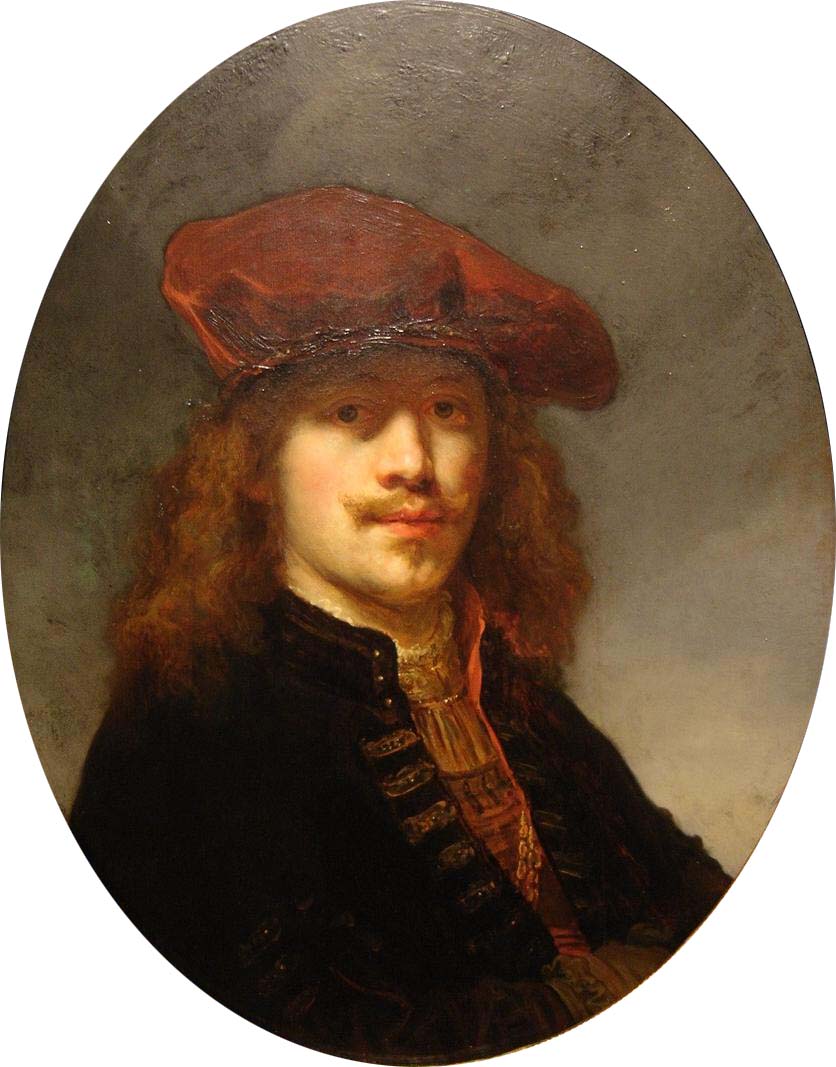
1615 - 1660
Kleve, Netherland
Govert Flinck was apprenticed by his father to a silk mercer, but having secretly acquired a passion for etching and drawing, was sent to Leeuwarden, where he boarded in the house of Lambert Jacobszoon, a Mennonite, better known as an itinerant preacher than as a painter.