Thomas Cole
(Bolton le Moors, 1801 - 1848)
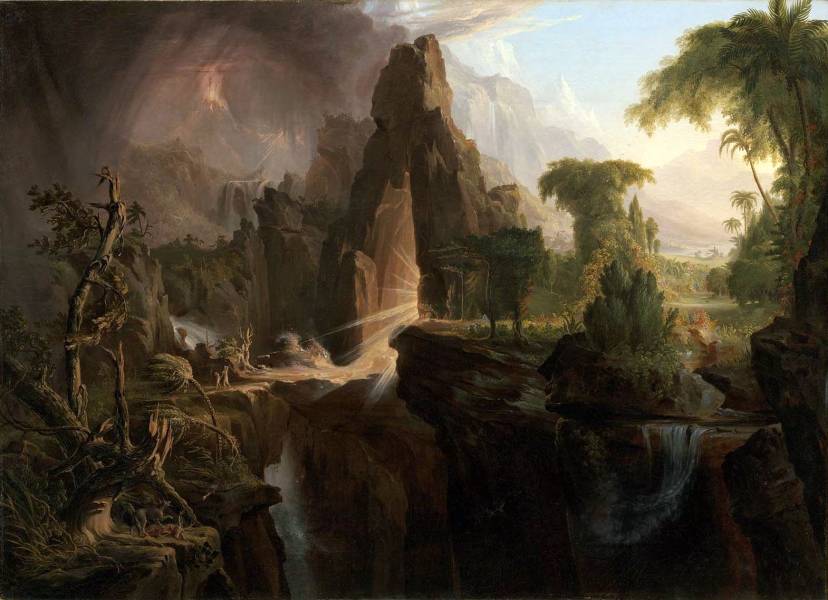
Genesis 3:21-24
The Subsiding of the Waters of the Deluge is an 1829 painting by English-born American artist Thomas Cole depicting the aftermath of the Great Flood.
The painting is a 90.8 x 121.4 cm oil on canvas. It is on display at the Smithsonian American Art Museum in Washington, D.C..
Cole collected extensive notes on geology and consulted geologists and other scientists such as Benjamin Silliman to gather background information on what the world might have looked like after the Biblical Flood.
The painting shows a barren rocky coastscape as seen from the viewpoint of a cavern. A waterfall created by the receding waters of the Flood flows towards the sea. Debris such as broken trees, a destroyed mast, and even a skull are seen upon the coast. The land has been stripped of soil. The sky outside the cavern is bright and in the distance floats an Ark and a dove flies.
The painting is interpreted as representing rebirth and redemption through destruction.[3] The cleansing nature of the Flood is meant to represent America as a "New Eden" free of the abusive power of the European monarchies.
Found in: Genesis, Genesis 8, 19th century
1 God remembered Noah, all the animals, and all the livestock that were with him in the ship; and God made a wind to pass over the earth. The waters subsided.
2 The deep’s fountains and the sky’s windows were also stopped, and the rain from the sky was restrained.
3 The waters continually receded from the earth. After the end of one hundred fifty days the waters decreased.
4 The ship rested in the seventh month, on the seventeenth day of the month, on Ararat’s mountains.
5 The waters receded continually until the tenth month. In the tenth month, on the first day of the month, the tops of the mountains were visible.
6 At the end of forty days, Noah opened the window of the ship which he had made,
7 and he sent out a raven. It went back and forth, until the waters were dried up from the earth.
8 He himself sent out a dove to see if the waters were abated from the surface of the ground,
9 but the dove found no place to rest her foot, and she returned into the ship to him, for the waters were on the surface of the whole earth. He put out his hand, and took her, and brought her to him into the ship.
10 He waited yet another seven days; and again he sent the dove out of the ship.
11 The dove came back to him at evening and, behold, in her mouth was a freshly plucked olive leaf. So Noah knew that the waters were abated from the earth.
12 He waited yet another seven days, and sent out the dove; and she didn’t return to him anymore.
13 In the six hundred first year, in the first month, the first day of the month, the waters were dried up from the earth. Noah removed the covering of the ship, and looked. He saw that the surface of the ground was dried.
14 In the second month, on the twenty-seventh day of the month, the earth was dry.
15 God spoke to Noah, saying,
Genesis 8:1-15 · World English Bible
1801 - 1848
Bolton le Moors, England
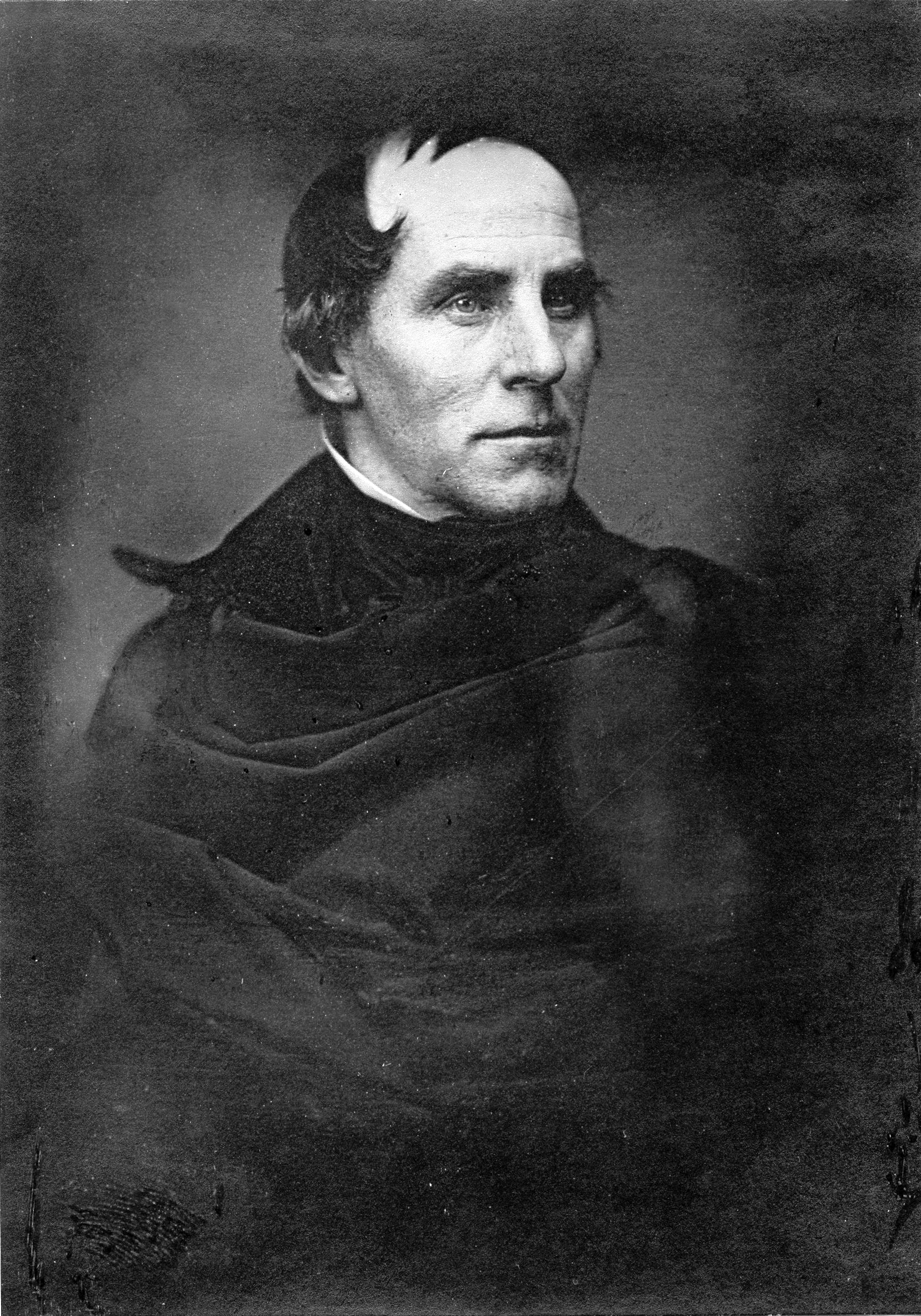
Thomas Cole (February 1, 1801 – February 11, 1848) was an English-born American painter known for his landscape and history paintings. One of the major 19th-century American painters, he is regarded as the founder of the Hudson River School, an American art movement that flourished in the mid-19th century. Cole's work is known for its romantic portrayal of the American wilderness.