Rembrandt Harmenszoon van Rijn
(Leiden, Netherland, 1606 - 1669)
Genesis 18:1-12
"Daniel's Vision" by Rembrandt Harmenszoon van Rijn is an oil-on-canvas painting created around 1650, based on the biblical passage from Daniel 8:15-19. As with many of Rembrandt's works, this painting showcases his extraordinary talent in capturing emotional depth and human expressions, while also masterfully interpreting a biblical scene.
The artwork depicts a specific vision that the prophet Daniel had, as described in the book of Daniel. In this vision, Daniel witnesses the angel Gabriel explaining the meaning of the vision to him. Gabriel's presence is often depicted in the painting as a figure with a celestial appearance, signifying his divine nature.
Here are some key aspects to analyze in "Daniel's Vision":
1. Emotional Expression: Rembrandt was renowned for his ability to convey a wide range of emotions through his subjects, and "Daniel's Vision" is no exception. The expressions on Daniel's face and Gabriel's ethereal appearance evoke a sense of wonder, awe, and spiritual connection. The artist's skillful use of light and shadow enhances the emotional impact of the scene.
2. Symbolism: The painting is laden with symbolic elements drawn from the biblical text. Rembrandt's attention to detail allows for the inclusion of various symbolic items and visual cues that help convey the narrative's religious significance. These symbols can hold multiple layers of meaning, enriching the viewer's understanding of the vision.
3. Composition and Perspective: Rembrandt's composition draws the viewer's attention to the central figures of Daniel and Gabriel, placing them prominently in the scene. The use of lighting and shadow creates a sense of depth and three-dimensionality, adding to the painting's realism and dramatic effect.
4. Historical and Cultural Context: The artwork was created in the mid-17th century, during the Dutch Golden Age when religious themes and biblical stories were commonly portrayed in art. This context can influence the artistic choices and interpretations made by Rembrandt, reflecting the prevailing religious sentiments of the time.
5. Size and Medium: The dimensions of the painting, 119cm ✕ 98cm, contribute to its visual impact. The large canvas allows for intricate details and textures to be displayed, enhancing the overall viewing experience.
In conclusion, "Daniel's Vision" by Rembrandt Harmenszoon van Rijn is a remarkable example of the artist's ability to capture powerful emotions and convey deep religious themes through his work. Through skillful use of composition, symbolism, and emotional expression, Rembrandt brings the biblical passage to life, inviting viewers to contemplate the spiritual significance of the vision experienced by the prophet Daniel. The painting stands as a testament to the enduring power of religious art and Rembrandt's enduring legacy as one of the greatest artists in history.
Found in: Daniel, Daniel 8, 17th century, Daniel
15 When I, even I Daniel, had seen the vision, I sought to understand it. Then behold, there stood before me something like the appearance of a man.
16 I heard a man’s voice between the banks of the Ulai, which called, and said, “Gabriel, make this man understand the vision.”
17 So he came near where I stood; and when he came, I was frightened, and fell on my face; but he said to me, “Understand, son of man; for the vision belongs to the time of the end.”
18 Now as he was speaking with me, I fell into a deep sleep with my face toward the ground; but he touched me, and set me upright.
19 He said, “Behold, I will make you know what will be in the latter time of the indignation; for it belongs to the appointed time of the end.
Daniel 8:15-19 · World English Bible
1606 - 1669
Leiden, Netherland
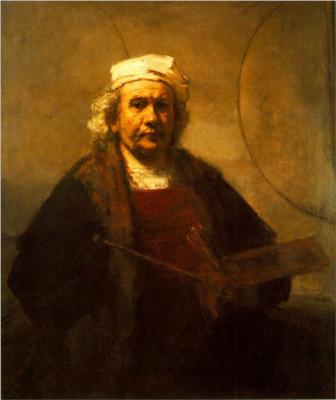
Rembrandt Harmenszoon van Rijn (15 July 1606– 4 October 1669) was a Dutch draughtsman, painter and printmaker. An innovative and prolific master in three media,he is generally considered one of the greatest visual artists in the history of art and the most important in Dutch art history.Unlike most Dutch masters of the 17th century, Rembrandt's works depict a wide range of style and subject matter, from portraits and self-portraits to landscapes, genre scenes, allegorical and historical scenes, biblical and mythological…