The Adoration of the Golden Calf
(c1634)
Nicolas Poussin
(Les Andelys, 1594 - 1665)
Exodus 32:4
Solomon was the son of David and Bathsheba, and third king of united Israel; his wisdom was proverbial. Solomon's rein saw the construction of the Temple at Jerusalem.
According to the biblical story Solomon was called upon to judge between the claims of two prostitutes who dwelt in one house, each of whom had given birth to a child at the same time. One infant had died and each woman then claimed that the other belonged to her. To determine the truth the king ordered a sword to be brought, saying, 'Cut the living child in two and give half to one and half to the other.' At this, the true mother revealed herself by renouncing her claim to the child in order that its life might be spared. The child was restored to her.
The scene, widely depicted in Christian art, shows Solomon on his throne, the two suppliant women before him. An executioner stands holding the living child aloft in one hand, with a sword in the other. The dead child lies in the hand of one of the women. The subject was made to prefigure the Last Judgment, and came to be used as a symbol of Justice in a wider sense.
There are many preparatory drawings to this painting in various French museums.
Found in: 1 Kings, 1 Kings 3, 17th century
16 Then two women who were prostitutes came to the king, and stood before him.
17 The one woman said, “Oh, my lord, I and this woman dwell in one house. I delivered a child with her in the house.
18 The third day after I delivered, this woman delivered also. We were together. There was no stranger with us in the house, just us two in the house.
19 This woman’s child died in the night, because she lay on it.
20 She arose at midnight, and took my son from beside me, while your servant slept, and laid it in her bosom, and laid her dead child in my bosom.
21 When I rose in the morning to nurse my child, behold, it was dead; but when I had looked at it in the morning, behold, it was not my son, whom I bore.”
22 The other woman said, “No; but the living one is my son, and the dead one is your son.” The first one said, “No; but the dead one is your son, and the living one is my son.” Thus they spoke before the king.
23 Then the king said, “One says, ‘This is my son who lives, and your son is the dead;’ and the other says, ‘No; but your son is the dead one, and my son is the living one.’”
24 The king said, “Get me a sword.” So they brought a sword before the king.
25 The king said, “Divide the living child in two, and give half to the one, and half to the other.”
26 Then the woman whose the living child was spoke to the king, for her heart yearned over her son, and she said, “Oh, my lord, give her the living child, and in no way kill him!” But the other said, “He shall be neither mine nor yours. Divide him.”
27 Then the king answered, “Give her the living child, and definitely do not kill him. She is his mother.”
28 All Israel heard of the judgment which the king had judged; and they feared the king; for they saw that the wisdom of God was in him, to do justice.
1 Kings 3:16-28 · World English Bible
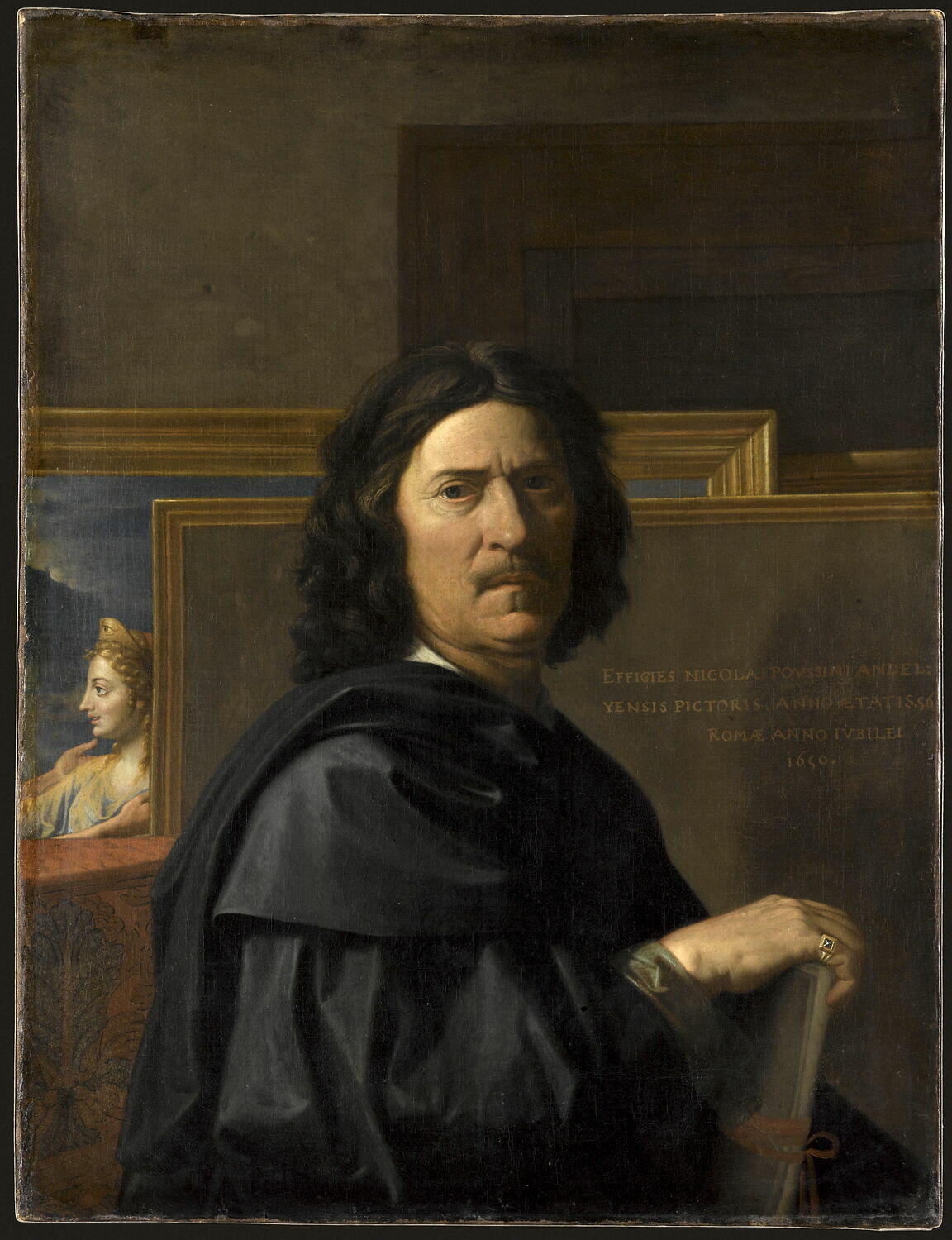
1594 - 1665
Les Andelys, France
Nicolas Poussin (June 1594 – 19 November 1665) was the leading painter of the classical French Baroque style, although he spent most of his working life in Rome. Most of his works were on religious and mythological subjects painted for a small group of Italian and French collectors. He returned to Paris for a brief period to serve as First Painter to the King under Louis XIII and Cardinal Richelieu, but soon returned to Rome and resumed his more traditional…