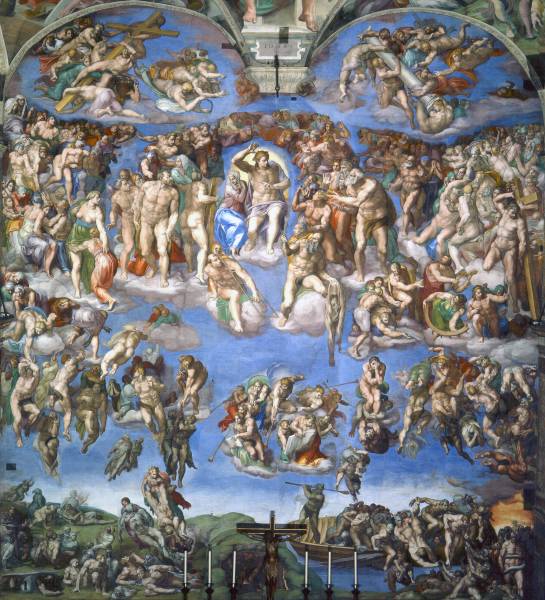
The Last Judgment
(1536)
Michelangelo
(Florence, Italy, 1475 - 1564)
Matthew 25:31-46
Raphael Sanzio's "Saint Paul Preaching in Athens" is a captivating depiction of the apostle's iconic sermon in ancient Athens, as described in Acts 17:16-34. The scene unfolds with Saint Paul standing atop a rocky outcropping, surrounded by a diverse crowd of philosophers, citizens, and priests, all of whom are engrossed in his passionate oration. The apostle's words, which spoke of a single, all-powerful God, sparked a mix of fascination and skepticism among his audience, and Raphael masterfully conveys this range of emotions through the varied expressions and poses of the onlookers.
The artistic composition of "Saint Paul Preaching in Athens" is characterized by Raphael's signature use of harmony and balance. The painting is divided into two main sections: the lower portion, where the crowd is gathered, and the upper section, which features a temple and several statues of pagan deities. This dichotomy serves to underscore the contrast between the old, pagan world and the new, Christian message that Saint Paul is introducing. The use of chiaroscuro, a strong contrast between light and dark, adds depth and volume to the scene, while the subtle play of emotions on the faces of the crowd draws the viewer's eye and invites contemplation.
The symbolism in "Saint Paul Preaching in Athens" is rich and multifaceted. The figure of Saint Paul, clad in a simple yet dignified robe, embodies the humility and conviction of the early Christian martyrs. The surrounding crowd, with its diverse array of characters, represents the universal appeal of the Christian message, which transcended social and cultural boundaries. The pagan temple and statues in the background serve as a reminder of the pagan world that Christianity sought to supplant, while the open, cloud-filled sky above suggests the infinite possibilities of the new faith. Through these symbols, Raphael offers a powerful visual representation of the enduring themes of faith, persuasion, and transformation.
The significance of "Saint Paul Preaching in Athens" lies not only in its masterful execution and rich symbolism but also in its historical context. Painted during the High Renaissance, this work reflects the cultural and artistic values of the time, including the revival of classical learning and the emergence of humanism. As a testament to Raphael's skill and artistry, "Saint Paul Preaching in Athens" continues to inspire and educate audiences, offering a profound meditation on the power of faith and the enduring legacy of the apostle Paul.