The Raising of Lazarus
(1547)
Jan Vermeyen
(Brussels, 1559 - 1606)
John 11:14-45
In this night scene – a novelty in painting at the time – Vermeyen succeeded in creating a dramatic effect. Candlelight plays over the faces and casts dark shadows. For the flames, Vermeyen used gold leaf. He was well ahead of his time: only around 1600 did the nocturn as a genre become more widely known through the Italian artist Caravaggio.
Found in: John, John 2, 16th century, Marriage at Cana
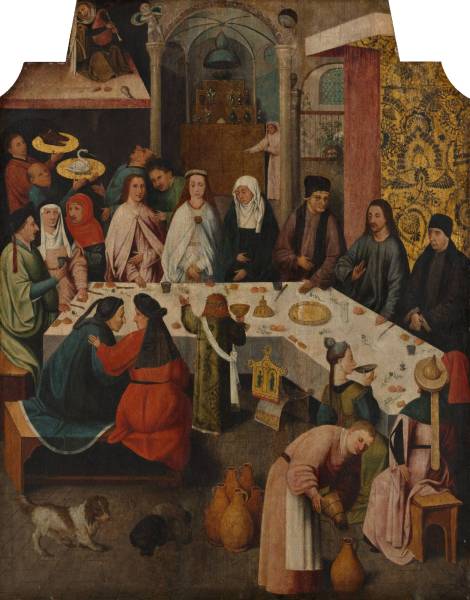
1 The third day, there was a marriage in Cana of Galilee. Jesus’ mother was there.
2 Jesus also was invited, with his disciples, to the marriage.
3 When the wine ran out, Jesus’ mother said to him, “They have no wine.”
4 Jesus said to her, “Woman, what does that have to do with you and me? My hour has not yet come.”
5 His mother said to the servants, “Whatever he says to you, do it.”
6 Now there were six water pots of stone set there after the Jews’ way of purifying, containing two or three metretes apiece.
7 Jesus said to them, “Fill the water pots with water.” They filled them up to the brim.
8 He said to them, “Now draw some out, and take it to the ruler of the feast.” So they took it.
9 When the ruler of the feast tasted the water now become wine, and didn’t know where it came from (but the servants who had drawn the water knew), the ruler of the feast called the bridegroom,
10 and said to him, “Everyone serves the good wine first, and when the guests have drunk freely, then that which is worse. You have kept the good wine until now!”
11 This beginning of his signs Jesus did in Cana of Galilee, and revealed his glory; and his disciples believed in him.
12 After this, he went down to Capernaum, he, and his mother, his brothers, and his disciples; and they stayed there a few days.
John 2:1-12 · World English Bible
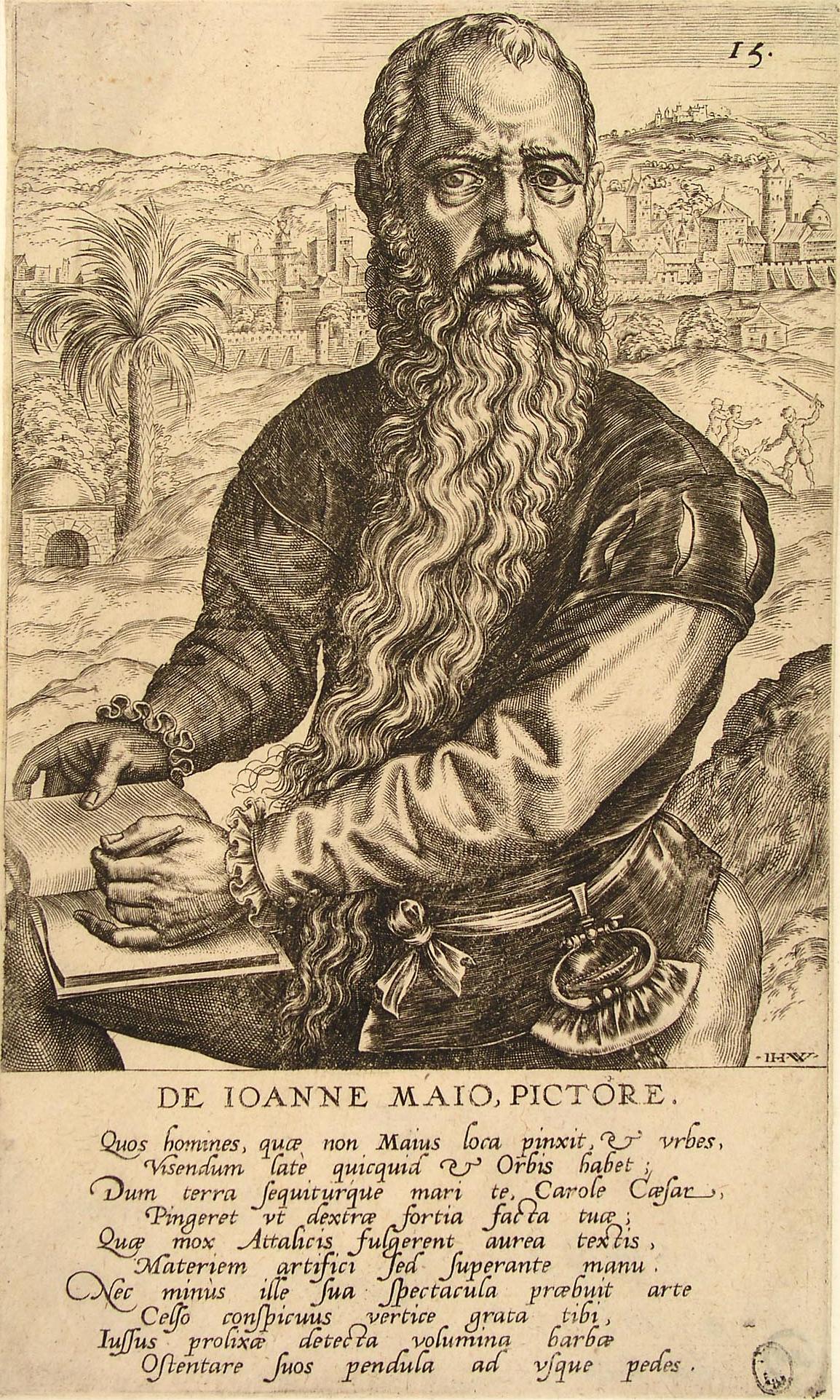
1559 - 1606
Brussels, Belgium
Jan Vermeyen (before 1559 – 1606) was a goldsmith of the Renaissance Mannerism.