The Way to Calvary
(c1544)
Jacopo Bassano
(Venice, 1510 - 1592)
Luke 23:26-43
Jacopo Bassano’s visual exegesis emphasizes social responsibility in an era in which many people in the environs of Venice suffered from poverty, homelessness, and food shortages. As a result, Venice and other nearby cities were besieged by a migration of homeless paupers and, in response to this societal trauma, numerous reformers in the Catholic church criticized the spiritual indifference that included neglect of impoverished people. Vincenzio Giaccaro, for example, cited the parable of the Good Samaritan to argue that Christians should meet their neighbours’ spiritual and bodily needs. Bassano’s religious paintings often clearly reflect such ethical concerns (Aikema 1996: 10, 46, 49; Hornik and Parsons 2003: 99–101).
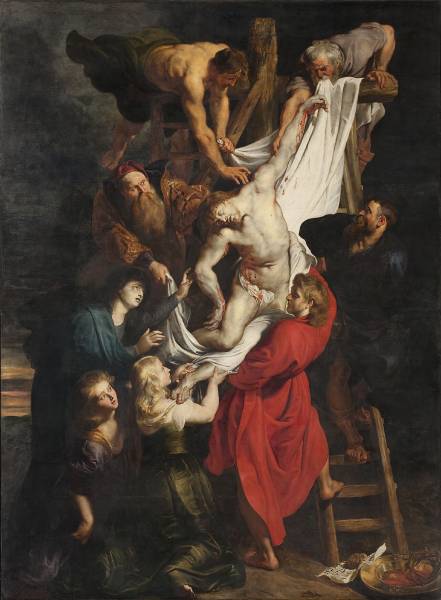
Although the human drama of the Samaritan’s act of mercy is therefore the centre of attention here—we are shown the Samaritan’s strenuous efforts to lift the wounded man onto the animal (Luke 10:34)—the painting’s naturalism does not prevent interpreters from envisioning allegorical elements in the work. The portrayal of the victim—his body pale, vulnerable, and helpless, with wounds dripping with blood—echoes visual representations of the Deposition, when Jesus’s body was removed from the cross (De Lange 2011: 66–68). There may be a bloody bandage in the place of a crown of thorns, but the painting seems to offer an example of how showing mercy to the ‘least of these’ is the same as showing mercy to Jesus (Matthew 25:40), a symbolism that once again reminds viewers to reflect on their responsibility to assist people in need.
In addition, the Levite at the far left of the composition is shown reading (a detail not in the text), which may symbolize people who who appear to love God’s Law, but disregard its commands to love one’s neighbour. Since Bassano often included dogs in his works to illustrate religious indifference or even blameworthiness, the two dogs likely mirror the callous neglect of the priest and Levite (Luke 10:31–32).
By contrast, the Samaritan, in this dark, dangerous place, does what the Law requires (cf. Luke 16:29). He chooses the good and righteous path, and energetically offers compassion and mercy. In this way, the painting seeks to persuade its viewers, as did Jesus the lawyer, to ‘go and do likewise’ (v.37).
Found in: Luke, Luke 10, 16th century
25 Behold, a certain lawyer stood up and tested him, saying, “Teacher, what shall I do to inherit eternal life?”
26 He said to him, “What is written in the law? How do you read it?”
27 He answered, “You shall love the Lord your God with all your heart, with all your soul, with all your strength, and with all your mind; and your neighbor as yourself.”
28 He said to him, “You have answered correctly. Do this, and you will live.”
29 But he, desiring to justify himself, asked Jesus, “Who is my neighbor?”
30 Jesus answered, “A certain man was going down from Jerusalem to Jericho, and he fell among robbers, who both stripped him and beat him, and departed, leaving him half dead.
31 By chance a certain priest was going down that way. When he saw him, he passed by on the other side.
32 In the same way a Levite also, when he came to the place, and saw him, passed by on the other side.
33 But a certain Samaritan, as he traveled, came where he was. When he saw him, he was moved with compassion,
34 came to him, and bound up his wounds, pouring on oil and wine. He set him on his own animal, and brought him to an inn, and took care of him.
35 On the next day, when he departed, he took out two denarii, and gave them to the host, and said to him, ‘Take care of him. Whatever you spend beyond that, I will repay you when I return.’
36 Now which of these three do you think seemed to be a neighbor to him who fell among the robbers?”
37 He said, “He who showed mercy on him.” Then Jesus said to him, “Go and do likewise.”
Luke 10:25-37 · World English Bible
1510 - 1592
Venice, Italy
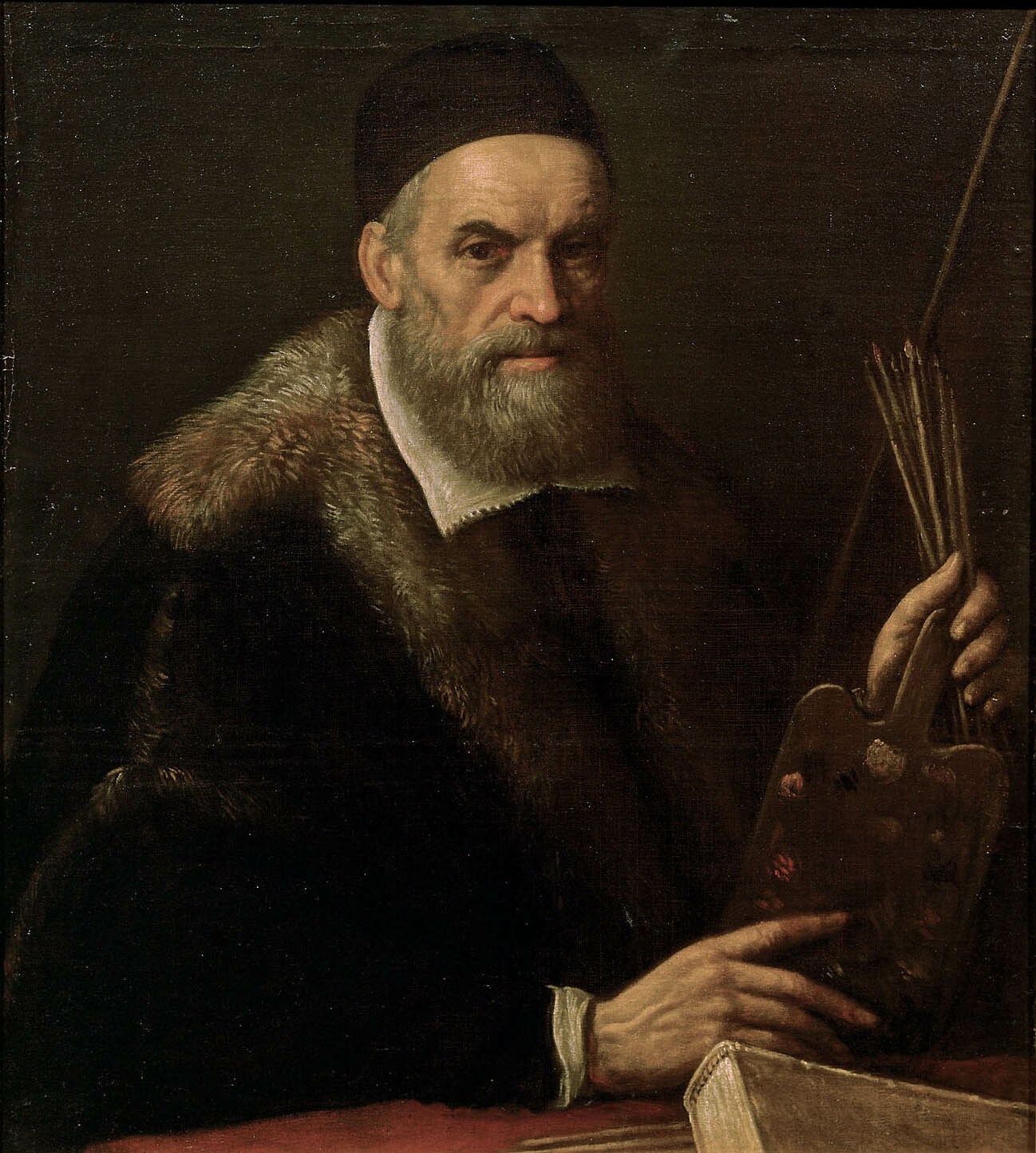
Jacopo Bassano (c. 1510 – 14 February 1592), known also as Jacopo dal Ponte, was an Italian painter who was born and died in Bassano del Grappa near Venice, and took the village as his surname. Trained in the workshop of his father, Francesco the Elder, and studying under Bonifazio Veronese in Venice, he painted mostly religious paintings including landscape and genre scenes.[3] He often treated biblical themes in the manner of rural genre scenes, portraying people who look like…