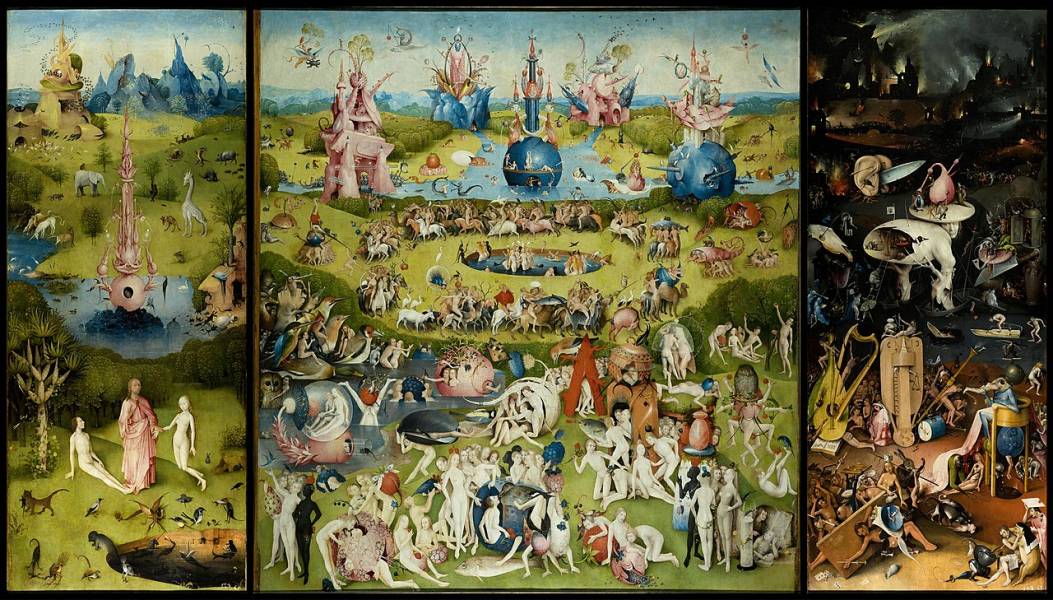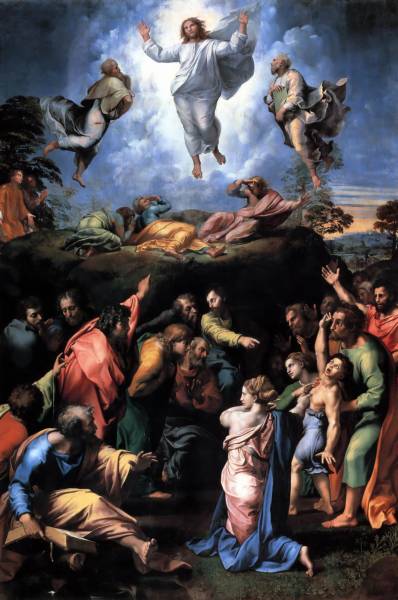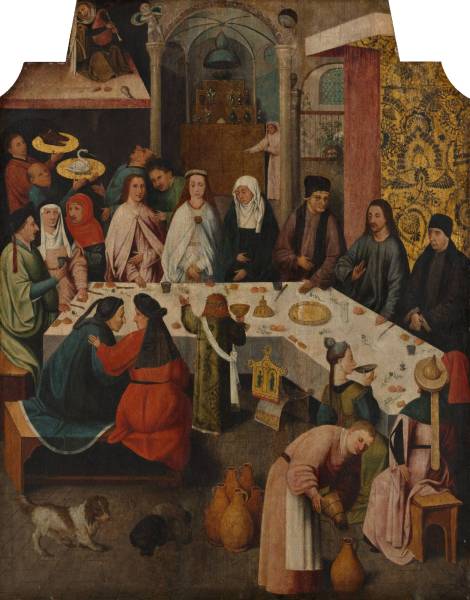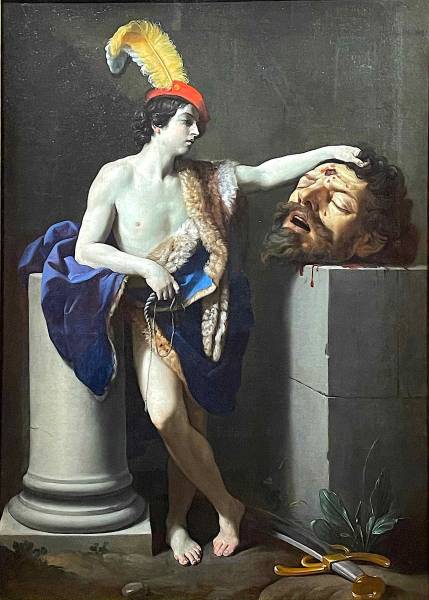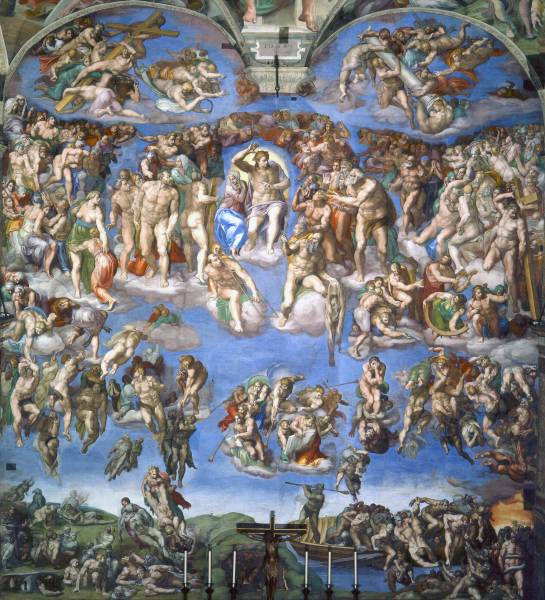
The Last Judgment
(1536)
Michelangelo
(Florence, Italy, 1475 - 1564)
Matthew 25:31-46
"Elijah Taken Up in a Chariot of Fire" (c. 1740/1755) by Venetian artist Giuseppe Angeli dramatically depicts the biblical moment when the prophet Elijah is carried to heaven in a fiery chariot. In the painting, an elderly man—Elisha—kneels on rocky ground, arms outstretched and face turned upward in awe and astonishment. Above him, Elijah sits in a chariot ablaze with coral-peach flames, drawn by powerful white horses that ascend through billowing, sand-colored clouds. Elijah’s gesture and upward gaze convey his acceptance of the divine call, while the swirling clouds and vibrant colors infuse the scene with movement and spiritual energy. Angeli’s composition captures both the human emotion of parting and the miraculous nature of Elijah’s ascent, making this work a vivid interpretation of a pivotal Old Testament story.
This painting is part of the Samuel H. Kress Collection at the National Gallery of Art and is in the public domain.
Found in: 2 Kings, 2 Kings 2, 18th century
11 As they continued on and talked, behold, a chariot of fire and horses of fire separated them, and Elijah went up by a whirlwind into heaven.
12 Elisha saw it, and he cried, “My father, my father, the chariots of Israel and its horsemen!” He saw him no more. Then he took hold of his own clothes, and tore them in two pieces.
2 Kings 2:11-12 · World English Bible
1709 - 1798
Venice, Italy
Giuseppe Angeli (1709–1798) was a Venetian painter of the late Baroque period, known for his work in both religious and genre scenes. Born in Venice in 1709, Angeli trained under the prominent painter Giambattista Piazzetta. By 1741, he had joined the local guild of painters. His connection to the Academy of Fine Arts of Venice began in 1756 when he was appointed as an instructor, eventually rising to the role of President in 1772.