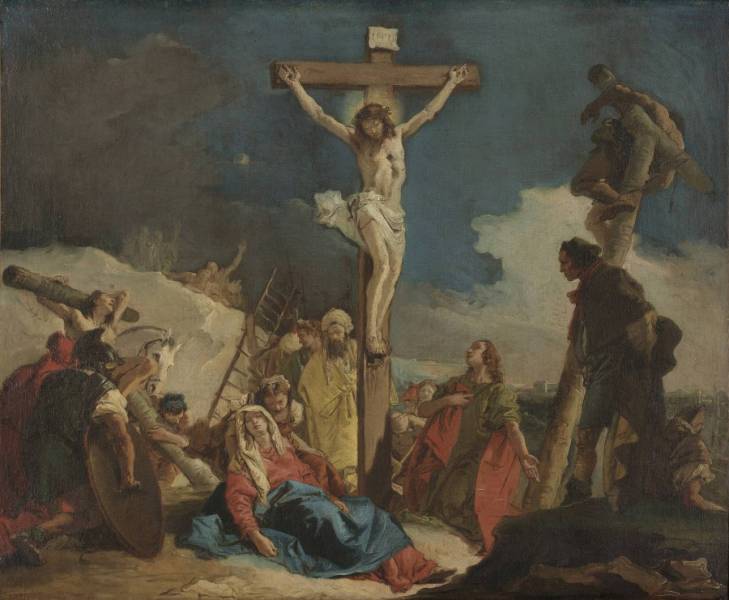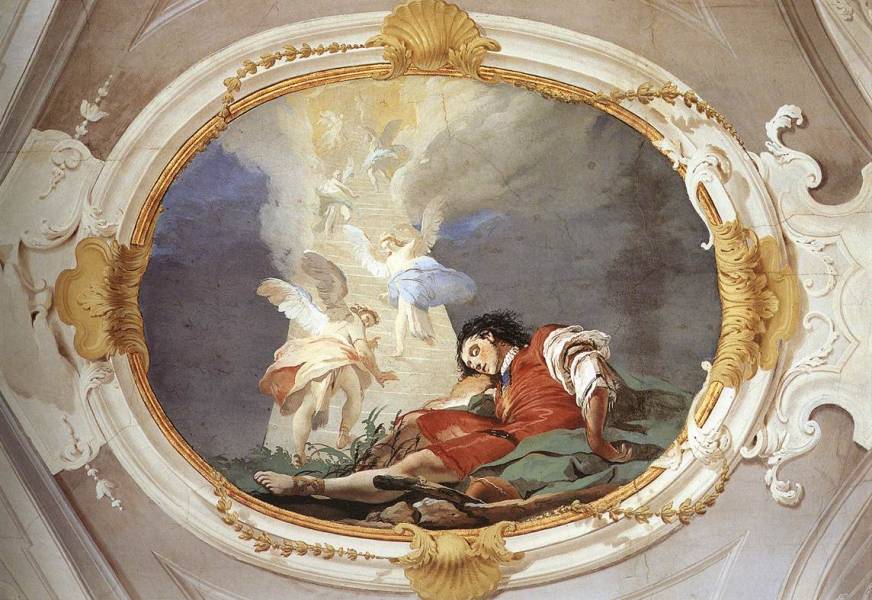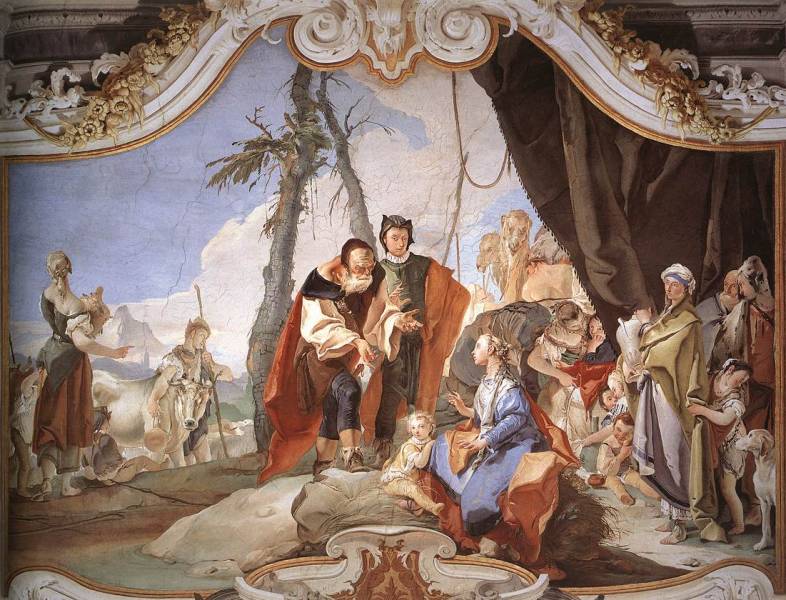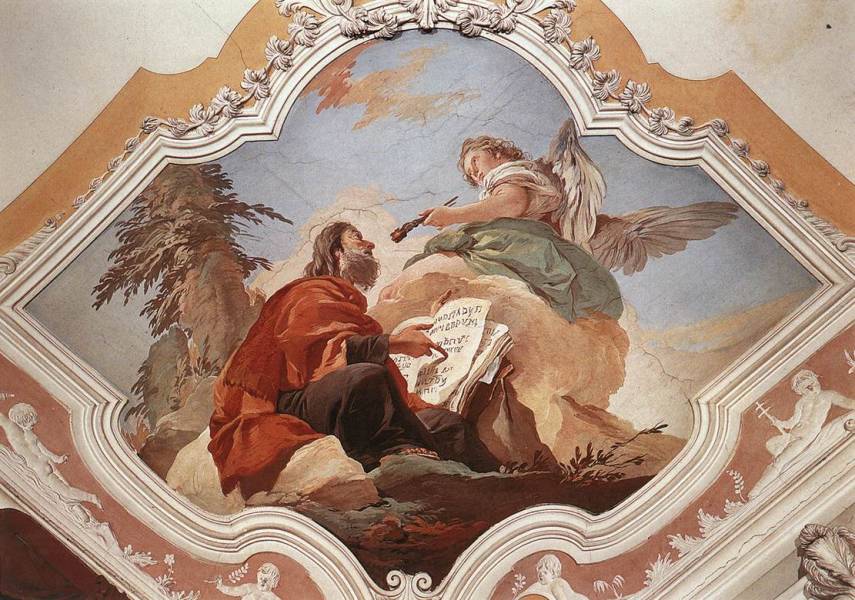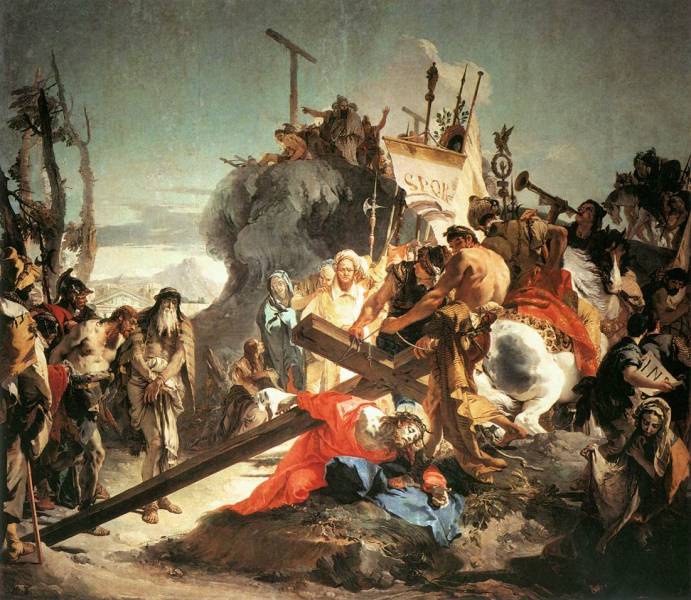
Christ Carrying the Cross
(c1738)
Giovanni Battista Tiepolo
(Venice, 1696 - 1770)
Mark 15:16-27
Tiepolo’s painting is based on the Old Testament story of Joseph, which appears in the Bible’s Book of Genesis. Joseph had been sold into slavery by his jealous brothers and was later imprisoned for a crime he did not commit. This painting shows the dramatic moment Joseph wins his freedom and is appointed to the role of Vizier, Pharaoh’s Chief Administrator. The precise moment the artist chose to depict is described in Genesis 41:42: ‘And Pharaoh took off his ring from his hand, and put it upon Joseph's hand, and arrayed him in vestures of fine linen, and put a gold chain about his neck.’
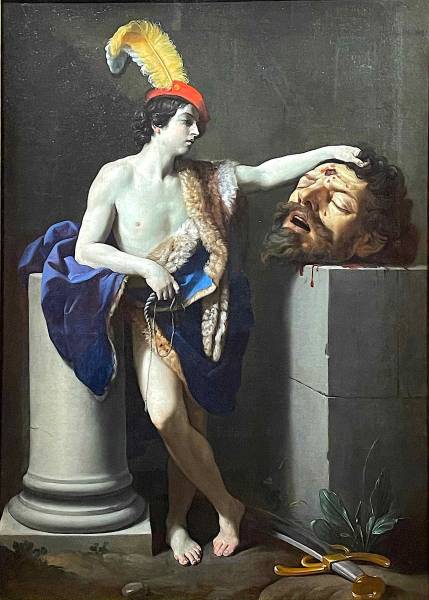
Tiepolo’s use of colour and costume references the Golden Age of Venetian painting, specifically the works of Veronese, as well as Old Testament scenes by Rembrandt and his circle. The horizontal format of the work, with its half-length figures, is exceptional within Tiepolo’s oeuvre and is more reminiscent of 17th century Bolognese paintings, such as Guercino, than of Venetian pictures. Some scholars have pointed to the far trumpeter as a possible self-portrait of the artist.
Found in: Genesis, Genesis 41, 18th century, Joseph (O.T.)
41 Pharaoh said to Joseph, “Behold, I have set you over all the land of Egypt.”
42 Pharaoh took off his signet ring from his hand, and put it on Joseph’s hand, and arrayed him in robes of fine linen, and put a gold chain about his neck,
43 and he made him to ride in the second chariot which he had. They cried before him, “Bow the knee!” He set him over all the land of Egypt.
44 Pharaoh said to Joseph, “I am Pharaoh, and without you shall no man lift up his hand or his foot in all the land of Egypt.”
45 Pharaoh called Joseph’s name Zaphenath-Paneah; and he gave him Asenath, the daughter of Potiphera priest of On as a wife. Joseph went out over the land of Egypt.
46 Joseph was thirty years old when he stood before Pharaoh king of Egypt. Joseph went out from the presence of Pharaoh, and went throughout all the land of Egypt.
47 In the seven plenteous years the earth produced abundantly.
48 He gathered up all the food of the seven years which were in the land of Egypt, and laid up the food in the cities: the food of the field, which was around every city, he laid up in the same.
49 Joseph laid up grain as the sand of the sea, very much, until he stopped counting, for it was without number.
50 To Joseph were born two sons before the year of famine came, whom Asenath, the daughter of Potiphera priest of On, bore to him.
51 Joseph called the name of the firstborn Manasseh, “For”, he said, “God has made me forget all my toil, and all my father’s house.”
52 The name of the second, he called Ephraim: “For God has made me fruitful in the land of my affliction.”
53 The seven years of plenty, that were in the land of Egypt, came to an end.
54 The seven years of famine began to come, just as Joseph had said. There was famine in all lands, but in all the land of Egypt there was bread.
55 When all the land of Egypt was famished, the people cried to Pharaoh for bread, and Pharaoh said to all the Egyptians, “Go to Joseph. What he says to you, do.”
56 The famine was over all the surface of the earth. Joseph opened all the store houses, and sold to the Egyptians. The famine was severe in the land of Egypt.
57 All countries came into Egypt, to Joseph, to buy grain, because the famine was severe in all the earth.
Genesis 41:41-57 · World English Bible

1696 - 1770
Venice, Italy
Giovanni Battista Tiepolo (March 5, 1696 – March 27, 1770), also known as Gianbattista or Giambattista Tiepolo, was an Italian painter and printmaker from the Republic of Venice who painted in the "Rococo" style. He was prolific, and worked not only in Italy, but also in Germany and Spain.