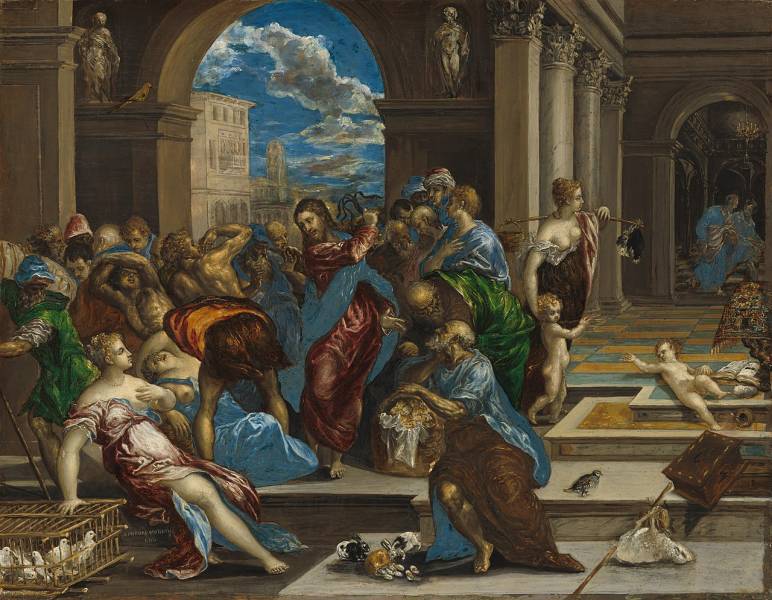
El Greco
(Fodele, 1541 - 1614)
Matthew 21:12-17
13 The Passover of the Jews was at hand, and Jesus went up to Jerusalem.
14 He found in the temple those who sold oxen, sheep, and doves, and the changers of money sitting.
15 He made a whip of cords, and threw all out of the temple, both the sheep and the oxen; and he poured out the changers’ money, and overthrew their tables.
16 To those who sold the doves, he said, “Take these things out of here! Don’t make my Father’s house a marketplace!”
17 His disciples remembered that it was written, “Zeal for your house will eat me up.”
18 The Jews therefore answered him, “What sign do you show us, seeing that you do these things?”
19 Jesus answered them, “Destroy this temple, and in three days I will raise it up.”
20 The Jews therefore said, “It took forty-six years to build this temple! Will you raise it up in three days?”
21 But he spoke of the temple of his body.
22 When therefore he was raised from the dead, his disciples remembered that he said this, and they believed the Scripture, and the word which Jesus had said.
John 2:13-22 · World English Bible