God Judging Adam
(1795)
William Blake
(London, 1757 - 1827)
Genesis 3:17-19
In "Naomi entreating Ruth and Orpah to return to the land of Moab," the eminent artist William Blake crafts a compelling drawing that bears the hallmark of both neo-classicism and the distinctive "line of beauty" associated with William Hogarth. Created in 1795, this artwork offers a timeless portrayal of a poignant moment from the biblical narrative found in Ruth 1:6-22.
The drawing depicts the heartfelt scene where Naomi, a widowed mother-in-law, implores her two daughters-in-law, Ruth and Orpah, to return to their homeland of Moab after the death of their husbands. The emotions conveyed in this delicate portrayal are profound, reflecting the human struggle between familial ties and the pursuit of one's destiny.
Blake's artistic finesse is evident in his masterful handling of form and composition. Influenced by the neo-classical style, the figures are gracefully rendered, evoking a sense of harmony and balance. The drapery and poses evoke classical references, lending an air of timelessness to the moment. The "line of beauty" employed by Hogarth, characterized by flowing and dynamic lines, adds a sense of movement and fluidity to the drawing, guiding the viewer's eye through the narrative with utmost elegance.
The artist's visionary approach is also evident in the portrayal of the characters' expressions and body language. Naomi's tender and pleading gesture, combined with her heartfelt gaze, emphasizes her emotional plea to her daughters-in-law. Ruth and Orpah, in turn, express their conflicted emotions through their contemplative postures and expressions, torn between loyalty to Naomi and the allure of their homeland.
Blake's adept use of chiaroscuro, with skillful play of light and shadow, heightens the emotional impact of the scene. The characters' faces are delicately illuminated, while the background fades into obscurity, directing the viewer's focus to the essence of the interaction between the three women.
Beyond the narrative itself, the drawing also reveals Blake's insightful anticipation of the fashions of his time. The elegant attire and hairstyles of the figures are remarkably akin to the prevailing styles of the late 18th century, particularly circa 1798-1799, showcasing Blake's keen eye for cultural nuances.
In "Naomi entreating Ruth and Orpah to return to the land of Moab," William Blake demonstrates his prowess as an artist who marries classicism with innovation. Through the deft integration of neo-classical elements and Hogarth's dynamic style, he brings forth a heartfelt and evocative portrayal of a profound biblical moment. This drawing stands as a testament to Blake's artistic vision, capturing the essence of human emotions and dilemmas in a manner that transcends time and continues to resonate with audiences today.
Found in: Ruth, Ruth 1, 18th century
6 Then she arose with her daughters-in-law, that she might return from the country of Moab; for she had heard in the country of Moab how Yahweh had visited his people in giving them bread.
7 She went out of the place where she was, and her two daughters-in-law with her. They went on the way to return to the land of Judah.
8 Naomi said to her two daughters-in-law, “Go, return each of you to her mother’s house. May Yahweh deal kindly with you, as you have dealt with the dead, and with me.
9 May Yahweh grant you that you may find rest, each of you in the house of her husband.” Then she kissed them, and they lifted up their voices, and wept.
10 They said to her, “No, but we will return with you to your people.”
11 Naomi said, “Go back, my daughters. Why do you want to go with me? Do I still have sons in my womb, that they may be your husbands?
12 Go back, my daughters, go your way; for I am too old to have a husband. If I should say, ‘I have hope,’ if I should even have a husband tonight, and should also bear sons;
13 would you then wait until they were grown? Would you then refrain from having husbands? No, my daughters, for it grieves me seriously for your sakes, for Yahweh’s hand has gone out against me.”
14 They lifted up their voices, and wept again; then Orpah kissed her mother-in-law, but Ruth joined with her.
15 She said, “Behold, your sister-in-law has gone back to her people, and to her god. Follow your sister-in-law.”
16 Ruth said, “Don’t urge me to leave you, and to return from following you, for where you go, I will go; and where you stay, I will stay. Your people will be my people, and your God my God.
17 Where you die, I will die, and there I will be buried. May Yahweh do so to me, and more also, if anything but death parts you and me.”
18 When she saw that she was determined to go with her, she stopped urging her.
19 So they both went until they came to Bethlehem. When they had come to Bethlehem, all the city was excited about them, and they asked, “Is this Naomi?”
20 She said to them, “Don’t call me Naomi. Call me Mara; for the Almighty has dealt very bitterly with me.
21 I went out full, and Yahweh has brought me home again empty. Why do you call me Naomi, since Yahweh has testified against me, and the Almighty has afflicted me?”
22 So Naomi returned, and Ruth the Moabitess, her daughter-in-law, with her, who returned out of the country of Moab. They came to Bethlehem in the beginning of barley harvest.
Ruth 1:6-22 · World English Bible
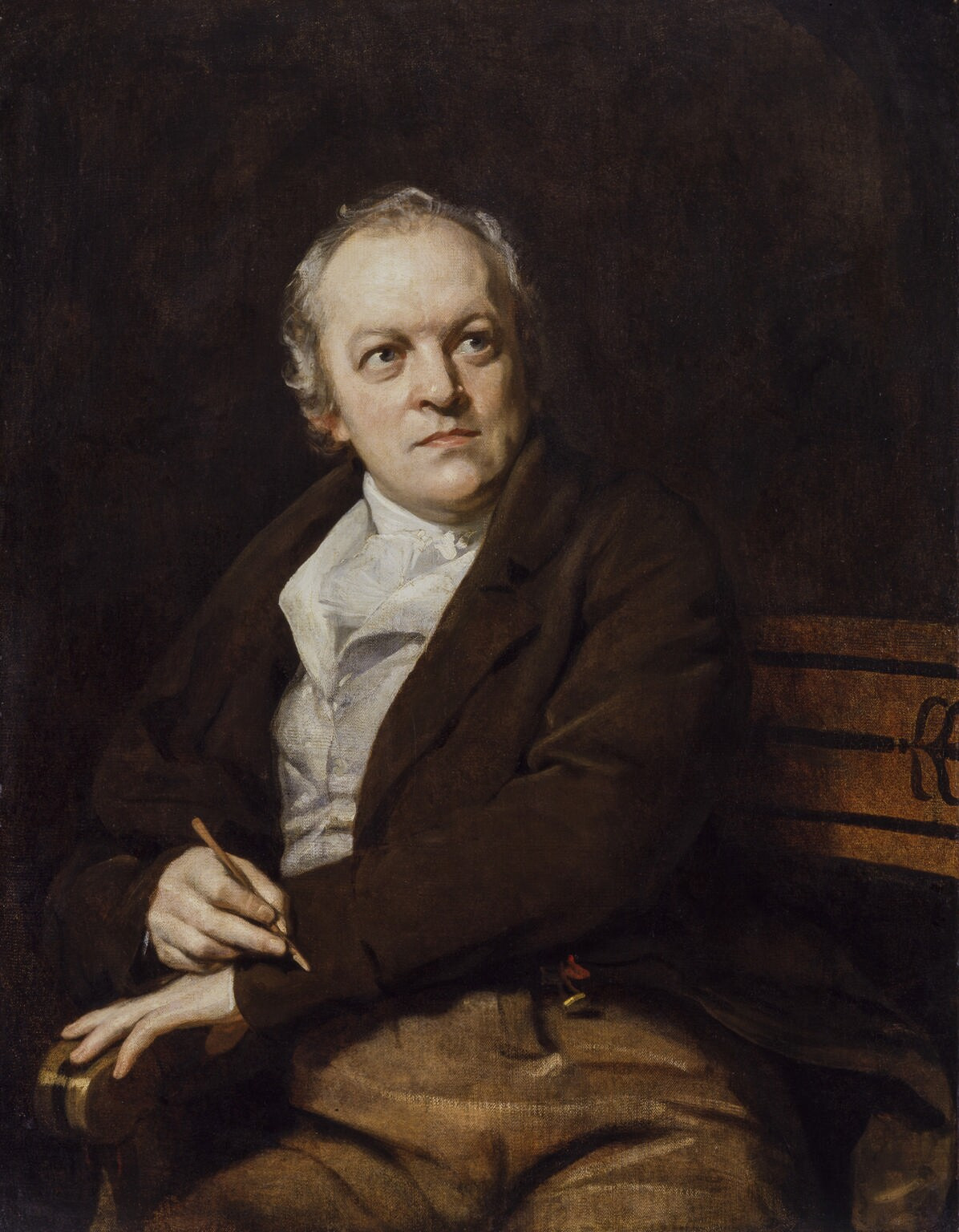
1757 - 1827
London
William Blake was an English poet, painter, and printmaker. Largely unrecognised during his lifetime, Blake is now considered a seminal figure in the history of the poetry and visual arts of the Romantic Age. What he called his prophetic works were said by 20th-century critic Northrop Frye to form "what is in proportion to its merits the least read body of poetry in the English language". His visual artistry led 21st-century critic Jonathan Jones to proclaim him "far and away…