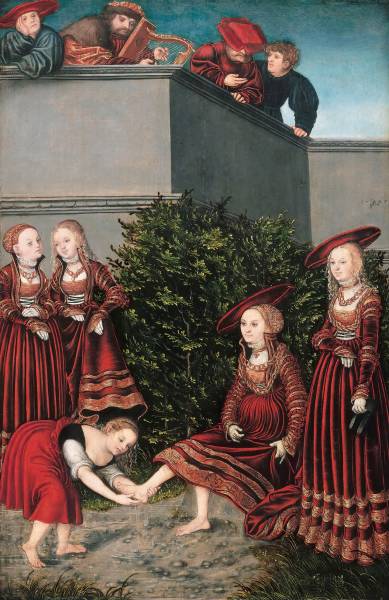
Herodias' Revenge
(1496)
Juan de Flandes
(Flanders, 1460 - 1519)
Matthew 14:1-12
"The Raising of Lazarus" by Juan de Flandes is an awe-inspiring and emotionally charged artwork that vividly brings to life one of the most profound moments in biblical history. Created between 1510 and 1518, this oil on panel painting is a remarkable example of religious art, originally housed in the church of St Lazarus in Palencia, Spain.
Measuring 110cm x 84cm, the painting's dimensions are well-suited to capture the viewer's attention and draw them into the miraculous scene it portrays. Juan de Flandes demonstrates exceptional skill in his meticulous use of oil paint, creating a rich and vibrant palette that heightens the visual impact of the artwork.
The composition is masterfully executed, with careful attention to detail and a harmonious balance of light and shadow. The central figure of Lazarus, emerging from the tomb, is depicted with a sense of otherworldly radiance, symbolizing the transformative power of faith and divine intervention. The surrounding figures, including Jesus, are portrayed with expressions of awe and reverence, conveying the profound significance of the resurrection miracle.
Juan de Flandes' artistry is evident in the delicate rendering of textures, from the folds of the garments to the intricate architectural elements of the tomb. The meticulous brushwork and attention to anatomical accuracy lend a sense of realism and emotional depth to the characters, allowing the viewer to empathize with the emotions of the moment.
The spiritual significance of "The Raising of Lazarus" is palpable, inviting viewers to contemplate themes of faith, hope, and the triumph of life over death. The painting serves as a poignant reminder of the transformative power of belief in the face of adversity and mortality.
As a panel from the church of St Lazarus in Palencia, the artwork holds historical and cultural significance, acting as a visual testament to the religious devotion and artistic excellence of its time. Its presence in the church would have served as an inspiring focal point for worship and contemplation, reinforcing the message of divine grace and eternal life.
In conclusion, "The Raising of Lazarus" by Juan de Flandes is a profound and spiritually uplifting masterpiece that stands as a testament to the enduring power of faith and the boundless creativity of the Renaissance era. With its exceptional technique, emotional resonance, and religious significance, the painting continues to captivate and inspire audiences, offering a timeless glimpse into the depths of human belief and the mysteries of divine intervention.
Found in: John, John 11, 16th century, Raising of Lazarus
38 Jesus therefore, again groaning in himself, came to the tomb. Now it was a cave, and a stone lay against it.
39 Jesus said, “Take away the stone.” Martha, the sister of him who was dead, said to him, “Lord, by this time there is a stench, for he has been dead four days.”
40 Jesus said to her, “Didn’t I tell you that if you believed, you would see God’s glory?”
41 So they took away the stone from the place where the dead man was lying. Jesus lifted up his eyes, and said, “Father, I thank you that you listened to me.
42 I know that you always listen to me, but because of the multitude standing around I said this, that they may believe that you sent me.”
43 When he had said this, he cried with a loud voice, “Lazarus, come out!”
44 He who was dead came out, bound hand and foot with wrappings, and his face was wrapped around with a cloth. Jesus said to them, “Free him, and let him go.”
John 11:38-44 · World English Bible
1460 - 1519
Flanders, Belgium
Juan de Flandes ("John of Flanders"; c. 1460 – by 1519) was a Flemish painter active in Spain from 1496 to 1519. His actual name is unknown, although an inscription Juan Astrat on the back of one work suggests a name such as "Jan van der Straat". Jan Sallaert, who became a master in Ghent in 1480, has also been suggested. He worked in the Early Netherlandish style.