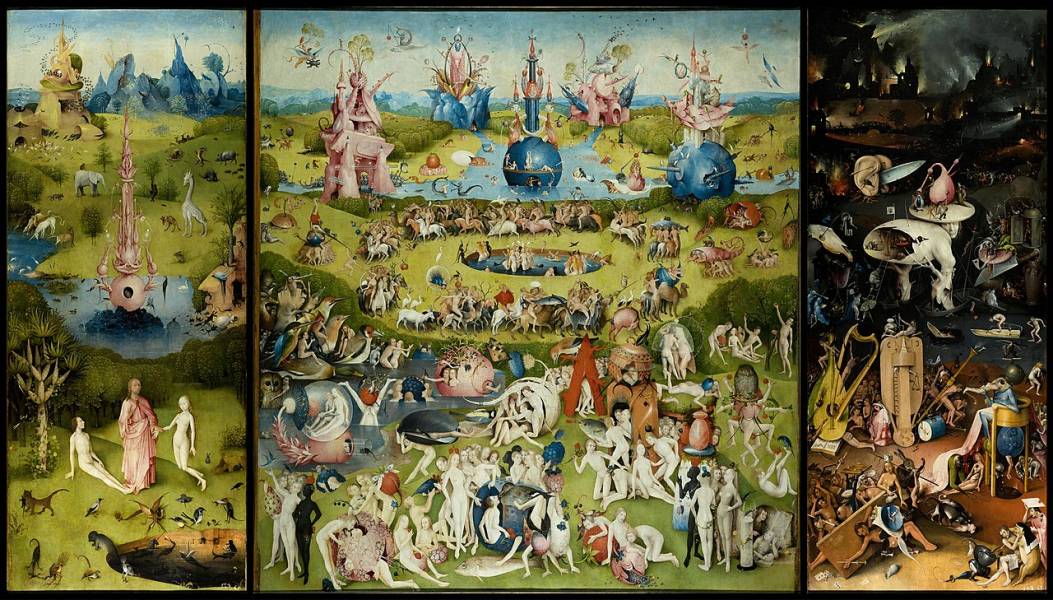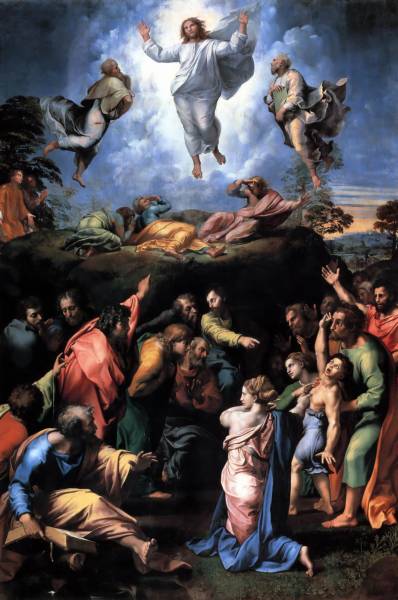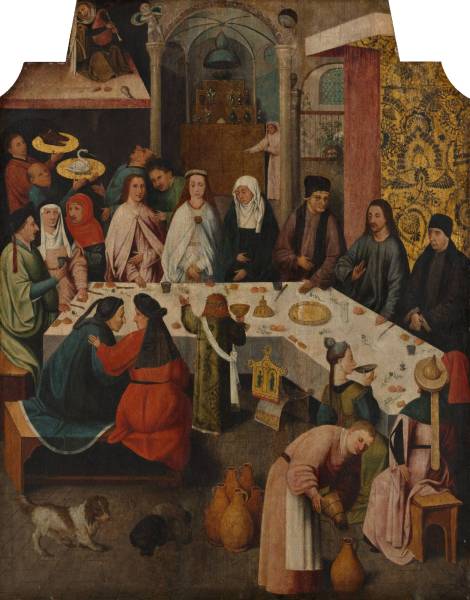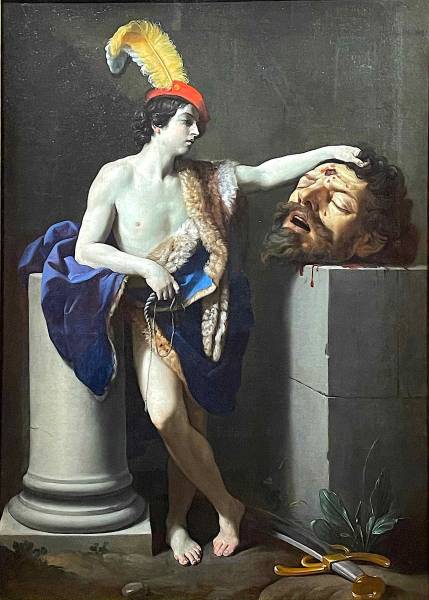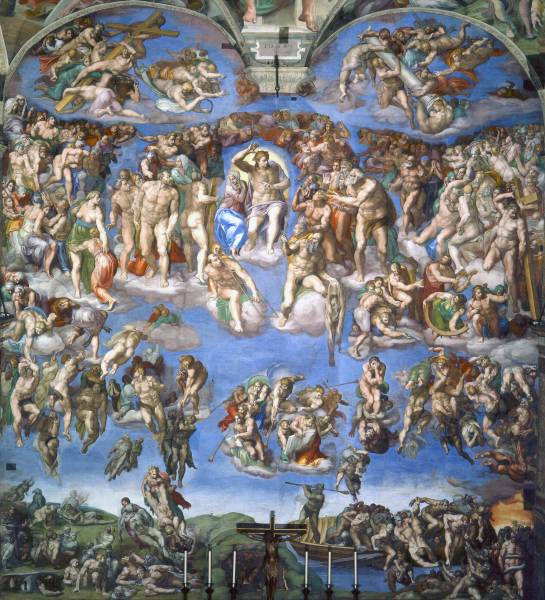
The Last Judgment
(1536)
Michelangelo
(Florence, Italy, 1475 - 1564)
Matthew 25:31-46
"The Feast of Esther" by Johannes Spilberg is an oil-on-canvas painting created around 1644, inspired by the biblical passage from Esther 7. The artwork depicts a significant moment from the Book of Esther, where Queen Esther reveals the evil intentions of Haman, leading to his downfall during a banquet with King Ahasuerus.
Johannes Spilberg's painting presents a captivating portrayal of a dramatic and pivotal scene from the biblical narrative. Let's review the key aspects of this artwork:
1. Composition and Narrative: Spilberg's composition skillfully captures the tension and drama of the scene. The central focus is on Queen Esther, who bravely reveals the truth to King Ahasuerus, while Haman's wicked intentions are exposed. The use of perspective and the arrangement of figures contribute to the dynamic nature of the painting, drawing the viewer into the unfolding narrative.
2. Emotional Expression: The artist's attention to emotional expression is evident in the faces and body language of the characters. Queen Esther's concern and determination, the shock and anger on King Ahasuerus' face, and Haman's fear and realization of his impending doom are effectively conveyed through the artist's brushwork.
3. Symbolism and Storytelling: "The Feast of Esther" beautifully captures the essence of the biblical passage, showcasing the courageous actions of Queen Esther in saving her people. The banquet setting symbolizes the opulence and luxury of the royal court, while the revelation of Haman's treachery signifies the triumph of justice and divine intervention.
4. Historical Accuracy and Detail: Spilberg's attention to historical accuracy is evident in the depiction of the clothing, architecture, and cultural elements of the biblical setting. The attention to detail adds authenticity and depth to the painting.
5. Use of Color and Light: The artist's use of color and light adds depth and dimension to the painting. The vibrant colors of the clothing and interior contrast with the darker tones in the background, drawing attention to the central figures and adding to the overall dramatic effect.
6. Size and Medium: Unfortunately, information about the dimensions of the artwork is not available. However, being an oil-on-canvas painting, it allows for the artist's skilled brushwork, rich colors, and smooth texture.
In conclusion, "The Feast of Esther" by Johannes Spilberg is a compelling representation of a significant biblical event. Through its composition, emotional expression, and attention to detail, the painting brings to life the tension and triumph of the story. Spilberg's artistic skill and adherence to historical accuracy make this artwork a noteworthy example of biblical art, capturing the enduring appeal of biblical narratives as a source of artistic inspiration and moral lessons.
Found in: Esther, Esther 7, 17th century
1 So the king and Haman came to banquet with Esther the queen.
2 The king said again to Esther on the second day at the banquet of wine, “What is your petition, queen Esther? It shall be granted you. What is your request? Even to the half of the kingdom it shall be performed.”
3 Then Esther the queen answered, “If I have found favor in your sight, O king, and if it pleases the king, let my life be given me at my petition, and my people at my request.
4 For we are sold, I and my people, to be destroyed, to be slain, and to perish. But if we had been sold for male and female slaves, I would have held my peace, although the adversary could not have compensated for the king’s loss.”
5 Then King Ahasuerus said to Esther the queen, “Who is he, and where is he who dared presume in his heart to do so?”
6 Esther said, “An adversary and an enemy, even this wicked Haman!” Then Haman was afraid before the king and the queen.
7 The king arose in his wrath from the banquet of wine and went into the palace garden. Haman stood up to make request for his life to Esther the queen; for he saw that there was evil determined against him by the king.
8 Then the king returned out of the palace garden into the place of the banquet of wine; and Haman had fallen on the couch where Esther was. Then the king said, “Will he even assault the queen in front of me in the house?” As the word went out of the king’s mouth, they covered Haman’s face.
9 Then Harbonah, one of the eunuchs who were with the king said, “Behold, the gallows fifty cubits high, which Haman has made for Mordecai, who spoke good for the king, is standing at Haman’s house.” The king said, “Hang him on it!”
10 So they hanged Haman on the gallows that he had prepared for Mordecai. Then was the king’s wrath pacified.
Esther 7 · World English Bible
1619 - 1690
Düsseldorf, Germany
Spilberg was born and died in Düsseldorf. He learned to paint from his father, who painted in oils and on glass, who then sent him to Antwerp, to learn under Rubens. While underway, he heard that Rubens had died, so he settled in Amsterdam and became apprentice to Govert Flink, a student of Rembrandt, for seven years. He won a commission for a schutterstuk from the Burgomasters of Amsterdam that still hangs in Amsterdam. In Amsterdam he married Marrite Gerrits…