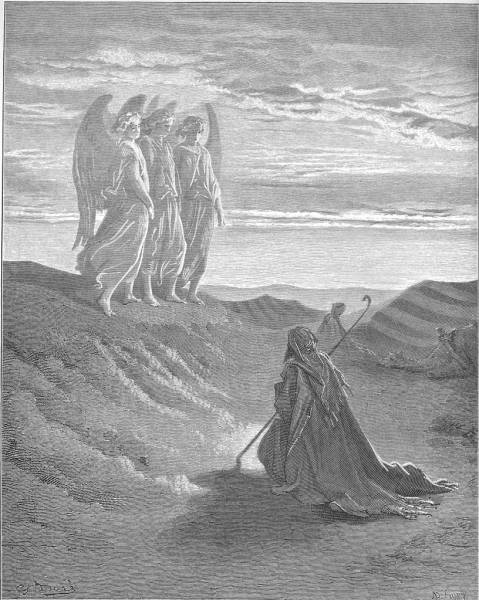
Gustave Doré
(Strasbourg, France, 1832 - 1883)
Genesis 18:1-15
The depiction presented in Genesis 3:24 portrays the poignant moment when humanity was banished from the paradise of Eden. This scene has captured the attention of artists for its sorrowful contrast to the preceding blissful existence. The drama of exile has been echoed throughout history, but none so profoundly as the experience of the first pair, who, hand in hand, ventured forth with faltering steps on their solitary journey through Eden.
Yet, the significance of this event extends beyond sentimental emotions. The expulsion from the garden marks a pivotal point in the history of mankind, signifying that humanity is no longer as it once was. Across cultures, ancient traditions recount a time when humanity was nobler, purer. The universal acknowledgment of human depravity is not merely a theological dogma but a deeply ingrained and shared belief. Philosophers, moralists, historians, and theologies from various faiths all attest to this fundamental understanding.
The cause of this widespread and profound flaw finds its clarity and meaning in the narrative of Moses. Originally, man was made in the image of his Creator, untainted by sin. Had humanity maintained that divine image, the many afflictions plaguing the world would have been nonexistent. However, humanity's failure and fall introduced a pernicious virus that has infected every member of the human race. "By one man sin entered into the world, and death by sin; and so death passed upon all men, for that all have sinned."
The heartrending portrayal of Adam and Eve's shame and fear as they fled their once-holy abode serves as the very cause and representation of each individual's estrangement from God's favor and communion. It is a poignant reminder of the eternal consequence of that original transgression.
Yet, the same sacred text that reveals the expulsion from Eden also unveils the path of return. While Eden may have vanished forever, a greater realm awaits those who overcome the trials of life – a realm untouched by curses, where once entered, they dwell eternally. As written in Revelation ii. 7, "To him that overcometh will I give to eat of the tree of life, which is in the midst of the paradise of God." This promise offers hope and redemption, inviting humanity to seek reconciliation and restoration to the divine presence that was lost in Eden's tragic tale.
Found in: Genesis, Genesis 3, 19th century
21 Yahweh God made coats of animal skins for Adam and for his wife, and clothed them.
22 Yahweh God said, “Behold, the man has become like one of us, knowing good and evil. Now, lest he reach out his hand, and also take of the tree of life, and eat, and live forever—”
23 Therefore Yahweh God sent him out from the garden of Eden, to till the ground from which he was taken.
24 So he drove out the man; and he placed cherubim at the east of the garden of Eden, and a flaming sword which turned every way, to guard the way to the tree of life.
Genesis 3:21-24 · World English Bible

1832 - 1883
Strasbourg, France
Paul Gustave Louis Christophe Doré (6 January 1832 – 23 January 1883) was a French artist, printmaker, illustrator, comics artist, caricaturist, and sculptor who worked primarily with wood-engraving.