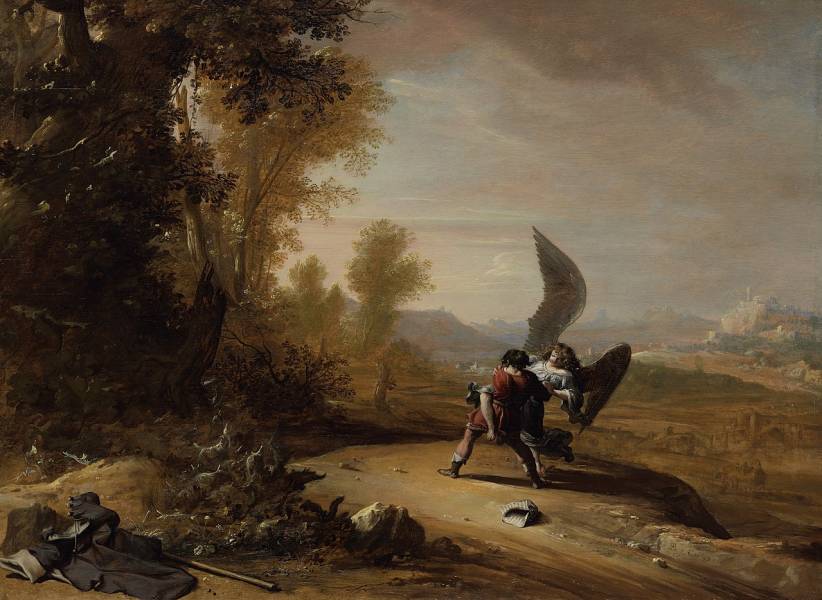
Bartholomeus Breenbergh
(Deventer, 1598 - 1657)
Genesis 32:22-32
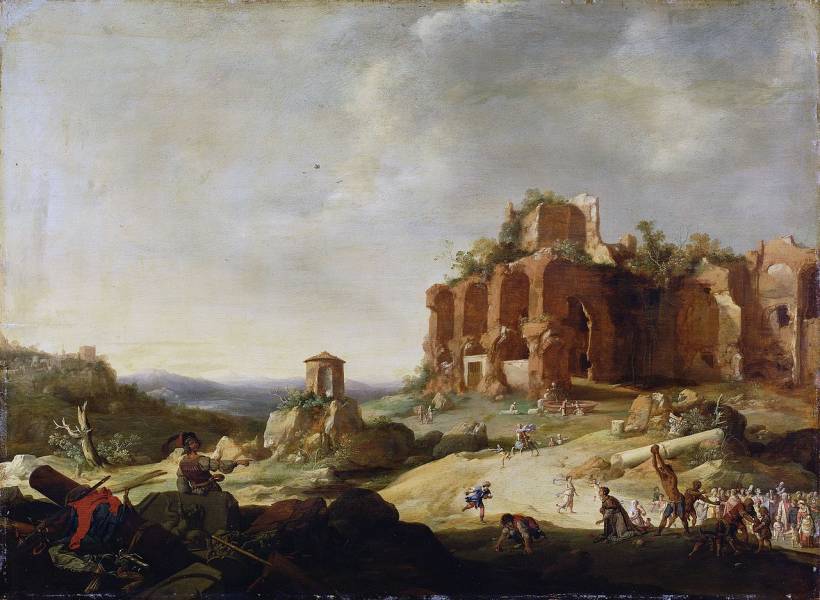
"Moses and Aaron Changing the Nile to Blood" by Bartholomeus Breenbergh is an oil-on-panel painting created in 1631, inspired by the biblical passage from Exodus 7:14-24. The artwork portrays a pivotal moment from the Book of Exodus, where Moses and Aaron, as leaders of the Israelites, demonstrate their divine authority by turning the waters of the Nile River into blood as a sign of God's power and judgment upon Egypt.
In this powerful and evocative painting, Breenbergh captures the dramatic scene with meticulous attention to detail and symbolism. Let's explore some key aspects of this artwork:
1. Composition and Lighting: Breenbergh's composition places Moses and Aaron at the center of the painting, surrounded by the Egyptian landscape and people. The use of light and shadow adds depth to the scene and emphasizes the divine intervention at play. The glowing light on Moses and Aaron draws the viewer's attention to their actions, highlighting the significance of their role as agents of God's will.
2. Symbolism: The painting is rich in symbolic elements that convey the narrative's theological and spiritual themes. The transformation of the Nile into blood represents the first of ten plagues that befell Egypt, illustrating the consequences of Pharaoh's refusal to release the Israelites from slavery. The river, which was considered sacred and essential to Egyptian life, turning into blood symbolizes divine retribution and judgment upon the Egyptian gods and their powers.
3. Emotional Expression: Breenbergh's attention to the emotional expressions of the characters adds depth and realism to the narrative. The astonishment and fear on the faces of the Egyptian onlookers juxtaposed with the calm determination of Moses and Aaron heighten the dramatic tension of the moment.
4. Historical and Cultural Context: The artwork was created during the Dutch Golden Age, a time when biblical themes and historical narratives were highly popular in art. Breenbergh's painting reflects the enduring fascination with religious stories and the desire to convey moral lessons through artistic expressions.
5. Size and Medium: With dimensions of 83cm ✕ 58cm, the painting is of moderate size, allowing for intricate details and fine brushwork. The use of oil on panel was common during this period and provided artists with the ability to create vibrant colors and realistic textures.
In conclusion, "Moses and Aaron Changing the Nile to Blood" by Bartholomeus Breenbergh is a striking representation of a significant biblical event. Through its composition, symbolism, and emotional expression, the painting invites viewers to contemplate the themes of divine intervention, judgment, and the consequences of human actions. Breenbergh's skillful execution and attention to detail make this artwork a notable example of religious art from the Dutch Golden Age, showcasing the enduring appeal of biblical narratives in visual storytelling.
Found in: Exodus, Exodus 7, 17th century, Plagues of Egypt
14 Yahweh said to Moses, “Pharaoh’s heart is stubborn. He refuses to let the people go.
15 Go to Pharaoh in the morning. Behold, he goes out to the water; and you shall stand by the river’s bank to meet him; and the rod which was turned to a serpent you shall take in your hand.
16 You shall tell him, ‘Yahweh, the God of the Hebrews, has sent me to you, saying, “Let my people go, that they may serve me in the wilderness:” and behold, until now you haven’t listened.
17 Yahweh says, “In this you shall know that I am Yahweh. Behold, I will strike with the rod that is in my hand on the waters which are in the river, and they shall be turned to blood.
18 The fish that are in the river shall die, and the river shall become foul; and the Egyptians shall loathe to drink water from the river.”’”
19 Yahweh said to Moses, “Tell Aaron, ‘Take your rod, and stretch out your hand over the waters of Egypt, over their rivers, over their streams, and over their pools, and over all their ponds of water, that they may become blood; and there shall be blood throughout all the land of Egypt, both in vessels of wood and in vessels of stone.’”
20 Moses and Aaron did so, as Yahweh commanded; and he lifted up the rod, and struck the waters that were in the river, in the sight of Pharaoh, and in the sight of his servants; and all the waters that were in the river were turned to blood.
21 The fish that were in the river died; and the river became foul, and the Egyptians couldn’t drink water from the river; and the blood was throughout all the land of Egypt.
22 The magicians of Egypt did the same thing with their enchantments; and Pharaoh’s heart was hardened, and he didn’t listen to them; as Yahweh had spoken.
23 Pharaoh turned and went into his house, and he didn’t even take this to heart.
24 All the Egyptians dug around the river for water to drink; for they couldn’t drink the river water.
Exodus 7:14-24 · World English Bible

1598 - 1657
Deventer, Netherland
Bartholomeus Breenbergh (before 13 November 1598 – after 3 October 1657) was a Dutch Golden Age painter of Italian and Italianate landscapes, in Rome (1619-1630) and Amsterdam (1630-1657).