Pietro Perugino
(Città della Pieve, 1446 - 1523)
Matthew 16:13-20
The Baptism of Christ is a fresco by the Italian Renaissance painter Pietro Perugino and his workshop, executed around 1482 and located in the Sistine Chapel, Rome.
The commission of the work originated in 1480, when Perugino was decorating a chapel in the Old St. Peter's Basilica in Rome. Pope Sixtus IV was pleased by his work, and decided to commission him also the decoration of the new Chapel he had built in the Vatican Palace. Due to the size of the work, Perugino was later joined by a group of painters from Florence, including Botticelli, Ghirlandaio and others.
Perugino's assistants in the Sistine Chapel included Pinturicchio, Andrea d'Assisi, Rocco Zoppo or, less likely, Lo Spagna or Bartolomeo della Gatta, but the attribution of details to them is disputed.
The fresco of the Baptism of Christ is the first on the wall on the right of the altar, and parallels Moses Leaving to Egypt and the Circumcision of Elezier facing it on the opposite wall, also by Perugino's workshop. The baptism was in fact considered by Augustine and other early Christian writers as a kind of "spiritual circumcision".
The scene follows a symmetrical pattern, typical of Perugino. In the center is the Jordan River flowing towards the observer and reaching the feet of Jesus and John, who is baptizing the former. A dove, symbol of the Holy Spirit, descends from the sky; it is sent by God, represented within a luminous cloud and flanked by flying seraphims and cherubims. The landscape includes a symbolic view of Rome, recognizable by a triumphal arch, the Colosseum and the Pantheon. The thin trees are typical of the Umbrian school and of Perugino in particular.
At the sides are two secondary episodes: the Baptist (left) and Jesus (right) preaching at the crowd. The central scene also features two kneeling angels who are keeping a towel: these are elements inspired by Flemish paintings, and can be seen in works by Hugo van der Goes and in the Portinari Triptych. At the sides, in the foreground, are portraits of contemporary characters, normally rare in Perugino, but in this case spurred by their presence in the works by Ghirlandaio, who was also working in the Sistine Chapel.
Found in: Mark, Mark 1, 15th century, Baptism of Jesus, Sistine Chapel
1 The beginning of the Good News of Jesus Christ, the Son of God.
2 As it is written in the prophets, “Behold, I send my messenger before your face, who will prepare your way before you:
3 the voice of one crying in the wilderness, ‘Make ready the way of the Lord! Make his paths straight!’”
4 John came baptizing in the wilderness and preaching the baptism of repentance for forgiveness of sins.
5 All the country of Judea and all those of Jerusalem went out to him. They were baptized by him in the Jordan river, confessing their sins.
6 John was clothed with camel’s hair and a leather belt around his waist. He ate locusts and wild honey.
7 He preached, saying, “After me comes he who is mightier than I, the thong of whose sandals I am not worthy to stoop down and loosen.
8 I baptized you in water, but he will baptize you in the Holy Spirit.”
9 In those days, Jesus came from Nazareth of Galilee, and was baptized by John in the Jordan.
10 Immediately coming up from the water, he saw the heavens parting, and the Spirit descending on him like a dove.
11 A voice came out of the sky, “You are my beloved Son, in whom I am well pleased.”
12 Immediately the Spirit drove him out into the wilderness.
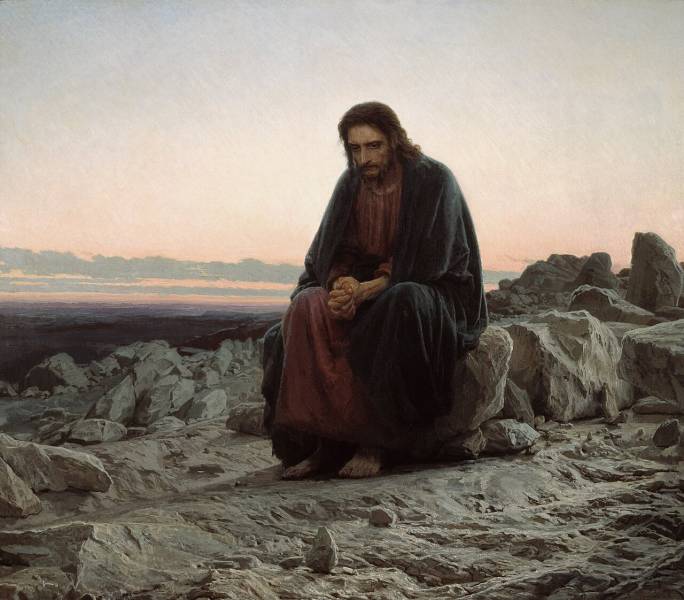
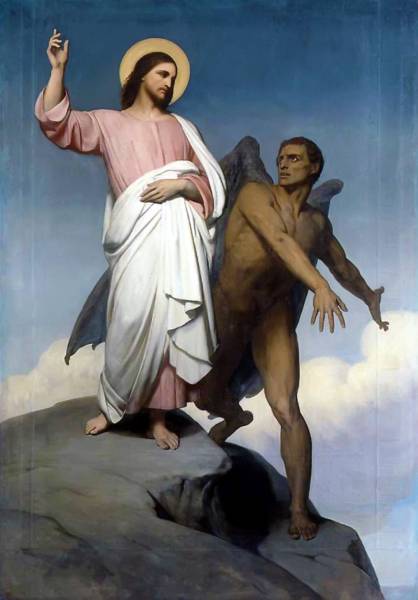
13 He was there in the wilderness forty days tempted by Satan. He was with the wild animals; and the angels were serving him.
Mark 1:1-13 · World English Bible

1446 - 1523
Città della Pieve, Italy
Pietro Perugino (c. 1446/1452 – 1523), born Pietro Vannucci, was an Italian Renaissance painter of the Umbrian school, who developed some of the qualities that found classic expression in the High Renaissance. Raphael was his most famous pupil.