Michelangelo Merisi da Caravaggio
(Milan, 1571 - 1610)
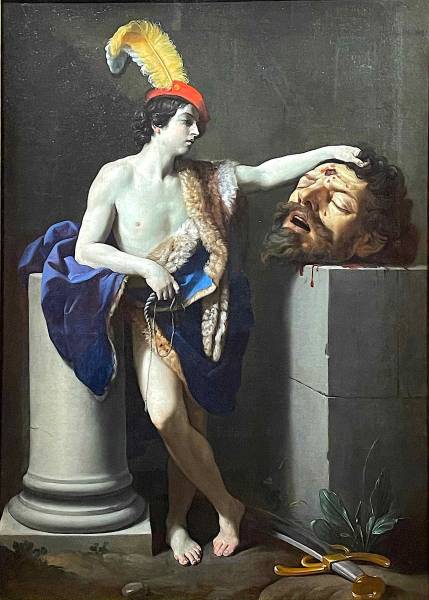
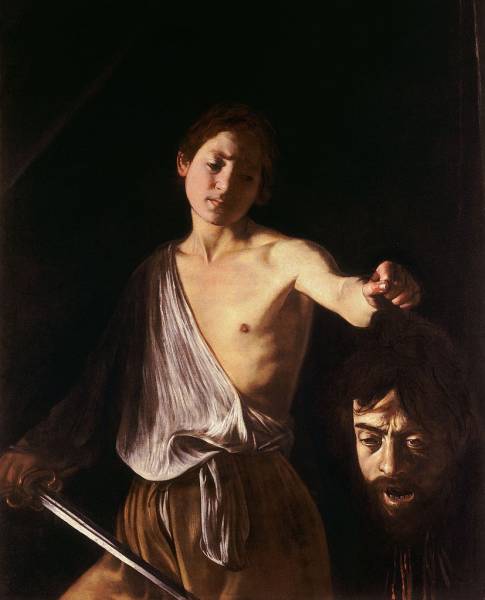
1 Samuel 17:45-53
"The Incredulity of Saint Thomas" is a captivating painting by the Italian Baroque master Caravaggio, created around 1601-1602. This masterpiece is now housed in the Sanssouci Picture Gallery, which serves as a museum located in Potsdam, Germany. The artwork portrays the iconic biblical episode known as the "Doubting Thomas" or formally as the "Incredulity of Thomas." This subject has been a popular theme in Christian art since at least the 5th century, used to convey various theological messages.
The painting draws inspiration from the Gospel of St. John, where Thomas the Apostle expresses skepticism and doubts about the resurrection of Jesus. He famously declares, "Unless I see the nail marks in his hands and put my finger where the nails were, and put my hand into his side, I will not believe it." (John 20:25) A week later, Jesus appears again before the Apostles, including Thomas, and invites him to touch His wounds, urging him to dispel his doubts. It is during this encounter that Jesus imparts the timeless message, "Because you have seen me, you have believed; blessed are those who have not seen and yet have believed." (John 20:29)
Caravaggio's mastery in using dramatic lighting and shadow, known as chiaroscuro, intensifies the emotional impact of the painting. The figures of Thomas and Jesus stand as powerful representations of doubt and faith, respectively. Thomas, with a mix of awe and incredulity, extends his hand towards Jesus's side, seeking tangible evidence of the miraculous event. Jesus, with an expression of calm assurance, guides Thomas's hand and conveys the message of faith transcending physical proof.
The composition's intimate and dynamic portrayal of the interaction between doubt and belief has made "The Incredulity of Saint Thomas" a timeless and evocative piece of religious art. Caravaggio's masterful brushwork and keen attention to human emotion immerse the viewer in the powerful narrative, encouraging contemplation on themes of faith, doubt, and the profound transformative potential of belief in the unseen.
Overall, "The Incredulity of Saint Thomas" by Caravaggio continues to captivate audiences as a powerful visual representation of a significant biblical episode. Its compelling storytelling, skillful use of light and shadow, and emotional depth make it a celebrated work in art history, inviting viewers to engage in a profound exploration of the complexities of faith and the human experience.
Found in: John, John 20, 17th century, Doubting Thomas
24 But Thomas, one of the twelve, called Didymus, wasn’t with them when Jesus came.
25 The other disciples therefore said to him, “We have seen the Lord!” But he said to them, “Unless I see in his hands the print of the nails, put my finger into the print of the nails, and put my hand into his side, I will not believe.”
26 After eight days again his disciples were inside, and Thomas was with them. Jesus came, the doors being locked, and stood in the middle, and said, “Peace be to you.”
27 Then he said to Thomas, “Reach here your finger, and see my hands. Reach here your hand, and put it into my side. Don’t be unbelieving, but believing.”
28 Thomas answered him, “My Lord and my God!”
29 Jesus said to him, “Because you have seen me, you have believed. Blessed are those who have not seen, and have believed.”
John 20:24-29 · World English Bible

1571 - 1610
Milan, Italy
Michelangelo Merisi (Michele Angelo Merigi or Amerighi) da Caravaggio (28 September 1571 – 18 July 1610) was an Italian painter active in Rome, Naples, Malta, and Sicily from the early 1590s to 1610. His paintings combine a realistic observation of the human state, both physical and emotional, with a dramatic use of lighting, which had a formative influence on Baroque painting.