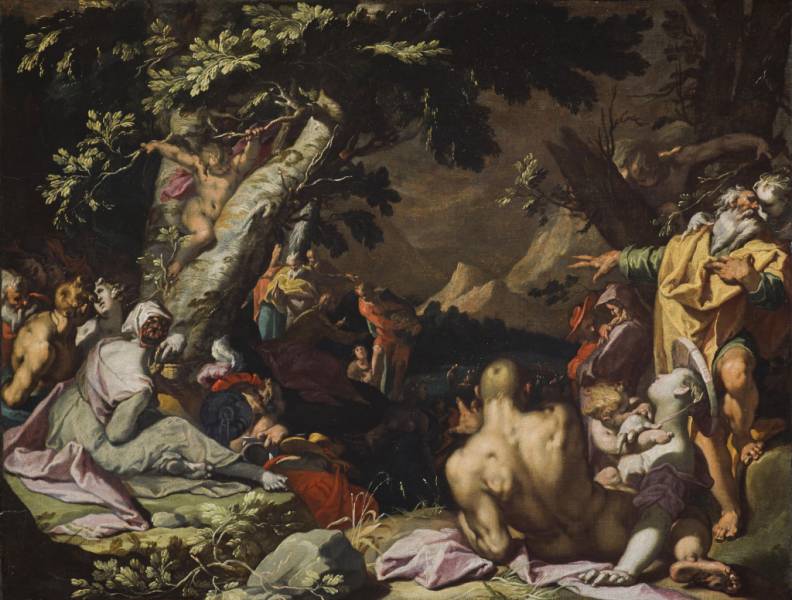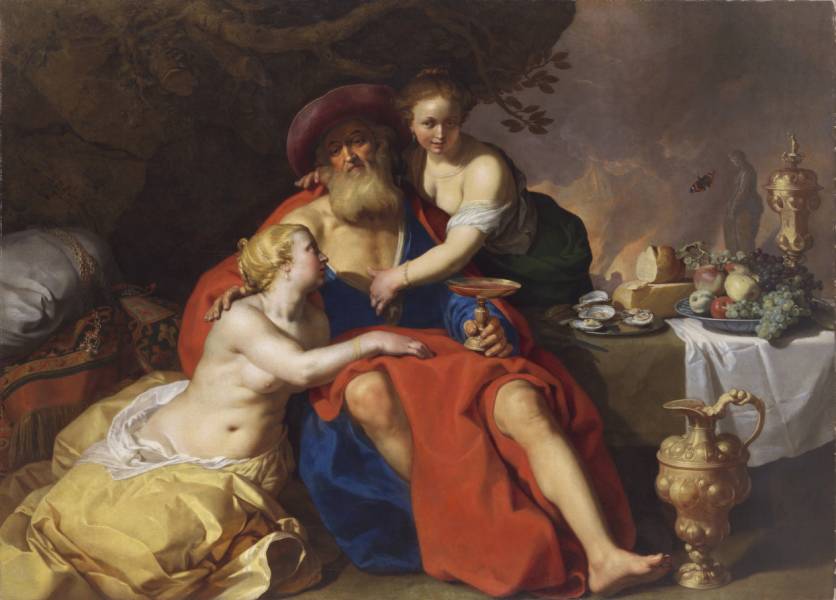
Lot and his daughters
(1624)
Abraham Bloemaert
(Gorinchem, 1566 - 1651)
Genesis 19:30-38
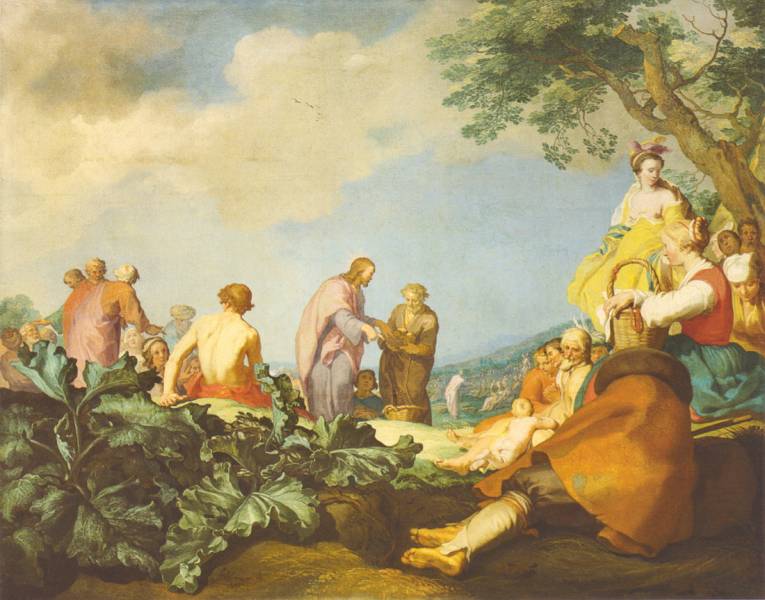
Abraham Bloemaert's artistic representation of the parable breathes new life into this age-old narrative. Originating in the book of Matthew (13:24-30), the parable tells of an enemy who stealthily sowed darnel weeds among a field of wheat while people were asleep. Through art, Bloemaert invites viewers to reexamine the parable from a fresh vantage point.
One notable aspect of Bloemaert's interpretation is his adept use of symbolism. The tall, golden wheat symbolizes the righteous, while the twisted, dark tares represent the wicked. This visual dichotomy effectively encapsulates the essence of the parable, underscoring the coexistence of good and evil in the world.
Bloemaert's representation serves as a metaphor for the human experience, where distinguishing between good and evil can be challenging due to their coexistence. His portrayal heightens the moral ambiguity inherent in the narrative, leaving viewers in contemplation.
Additionally, Bloemaert's choice of colors and lighting enhances the emotional depth of the artwork. The contrast between the bright, sunny background and the shadowy tares amplifies the moral tension present in the parable. The meticulous attention to detail within the composition draws the viewer's focus to the intricate interplay between the wheat and tares.
Nevertheless, art interpretations are inherently subjective, and opinions may vary. Some observers might find Bloemaert's portrayal lacks subtlety and prefer a more nuanced approach to the parable. Moreover, given the open-ended nature of the parable, it remains a fertile ground for theological and philosophical discussions.
In summation, Abraham Bloemaert's interpretation of "The Parable of the Wheat and the Tares" offers viewers a visually captivating representation of a biblical narrative teeming with profound moral implications. The artwork serves as a catalyst for reflection and discourse, reminding us of the intricacies of human nature and the ceaseless struggle between good and evil. Whether viewed through a religious or artistic lens, this depiction makes a valuable contribution to the ongoing dialogue surrounding this timeless parable.
Found in: Matthew, Matthew 13, 17th century, Parable
24 He set another parable before them, saying, “The Kingdom of Heaven is like a man who sowed good seed in his field,
25 but while people slept, his enemy came and sowed darnel weeds also among the wheat, and went away.
26 But when the blade sprang up and produced fruit, then the darnel weeds appeared also.
27 The servants of the householder came and said to him, ‘Sir, didn’t you sow good seed in your field? Where did these darnel weeds come from?’
28 “He said to them, ‘An enemy has done this.’ “The servants asked him, ‘Do you want us to go and gather them up?’
29 “But he said, ‘No, lest perhaps while you gather up the darnel weeds, you root up the wheat with them.
30 Let both grow together until the harvest, and in the harvest time I will tell the reapers, “First, gather up the darnel weeds, and bind them in bundles to burn them; but gather the wheat into my barn.”’”
Matthew 13:24-30 · World English Bible

1566 - 1651
Gorinchem, Netherlands
Bloemaert was born in Gorinchem, Habsburg Netherlands, the son of the architect Cornelis Bloemaert I, who moved his family to Utrecht in 1575, where Abraham was first a pupil of Gerrit Splinter (pupil of Frans Floris) and of Joos de Beer. From the age of 15 or 16, he then spent three years in Paris from 1581–1583, studying six weeks under a Jehan Bassot (possibly Jean Cousin the Younger) and then under a Maistre Herry. While in the School of…