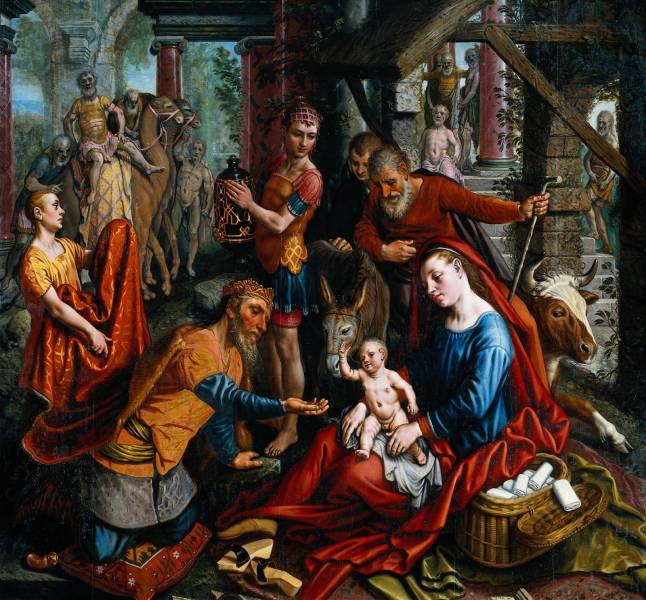
Adoration of the Magi
(c1560)
Pieter Aertsen
(Amsterdam, 1508 - 1575)
Matthew 2:1-12
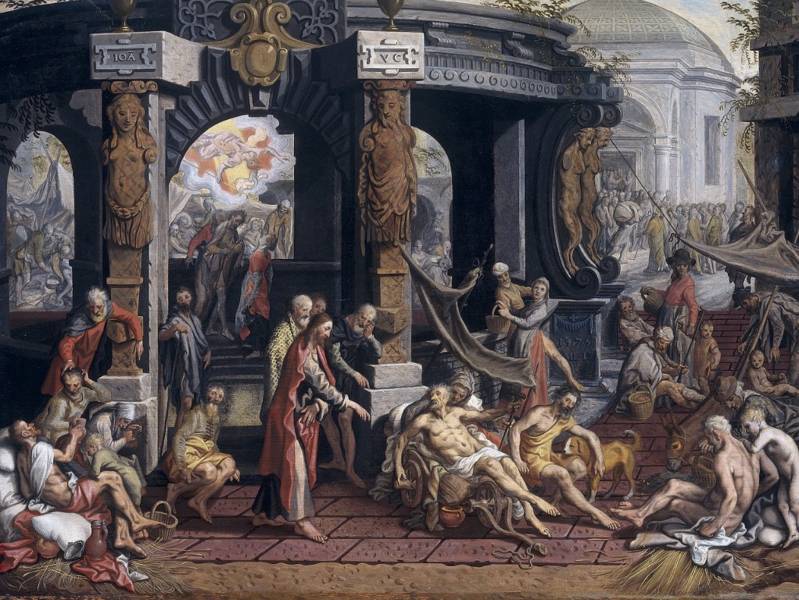
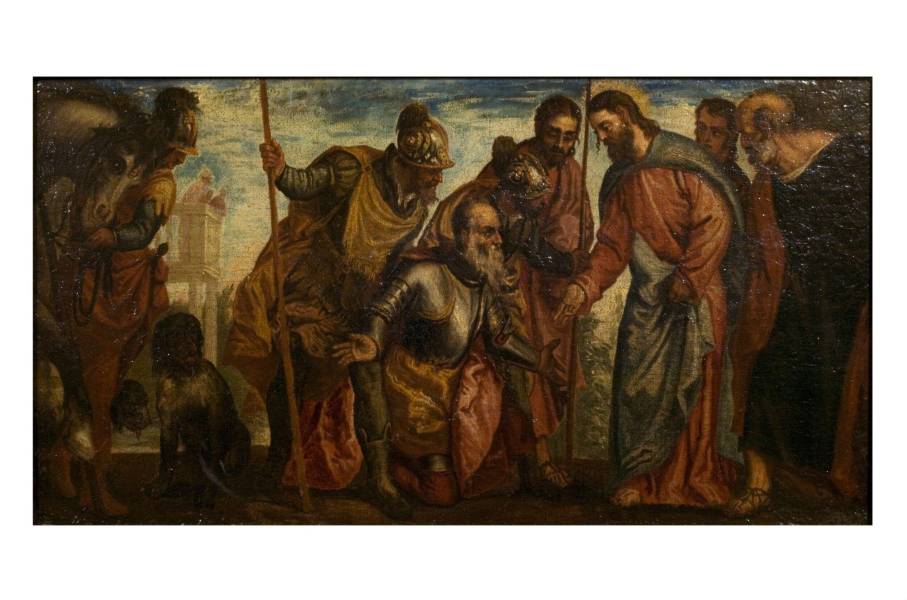
Pieter Aertsen's compelling masterpiece, "The Miraculous Healing of a Lame Man by Peter and John," transports us to the vibrant world of 16th-century Amsterdam. Painted with remarkable skill in 1575, this oil on panel artwork stands as a testament to Aertsen's exceptional talent as a Northern Renaissance artist.
The painting draws its inspiration from the biblical account found in Acts 3:1-10, narrating the awe-inspiring moment when the apostles Peter and John heal a lame man at the gate of the temple in Jerusalem. Aertsen masterfully captures the dramatic scene, infusing it with vivid emotions and profound spirituality.
The composition is a symphony of colors and forms, with a harmonious interplay between light and shadow that imbues the figures with a lifelike presence. The rich, earthy tones of the surrounding landscape contrast with the luminous robes of the apostles, emphasizing their divine mission and spiritual authority.
At the center of the painting, we witness the transformative moment as Peter reaches out with a compassionate touch to the crippled man. The man's expression exudes a mix of astonishment and hope as he begins to rise from his infirmity, his crutches cast aside as a testimony to the miraculous healing taking place.
Aertsen's attention to detail is breathtaking, evident in the intricate architectural elements of the temple gate and the crowd of onlookers witnessing the divine intervention. Each figure is rendered with unique facial expressions, conveying a myriad of emotions - from awe and reverence to skepticism and curiosity.
As we contemplate the artwork, we are invited to reflect on themes of faith, compassion, and the transformative power of divine grace. Aertsen's painting transcends its historical context, touching upon timeless human experiences of suffering, healing, and the hope that emanates from encountering the divine.
"The Miraculous Healing of a Lame Man by Peter and John" exemplifies Aertsen's mastery of his craft and his ability to convey spiritual narratives with profound emotional resonance. The artwork continues to captivate viewers, drawing them into a moment of wonder and contemplation, making it an enduring treasure within the realm of religious art.
In conclusion, Pieter Aertsen's painting stands as a remarkable representation of the Northern Renaissance's spiritual and artistic richness. Through the deft strokes of his brush, he brings to life a sacred event that transcends time and culture, leaving an indelible mark on the hearts of those who gaze upon it.
Found in: Acts, Acts 3, 16th century, John the Evangelist, Peter
1 Peter and John were going up into the temple at the hour of prayer, the ninth hour.
2 A certain man who was lame from his mother’s womb was being carried, whom they laid daily at the door of the temple which is called Beautiful, to ask gifts for the needy of those who entered into the temple.
3 Seeing Peter and John about to go into the temple, he asked to receive gifts for the needy.
4 Peter, fastening his eyes on him, with John, said, “Look at us.”
5 He listened to them, expecting to receive something from them.
6 But Peter said, “I have no silver or gold, but what I have, that I give you. In the name of Jesus Christ of Nazareth, get up and walk!”
7 He took him by the right hand, and raised him up. Immediately his feet and his ankle bones received strength.
8 Leaping up, he stood, and began to walk. He entered with them into the temple, walking, leaping, and praising God.
9 All the people saw him walking and praising God.
10 They recognized him, that it was he who used to sit begging for gifts for the needy at the Beautiful Gate of the temple. They were filled with wonder and amazement at what had happened to him.
Acts 3:1-10 · World English Bible

1508 - 1575
Amsterdam, Netherland
Pieter Aertsen, called Lange Pier ("Tall Pete") because of his height, was a Dutch painter in the style of Northern Mannerism. He is credited with the invention of the monumental genre scene, which combines still life and genre painting and often also includes a biblical scene in the background. He was active in his native city Amsterdam but also worked for a long period in Antwerp, then the centre of artistic life in the Netherlands.