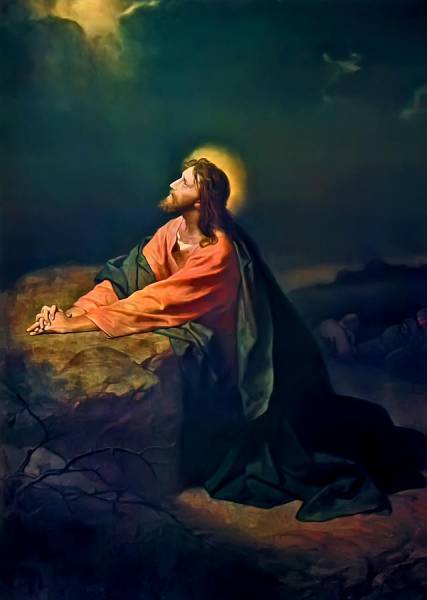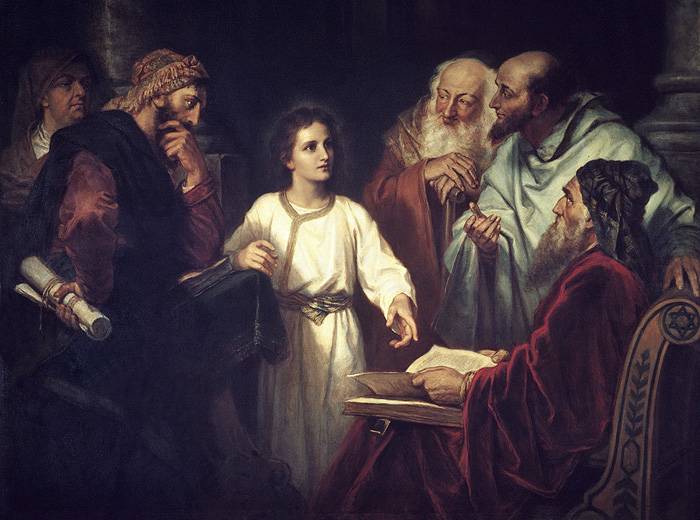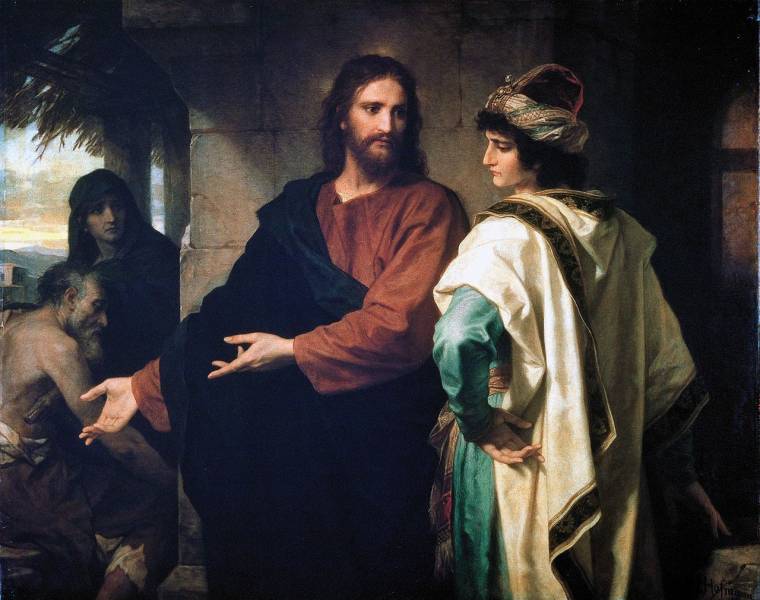
Heinrich Hofmann
(Darmstadt, 1824 - 1911)
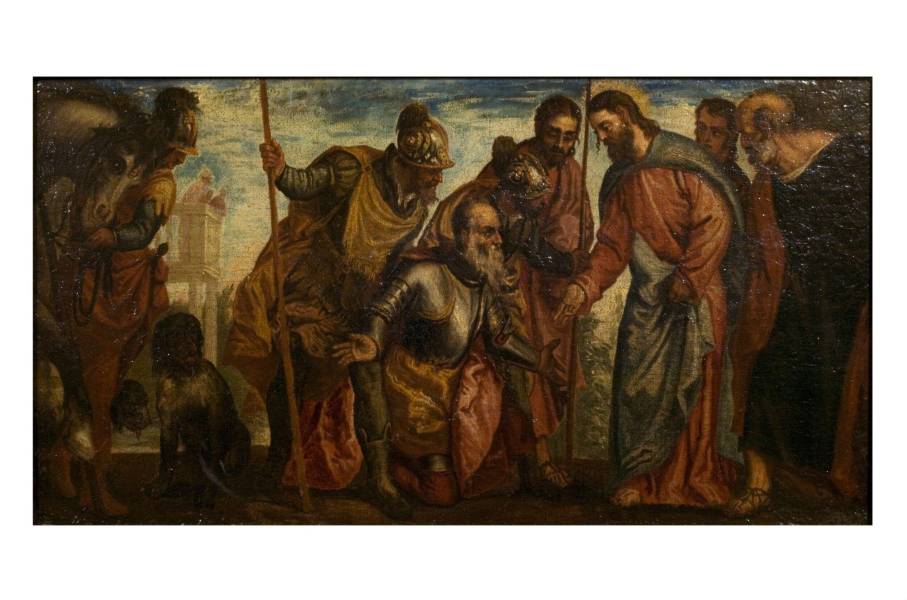
Mark 10:17-29
"The Capture of Christ" portrays a gripping scene from Matthew 26:47-57, where Jesus Christ is led forward by two richly dressed Pharisees amidst a procession of armed guards. Bound at the wrist, the haloed Christ moves towards an unjust judgment and impending crucifixion. The remorseful figure of Judas stands to the left, tightly clutching the bag of thirty silver coins that sealed his betrayal of the Savior. The background reveals the walled city of Jerusalem, as the first light of dawn begins to appear.
Hofmann, who had studied at the Düsseldorf Academy of Art under the influence of late Nazarene painters promoting religious art revival, painted "The Capture of Christ" while living in Rome. There, he drew inspiration from the works of old masters and contemporary artists, such as Peter Cornelius, known for championing idealized classical religious art. In his thirties, Hofmann boldly embraced this major religious subject, reflecting not only his spiritual inclinations but also the ideals of German national painting.
Upon returning to Germany in 1858 to exhibit the painting, Hofmann felt anxious about its reception and its potential impact on his career. Its exhibition in Munich garnered significant positive attention, with one critic praising its portrayal of Judas's guilt in contrast to Christ's enduring nobility. This distinction, wherein Hofmann masterfully depicted Christ's serenity against the turmoil of those around him, became a hallmark of his religious works. The painting's acclaim led to its acquisition by Darmstadt's leading museum, providing Hofmann the encouragement needed to pursue more ambitious religious pieces.
However, with a young wife to support, Hofmann continued to rely on portraiture to earn an income throughout the 1860s and 70s, even as he intermittently presented religious subjects. By the 1880s, Hofmann decisively turned his focus towards religious painting. Despite the subsequent dominance of secular modernist art that overshadowed traditional religious painting as outdated, "The Capture of Christ" endured. Having spent decades hidden away in museum storage, this rare opportunity now allows audiences to witness Hofmann's initial triumph in the genre of religious art.
Found in: Matthew, Matthew 26, 19th century
47 While he was still speaking, behold, Judas, one of the twelve, came, and with him a great multitude with swords and clubs, from the chief priests and elders of the people.
48 Now he who betrayed him gave them a sign, saying, “Whoever I kiss, he is the one. Seize him.”
49 Immediately he came to Jesus, and said, “Hail, Rabbi!” and kissed him.
50 Jesus said to him, “Friend, why are you here?” Then they came and laid hands on Jesus, and took him.
51 Behold, one of those who were with Jesus stretched out his hand, and drew his sword, and struck the servant of the high priest, and struck off his ear.
52 Then Jesus said to him, “Put your sword back into its place, for all those who take the sword will die by the sword.
53 Or do you think that I couldn’t ask my Father, and he would even now send me more than twelve legions of angels?
54 How then would the Scriptures be fulfilled that it must be so?”
55 In that hour Jesus said to the multitudes, “Have you come out as against a robber with swords and clubs to seize me? I sat daily in the temple teaching, and you didn’t arrest me.
56 But all this has happened, that the Scriptures of the prophets might be fulfilled.” Then all the disciples left him, and fled.
57 Those who had taken Jesus led him away to Caiaphas the high priest, where the scribes and the elders were gathered together.
Matthew 26:47-57 · World English Bible
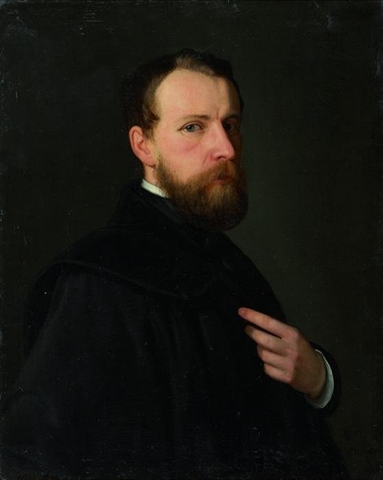
1824 - 1911
Darmstadt, Germany
Heinrich Hofmann grew up in a family that harbored a deep interest in art. His father, advocate Heinrich Karl Hofmann (1795–1845) painted in watercolors, his mother Sophie Hofmann, née Volhard (1798–1854) gave lessons in art before she married, and his four brothers all showed artistic talent. Heinrich, however, was the only one for whom art was not only a profession but the center of his life.