Paul Gauguin
(Paris, 1848 - 1903)
John 19:16-27
1848 - 1903
Paris, France
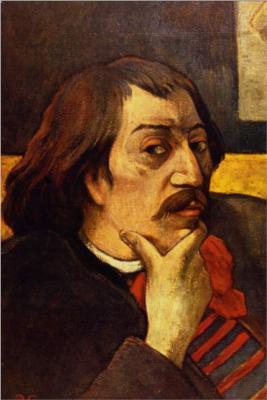
Eugène Henri Paul Gauguin was a French post-Impressionist artist. Unappreciated until after his death, Gauguin is now recognized for his experimental use of colour and Synthetist style that were distinctly different from Impressionism. Toward the end of his life, he spent ten years in French Polynesia, and most of his paintings from this time depict people or landscapes from that region.
His work was influential to the French avant-garde and many modern artists, such as Pablo Picasso and Henri Matisse. Gauguin's art became popular after his death, partially from the efforts of art dealer Ambroise Vollard, who organized exhibitions of his work late in his career and assisted in organizing two important posthumous exhibitions in Paris. Gauguin was an important figure in the Symbolist movement as a painter, sculptor, printmaker, ceramist, and writer. His expression of the inherent meaning of the subjects in his paintings, under the influence of the cloisonnist style, paved the way to Primitivism and the return to the pastoral. He was also an influential proponent of wood engraving and woodcuts as art forms.
3 artworks found
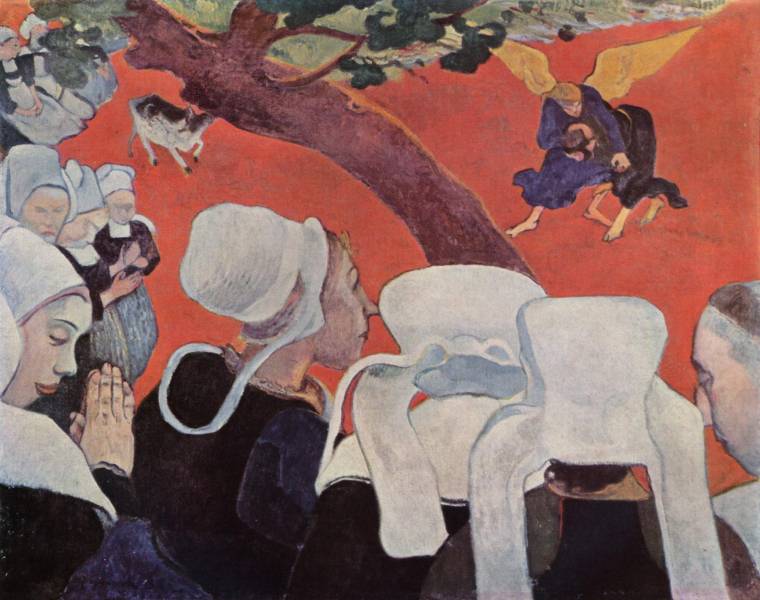
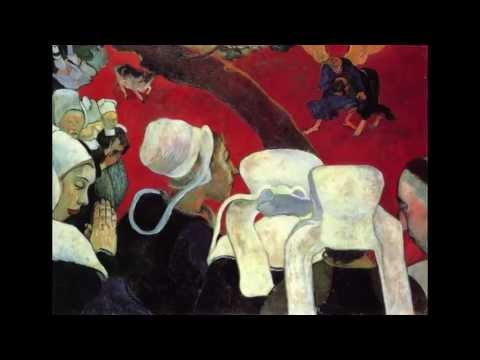
Paul Gauguin, Vision after the Sermon, or Jacob Wrestling with the Angel, 1888, oil on canvas, 2' 4 3/4" x 3' 1/2" (National Gallery of Scotland, Edinburgh)

In 1903, on the island of Hiva Oa in the Marquesas, a syphilitic and alcoholic Frenchman called Paul Gauguin died of a heart attack. At that point nobody realised the incredible impact Gauguin's work...